Dixon Technologies & Vivo JV: Impact on Dixon’s Revenue And Production
The Dixon Technologies - Vivo joint venture is important for one simple reason: It can materially increase Dixon’s smartphone production volumes at a time when the company is already heavily dependent on mobile and electronics manufacturing.
But the key question for investors is not simply whether the JV is positive.
The more important questions are:
How much additional production can Dixon get from Vivo? How much can that translate into revenue? And how meaningful is that opportunity compared with Dixon’s existing business?
The answer is that the JV could become a significant incremental growth driver, but its eventual revenue contribution will depend on the speed of production ramp-up, the portion of Vivo's volumes actually transferred to the JV and the revenue value per handset.

What exactly is the Dixon - Vivo JV?
Dixon and vivo Mobile India have now executed the definitive Joint Venture Agreement (JVA) and Shareholders' Agreement (SHA) after the required government approval.
Dixon will hold a 51% stake, while vivo Mobile India will hold the remaining 49%.
The JV will operate as an OEM manufacturing company for electronic devices, particularly smartphones. It will undertake a portion of Vivo's smartphone OEM orders in India and can also manufacture electronic products for other brands.
Importantly, the transaction is not simply about creating a new factory from scratch.
The structure includes the JV purchasing certain manufacturing assets from vivo and entering into a manufacturing and packaging agreement with vivo.
This gives the partnership an existing manufacturing base from which production can be scaled.
That distinction matters because an existing manufacturing setup can shorten the time between regulatory approval and actual production ramp-up.
Why does Vivo matter so much to Dixon?
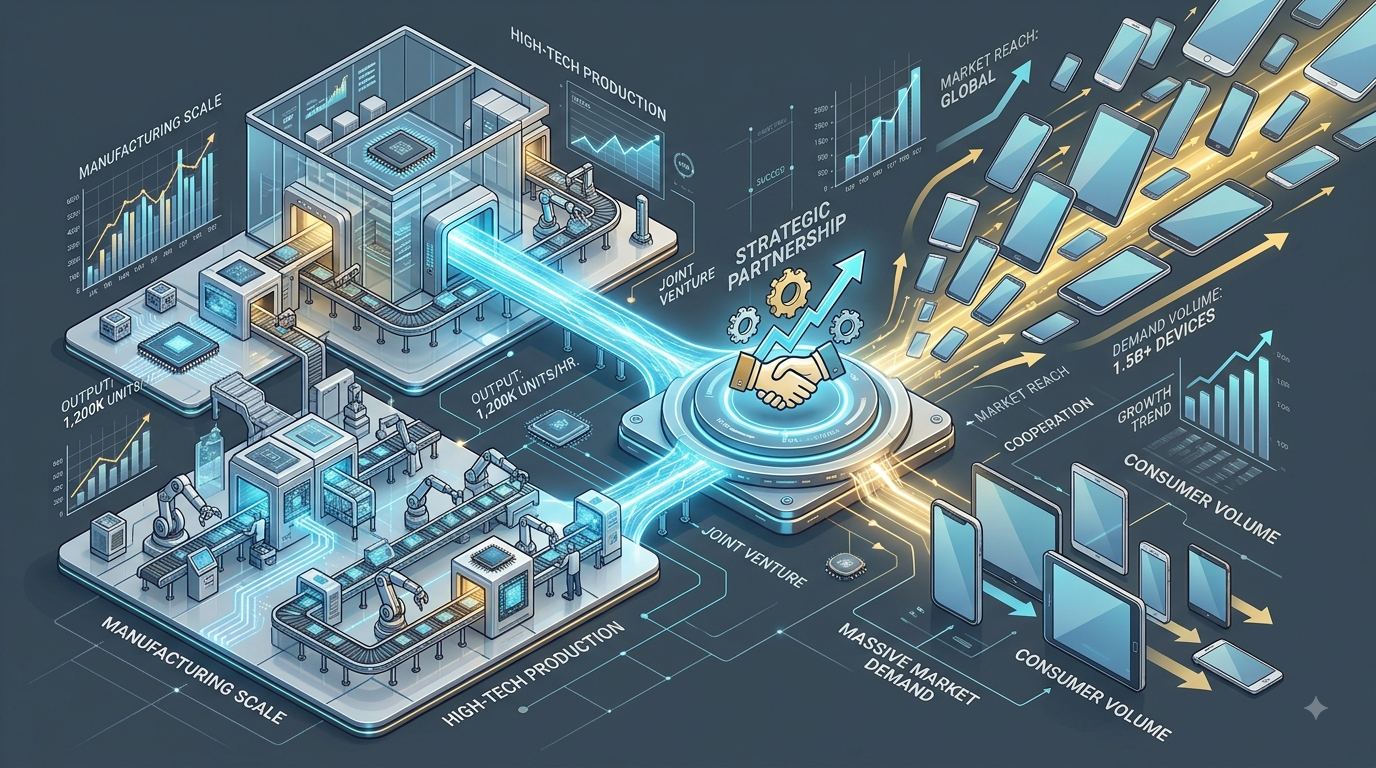
To understand the impact of the JV, first look at Dixon's current scale.
Dixon reported FY26 revenue of approximately ₹48,873 crore, compared with ₹38,880 crore in FY25. The company's mobile-phone manufacturing business is already its largest growth engine.
This means Vivo is entering an area that is already central to Dixon's business rather than creating an entirely new revenue stream.
The company has also built significant manufacturing scale over the years. Dixon's official website currently reports 30 manufacturing facilities, seven R&D centres and more than 30,000 employees.
So the strategic logic is straightforward:
Vivo brings demand and volumes – Dixon brings manufacturing capability – the JV combines the two.
The biggest impact: production volumes
This is where the JV becomes particularly important. During its FY26 discussions, Dixon management indicated that Vivo's annual smartphone sales in India were around 35 million units and that the partnership could eventually add approximately 20-22 million smartphones annually to Dixon's manufacturing volumes.
That is a very large number relative to Dixon's existing mobile production base.
The important point is that 20-22 million is an annualised potential, not an immediate FY27 production number.
The JV will need to ramp up production progressively.
Therefore, investors should distinguish between:
- Annualised potential: 20-22 million units
- Actual FY27 production: likely to depend on the timing and speed of ramp-up
- Long-term production opportunity: potentially 20 - 22 million units annually if the planned scale is fully achieved
This distinction is critical because simply adding 20 - 22 million units to FY26 production and assuming the same amount of revenue immediately would overstate the near-term impact.
How large is the Vivo opportunity for Dixon?
The 20–22 million handset opportunity is significant, but its importance becomes clearer when it is translated into economics rather than simply production volume.
The company has indicated that the broader Vivo opportunity could represent an opportunity of around ₹30,000 crore over time. This figure is important because it provides a better sense of the potential scale than the handset number alone.
However, the ₹30,000-crore figure should be treated as a potential opportunity at scale, not as revenue Dixon will immediately recognise in FY27.
The distinction is important:
- 20–22 million units - potential annualised production volume
- ₹30,000 crore - potential scale of the broader opportunity
- FY27 revenue contribution - depends on how quickly production ramps up and the commercial structure of the JV
- Full-ramp economics - depends on volumes, revenue per handset, margins and the investment required to support production
This makes the Vivo JV potentially large enough to influence Dixon's growth trajectory, but the financial impact will be gradual rather than immediate.
FY27 ramp-up versus the full opportunity

The biggest mistake investors could make is to treat the eventual 20–22 million annualised production figure as a FY27 revenue number.
The JV was approved only in July 2026, which means FY27 will include only part of the ramp-up period. Production will need to move progressively from integration and asset transfer to meaningful manufacturing volumes and then toward a larger run-rate.
Therefore, the opportunity should be viewed in two stages.
FY27 is primarily a ramp-up year. The focus should be on how quickly production begins, how many units are actually manufactured and whether the JV moves toward a meaningful run-rate during the year.
The 20–22 million figure represents the longer-term annualised opportunity. If the JV eventually reaches that scale, the financial contribution could become much more significant, but that should be considered a full-ramp scenario rather than an immediate FY27 assumption.
This distinction also changes how the ₹30,000-crore opportunity should be interpreted. It represents the potential scale of the business opportunity, whereas the revenue recognised in FY27 will depend on the portion of that opportunity that actually becomes operational during the year.
For investors, quarterly production data will therefore be more useful than simply repeating the annualised target. The trajectory from initial production – higher quarterly volumes – full annualised run-rate will determine how quickly the opportunity becomes visible in Dixon's financial statements.
The more relevant question is how much additional growth the Vivo relationship can add to this existing base. In other words, Vivo is not creating Dixon’s mobile manufacturing business from scratch; it is potentially adding another large source of production volumes to a business that is already established.
The impact can be understood through three things:
- Higher production volumes: Vivo can add significant incremental smartphone manufacturing volumes to Dixon’s existing operations.
- Better utilisation of manufacturing capacity: Higher volumes can help Dixon utilise its factories, equipment and manufacturing infrastructure more efficiently.
- Potential operating leverage: As production scales up, certain fixed costs can be spread across a larger number of units, potentially improving the economics of the manufacturing business.
This is why the distinction between “transformational” and “incremental” growth is important. The JV may not completely change Dixon’s business model, but it can make an already large mobile manufacturing operation significantly larger.
So, rather than thinking of the opportunity as: “Vivo makes Dixon a major smartphone manufacturer,”
the better way to look at it is:
“Vivo gives Dixon another major growth engine within a business where Dixon already has scale, manufacturing capabilities and experience.”
That makes the real investment question less about whether Vivo is a big deal - and more about how quickly the JV ramps up production and how much revenue and profitability that additional scale ultimately contributes to Dixon.
Why may production growth matter more than revenue growth?

For Dixon, the real significance of the Vivo JV is not simply how much additional revenue it can generate. The number of smartphones produced and how that production is absorbed by Dixon's existing manufacturing infrastructure can be equally important.
Dixon's manufacturing business has a combination of fixed and variable costs. Factories, machinery, engineering capabilities and certain employee costs have to be incurred even before the company reaches full production capacity.
If Vivo helps Dixon push more units through those facilities, Dixon can potentially generate more revenue without increasing every cost at the same rate.
This creates the possibility of operating leverage. In simple terms, the economics can improve as production scales because the existing manufacturing infrastructure is being used more intensively.
The bigger question: How profitable will the additional volumes be?
For Dixon, higher production is valuable only if the incremental revenue translates into incremental profit.
This is where the economics of the JV become more important than the headline 20–22 million handset number. Electronics manufacturing typically operates on relatively modest margins, so even a large increase in revenue does not necessarily produce an equally large increase in profit.
The key question is therefore how much profit Dixon can retain from each additional unit after manufacturing costs, employee costs, logistics, working capital and other operating expenses.
If Vivo volumes can be absorbed largely through existing infrastructure, the incremental business could have attractive economics because Dixon would be adding revenue without increasing every cost proportionately.
But if the company needs substantial new factories, machinery, employees or other infrastructure, the benefit could be more limited. In that case, a larger portion of the additional revenue would be accompanied by additional costs.
This creates two very different outcomes:
- High utilisation + limited incremental investment: stronger incremental profitability
- High volumes + heavy new investment: strong revenue growth but potentially weaker incremental returns

Therefore, investors should not judge the JV simply by asking whether revenue rises. The more important metric is incremental profit generated relative to the additional capital required.
That is ultimately what will determine whether Vivo makes Dixon merely larger or genuinely more profitable.
The JV also strengthens Dixon's position in mobile manufacturing
The Vivo partnership also makes strategic sense because it fits directly into a business where Dixon already has significant experience.
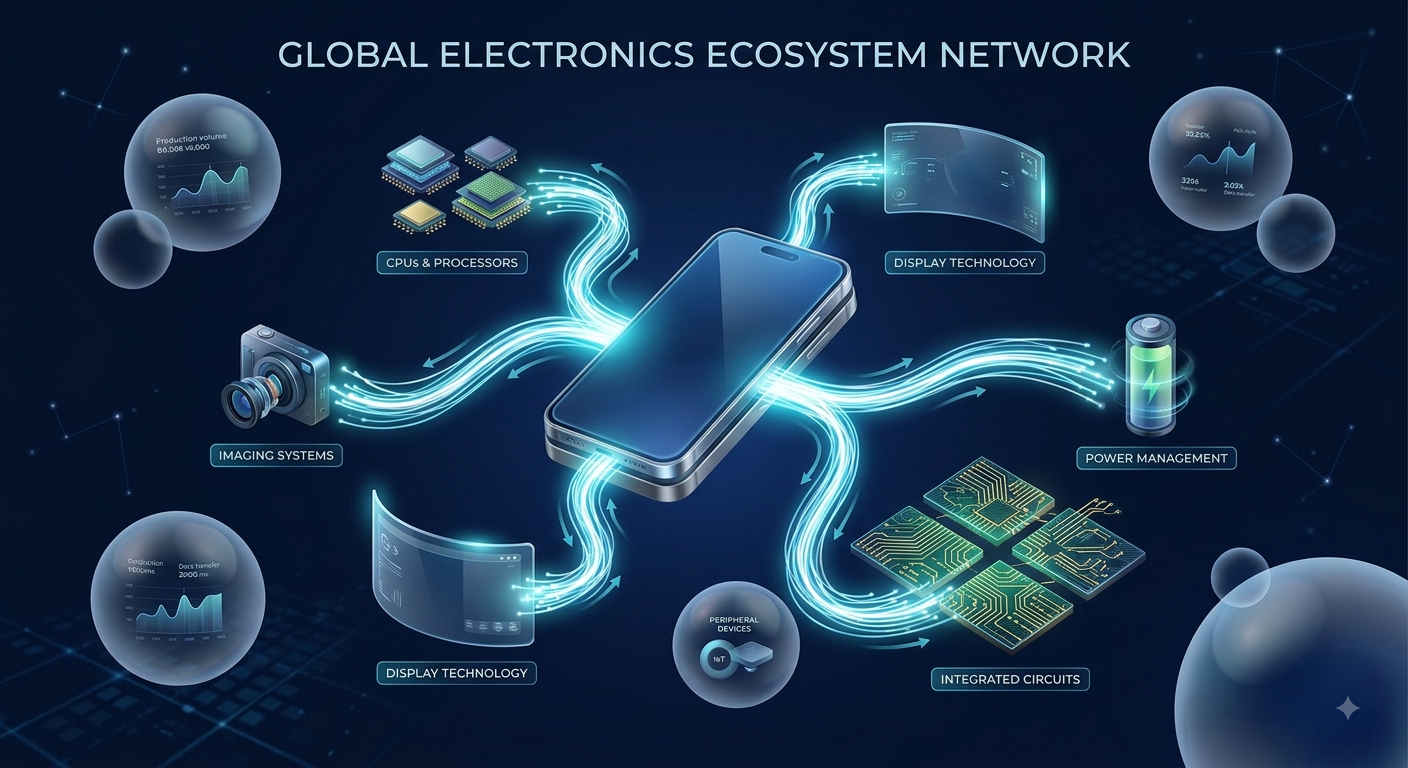
Dixon is not entering smartphone manufacturing for the first time through Vivo. The company already operates across several electronics categories, including mobile phones, telecom equipment, IT hardware, displays, appliances and lighting.
The Vivo JV therefore gives Dixon an opportunity to increase its scale in an area where it already has manufacturing capabilities, rather than entering an entirely unfamiliar industry.
That existing experience can be valuable because large-scale smartphone manufacturing requires more than simply assembling a phone. It involves managing suppliers, components, production schedules, quality standards, workforce requirements and large-volume output.
Dixon already has capabilities and relationships built around this manufacturing ecosystem. A large customer such as Vivo can therefore potentially allow the company to extract greater value from capabilities it has already developed.
The strategic logic is essentially:
Existing mobile manufacturing capabilities – Vivo adds large production volumes – greater scale – better utilisation of the manufacturing ecosystem – stronger position in mobile manufacturing.
This is why the JV is strategically important even beyond the revenue it may eventually contribute. It can deepen Dixon's position in its core mobile manufacturing business while simultaneously increasing the scale of that business.
Source - Dixon Technologies – Shareholder Information and Regulatory Disclosures
How much can the Vivo JV really change Dixon?
Dixon is already a ₹48,873-crore business, so the Vivo JV should not be interpreted as something that suddenly changes the company's entire revenue profile. Dixon Technologies already has a large mobile manufacturing operation, established facilities and experience in high-volume electronics manufacturing.
What Vivo potentially changes is the scale of that existing business. The JV gives Dixon access to an additional opportunity to manufacture 20–22 million smartphones on an annualised basis. That is significant because it can add a large number of units to a business that is already operating at scale.
The impact could therefore build through a chain reaction:
Higher Vivo volumes – higher smartphone production – better capacity utilisation – greater manufacturing scale – additional revenue – potential operating leverage.
But the important word is “potential.” The 20–22 million figure represents the targeted annualised production opportunity, not an amount of revenue that Dixon will automatically recognise. The actual financial contribution will depend on how quickly production ramps up, the manufacturing scope and commercial terms of the JV, and the revenue generated per handset.
This is why the JV should be evaluated over several quarters rather than based on the announcement alone.
If production ramps quickly without requiring disproportionate additional investment, the economics could become increasingly attractive. If the ramp-up is slow or requires significant new capex and working capital, the financial benefits could take longer to emerge.
What investors should track?
The Vivo JV should now be judged through execution rather than the announcement itself.
Actual quarterly production
The key question is whether production is moving steadily toward the 20–22 million annualised opportunity.
FY27 revenue contribution
Dixon has not provided a specific revenue number for the JV, so investors should watch how much incremental revenue actually appears as the ramp progresses.
Incremental margins
Revenue growth will matter less if the additional business generates very little incremental profit. EBITDA and margin performance should therefore be monitored alongside revenue.
Incremental capex
Investors should assess how much additional capital Dixon needs to support the production ramp. Lower capital intensity would make the opportunity more attractive.
Working capital
Higher production can require more inventory and receivables. A strong revenue ramp accompanied by a disproportionate increase in working capital would reduce the quality of the growth.
Vivo dependence
The sustainability of the opportunity will depend partly on Vivo's continued production requirements and sourcing strategy.
Progress toward full utilisation
The ultimate test is whether Dixon can convert the initial opportunity into a sustainable, high-volume manufacturing platform rather than simply achieve a temporary production spike.
Source - Dixon Technologies – Financial Performance and Investor Presentations
But Dixon's growth story is not limited to smartphones. As India's digital infrastructure expands, new electronics manufacturing opportunities are emerging across areas such as data centres, networking and IT hardware. To understand where this broader demand could come from you can watch my video on data center stocks
Final Verdict
The Dixon - Vivo JV is primarily a volume and scale story before it becomes a revenue story.
The strategic advantage is that Dixon does not have to build an entirely new manufacturing capability to pursue this opportunity.
It can leverage the manufacturing expertise, infrastructure and supply-chain ecosystem it has already developed and potentially use those capabilities at a much larger scale.
Vivo, in this context, acts as a large incremental source of production demand. If the JV successfully moves toward the targeted 20-22 million annualised units, Dixon's mobile manufacturing volumes could increase substantially.
That could have three potential effects:
- Revenue growth: More smartphones manufactured should translate into additional revenue, depending on the value and scope of each handset manufactured.
- Better utilisation: Higher production can allow Dixon to use existing factories and manufacturing infrastructure more intensively.
- Potential operating leverage: If volumes rise faster than the associated costs, incremental production could contribute positively to operating profitability.
However, investors should not make the mistake of converting 20-22 million handsets directly into a ₹-crore revenue estimate without knowing the relevant commercial economics. Production volume, revenue per unit, product mix, manufacturing scope and incremental costs all matter.
Therefore, the real investment thesis comes down to three questions:
How quickly does production ramp up?
This determines how much of the opportunity actually appears in FY27 versus later years.
How much revenue does Dixon generate from each unit?
This determines the actual revenue contribution of the additional volumes.
How profitable are those incremental volumes?
This determines whether the JV merely makes Dixon bigger or also makes the business financially stronger.
So, the most balanced conclusion is that Vivo is a major incremental growth catalyst for Dixon, but its full impact will be gradual. The immediate significance is the potential increase in production scale; the larger financial payoff will come only if that scale converts into sustained revenue growth, efficient capacity utilisation and healthy incremental profitability.