Could Stricter Immigration Policies Become a Tailwind for BLS International?
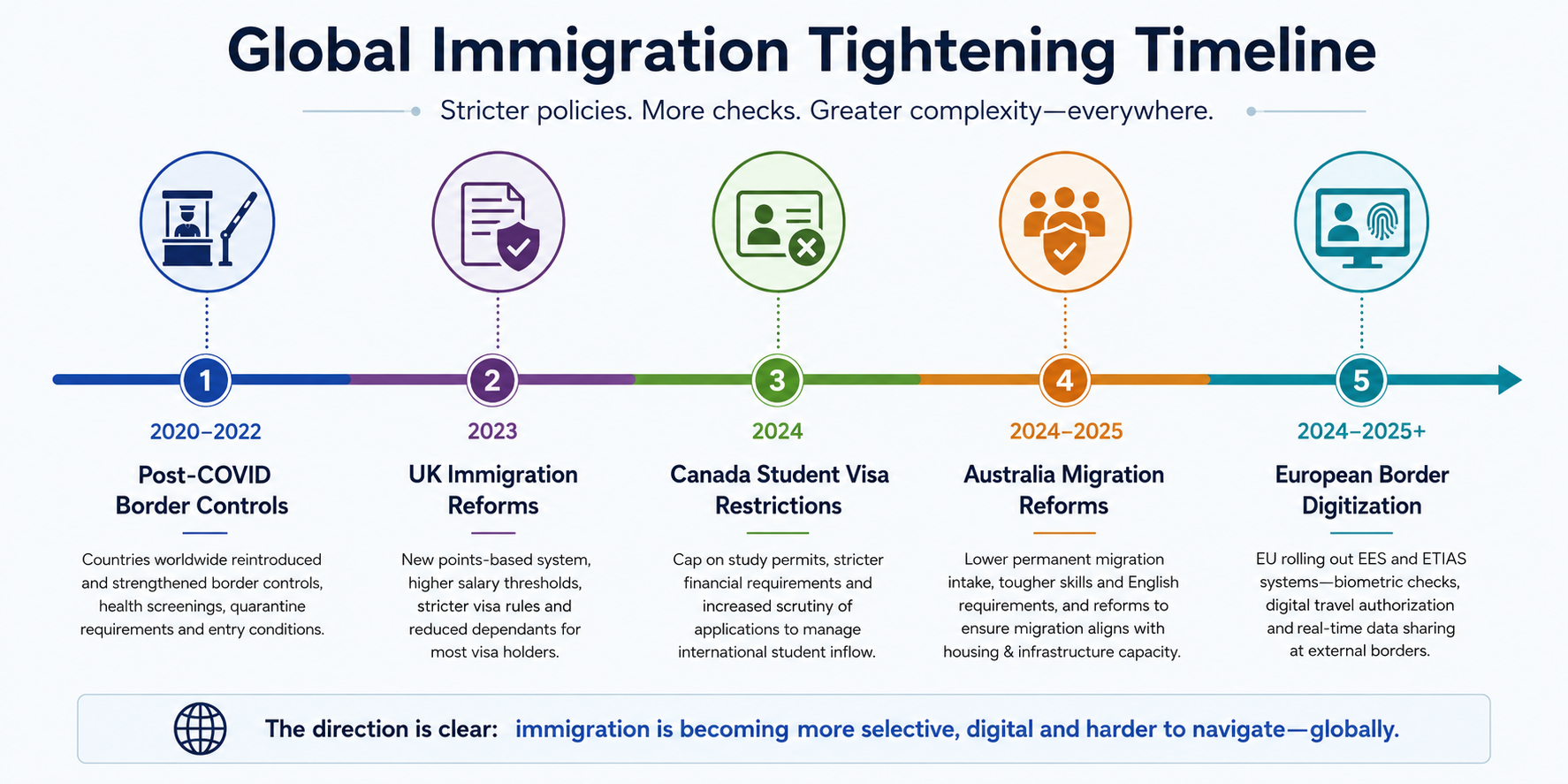
At first glance, stricter immigration policies appear to be bad news for companies involved in visa processing.
Fewer approvals, tighter regulations, and increased scrutiny would seem to imply lower business volumes.
However, for companies like BLS International, the reality may be more nuanced.
In many cases, stricter immigration policies increase the complexity of visa processing, creating additional administrative work that governments often choose to outsource.
This raises an interesting question:
Could stricter immigration policies actually become a tailwind for BLS International?

Understanding BLS's Business Model
Most readers misunderstand BLS
🚫What BLS DOES NOT Do?
Approve visas
BLS International has no authority to approve or issue visas. While it facilitates the application process and collects the required documentation, the final decision rests entirely with the relevant embassy, consulate, or government immigration authority. Factors such as eligibility, travel purpose, financial standing, and security considerations are evaluated solely by the issuing government.
Reject visas
Similarly, BLS International cannot reject visa applications. Even if an application is incomplete or contains errors, BLS's role is limited to informing the applicant and facilitating the submission process. Any rejection is issued exclusively by the embassy or immigration authority responsible for assessing the application.
Make immigration decisions
BLS does not determine who qualifies for a visa, residency permit, or any other immigration-related approval. It does not conduct security assessments, evaluate immigration risks, or formulate immigration policies. Its primary responsibility is to manage administrative tasks such as application collection, document handling, biometric enrollment, and customer support, allowing governments to focus on the actual decision-making process.
✅What BLS DOES Do?
Application collection
One of BLS International's primary responsibilities is collecting visa applications and supporting documents from applicants. The company acts as the first point of contact in the visa process, ensuring that applications are received, organized, and forwarded to the relevant embassy or consulate for further assessment. This helps streamline the submission process and improves operational efficiency for government authorities.
Biometric enrollment
Many countries require biometric information as part of their visa and immigration procedures. BLS International facilitates the collection of fingerprints, photographs, and other biometric data through dedicated enrollment centers. These biometrics play a crucial role in identity verification, security screening, and fraud prevention, making them an increasingly important component of modern visa processing.
Document verification
Before applications are submitted to the relevant authorities, BLS conducts preliminary checks to ensure that all required documents have been provided. While the company does not assess the validity of an applicant's claims or determine visa eligibility, it helps reduce processing delays by identifying missing documents and ensuring that applications meet basic submission requirements.
Appointment scheduling
BLS International manages appointment booking systems that allow applicants to schedule visits to visa application centers. This includes coordinating appointment availability, managing applicant flow, and ensuring an organized submission process. Efficient scheduling helps reduce wait times and improves the overall applicant experience.
Customer support
Throughout the visa application journey, applicants often require assistance regarding documentation requirements, appointment availability, application status, or procedural queries. BLS provides customer support through call centers, email assistance, online portals, and in-person service centers, helping applicants navigate what can often be a complex process.
Passport logistics
Once an application has been processed, BLS International manages the secure handling and movement of passports and related documents. This includes the collection, transportation, tracking, and return of passports between applicants and government authorities. Given the sensitive nature of these documents, secure logistics form a critical part of the company's service offering.
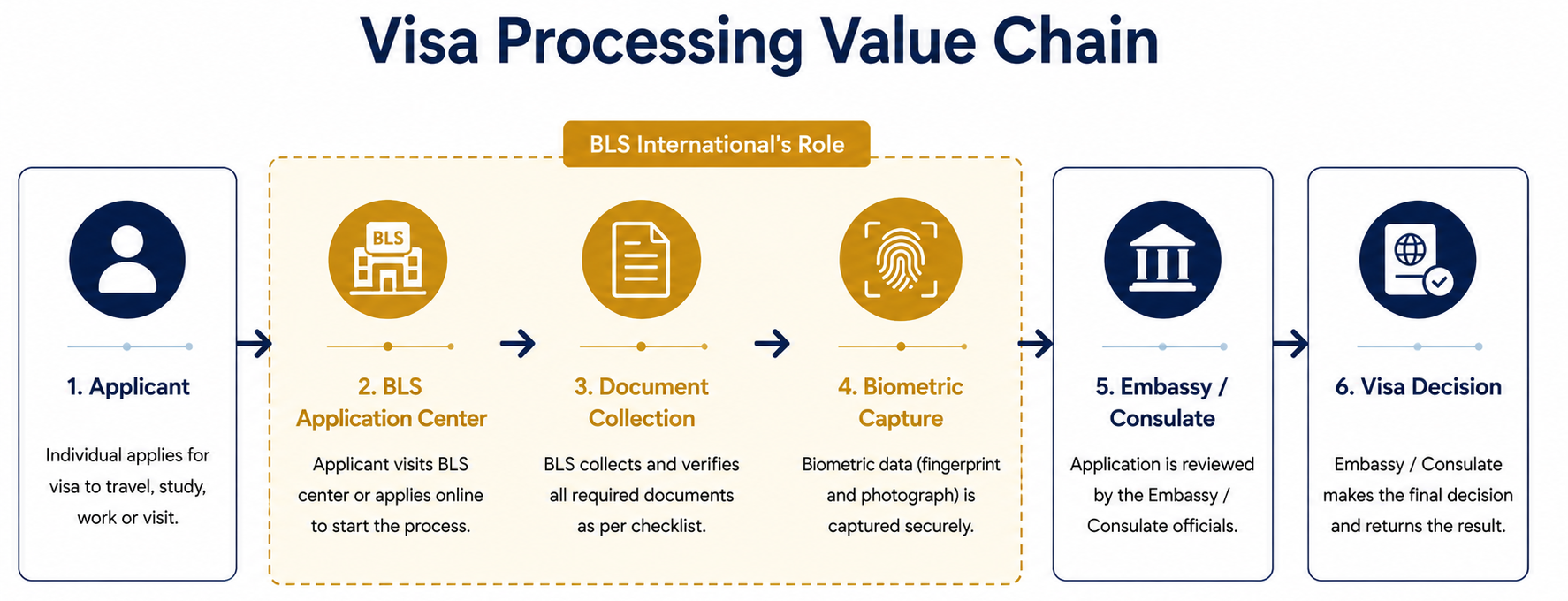
Key takeaway: BLS does generate revenue from visa approvals or rejections, it’s revenue comes from providing visa processing and administrative services.
Why Stricter Immigration Policies Increase Complexity?
When governments tighten immigration:
More supporting documents
Governments are increasingly requiring applicants to submit a broader range of supporting documents to strengthen eligibility assessments. These may include financial statements, employment records, proof of accommodation, educational certificates, travel histories, and sponsorship documents. The collection and management of this additional paperwork significantly increases the amount of information that must be reviewed and processed.
More verification checks
Immigration authorities are conducting more thorough verification of applicant information than ever before. Documents may be cross-checked against government databases, educational institutions, employers, financial records, or previous immigration histories. These additional verification requirements increase the time and resources needed to process applications accurately.
More biometrics
Biometric authentication has become a critical component of modern immigration systems. Many countries now require fingerprints, facial recognition scans, and digital photographs as part of the application process. These measures help improve identity verification and border security but also add another layer of operational complexity to visa processing.
More identity validation
Beyond standard documentation, governments are increasingly focused on confirming the authenticity of an applicant's identity. This may involve enhanced identity verification procedures, digital authentication systems, and additional checks designed to prevent impersonation or misuse of travel documents. As a result, the overall application process becomes more detailed and resource-intensive.
More fraud prevention
As immigration systems become more digitized and interconnected, governments are placing greater emphasis on detecting fraudulent applications. Advanced screening processes are being implemented to identify forged documents, identity theft, fake employment records, and other forms of immigration fraud. These safeguards increase the level of scrutiny applied to each application.
More compliance
Applicants are now expected to comply with a growing number of regulatory requirements throughout the immigration process. This may include additional declarations, disclosures, security-related documentation, interviews, or periodic reporting obligations. Managing these requirements creates additional administrative responsibilities for both governments and their outsourcing partners.
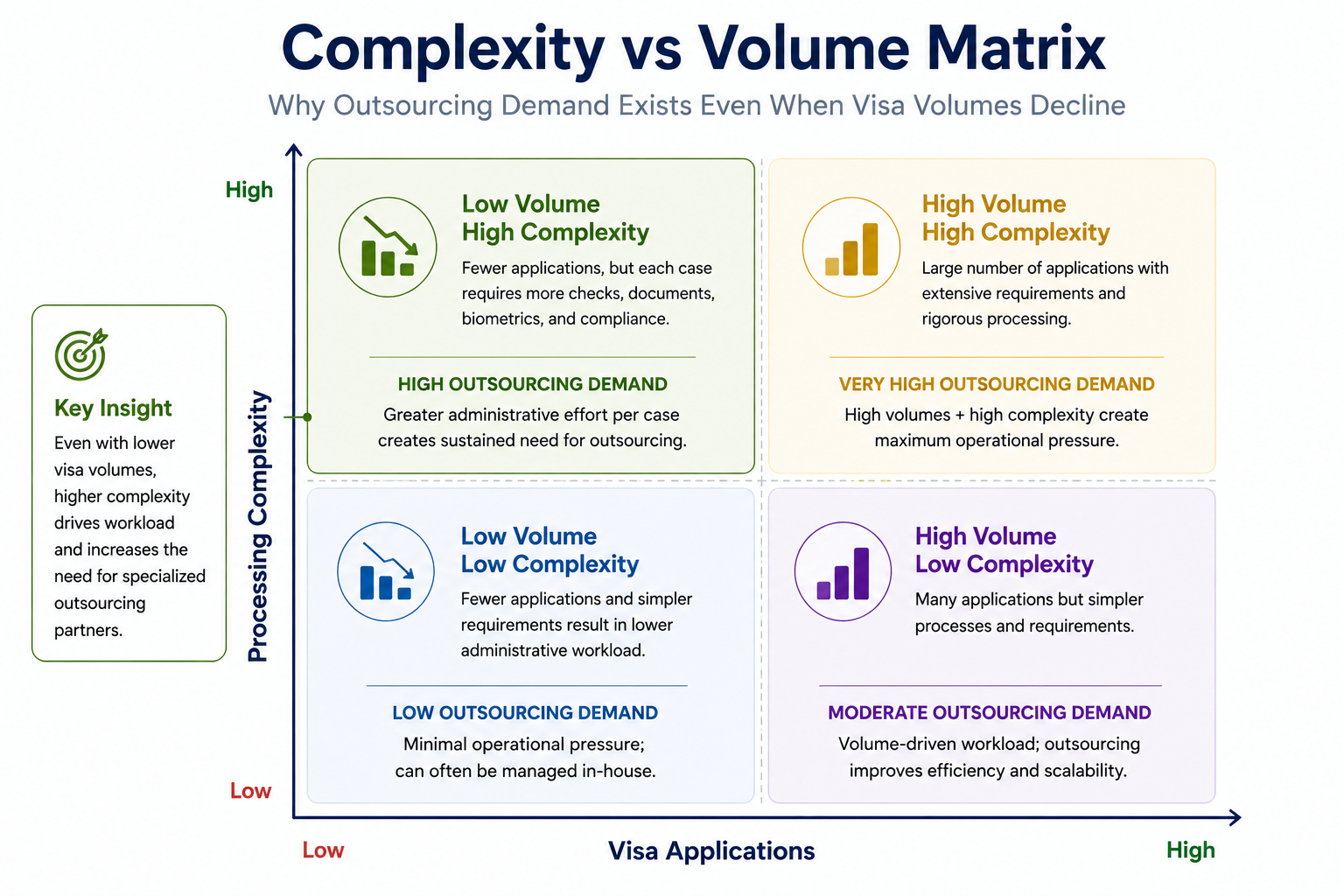
Key Insight - Immigration volume and immigration complexity are not the same thing. Even when the number of approvals or applications declines, stricter regulations can increase the administrative workload required to process each case.
Why Governments Prefer Outsourcing?
Governments have two options:
Option A - Build internal infrastructure
- Hire employees
If governments choose to manage visa and consular services themselves, they must invest heavily in physical and digital infrastructure. This includes establishing secure visa application centers, installing biometric collection systems, maintaining document storage facilities, and ensuring cybersecurity standards are met. Such infrastructure requires significant upfront investment and ongoing maintenance costs, making it both capital-intensive and time-consuming to develop.
- Build software
Modern visa processing relies heavily on digital systems for appointment scheduling, document management, application tracking, biometric integration, and communication with applicants. Developing and maintaining these platforms requires significant technological expertise and continuous investment. Governments must also ensure that these systems remain secure, scalable, and capable of handling millions of applications without disruptions.
- Manage operations
Running visa services is an ongoing operational challenge that extends beyond infrastructure and technology. Governments must oversee day-to-day activities such as application intake, customer support, biometric enrollment, passport logistics, data management, quality control, and regulatory compliance. Coordinating these activities across multiple locations can be complex and resource-intensive, especially during periods of high application volumes.
Option B - Outsource to specialists
- BLS
BLS International specializes in delivering visa, consular, and citizen services on behalf of governments and diplomatic missions. Rather than building and managing their own application centers, governments can leverage BLS's existing infrastructure, trained workforce, technology platforms, and operational expertise. This allows authorities to process applications more efficiently while reducing administrative costs and focusing their resources on core decision-making functions such as visa approvals, security assessments, and immigration policy.
- VFS Global
VFS Global operates a similar outsourcing model and is one of the largest providers of visa and consular services worldwide. The company manages extensive networks of visa application centers across numerous countries, handling tasks such as application collection, biometric enrollment, document management, and customer support. By partnering with organizations like VFS Global, governments gain access to established operational capabilities without having to invest heavily in infrastructure, staffing, and technology.
Could Stricter Immigration Policies benefit BLS International’s business?
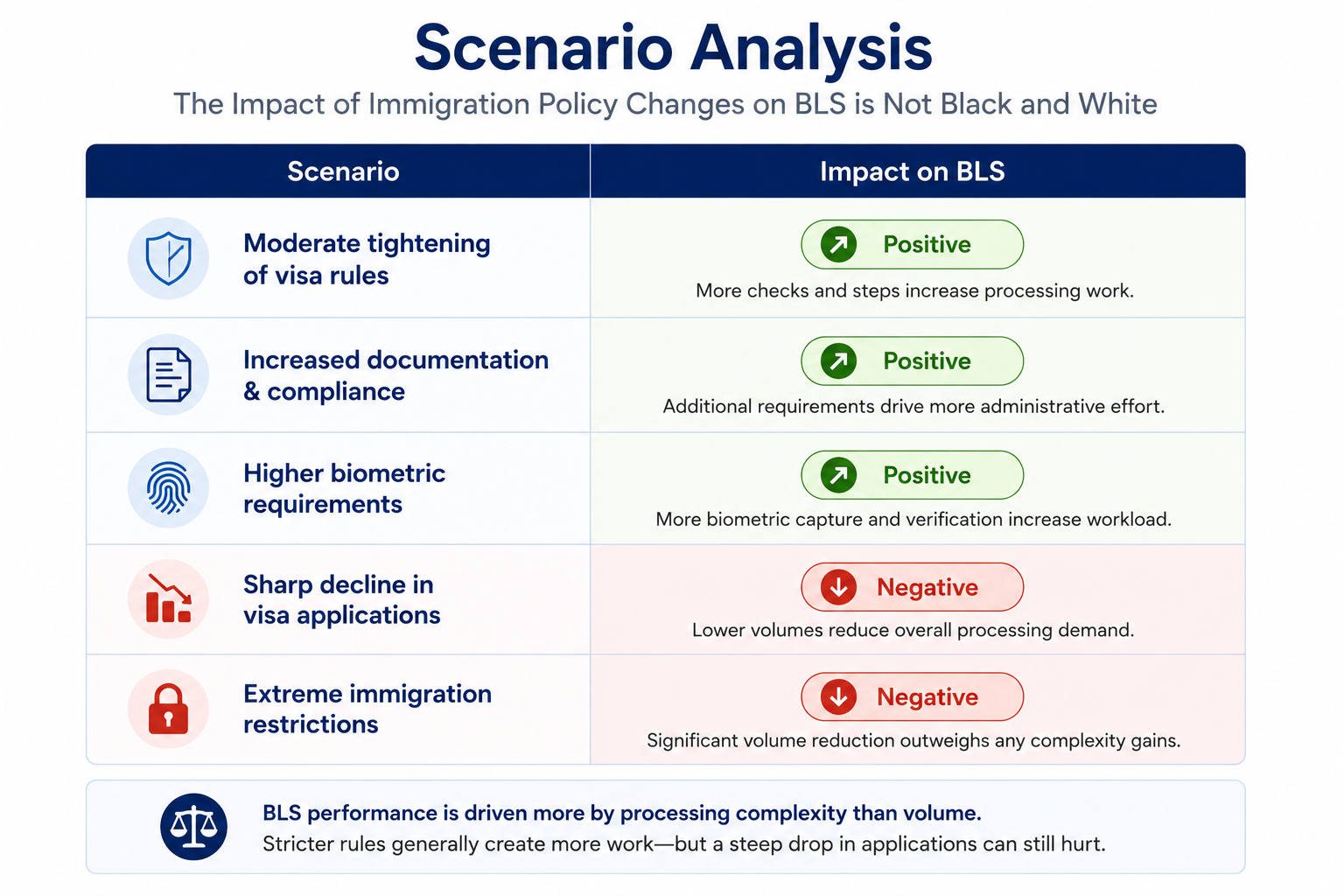
At first glance, stricter immigration policies appear negative for companies operating in the visa ecosystem. Tighter regulations can lead to lower approval rates and may discourage some applicants from applying altogether.
However, BLS International does not generate revenue from visa approvals. Its role is to manage and facilitate the visa application process on behalf of governments and diplomatic missions.
As immigration policies become stricter, governments typically introduce additional layers of scrutiny and verification. This increases the operational complexity of processing visa applications, potentially creating greater demand for outsourcing partners such as BLS International.
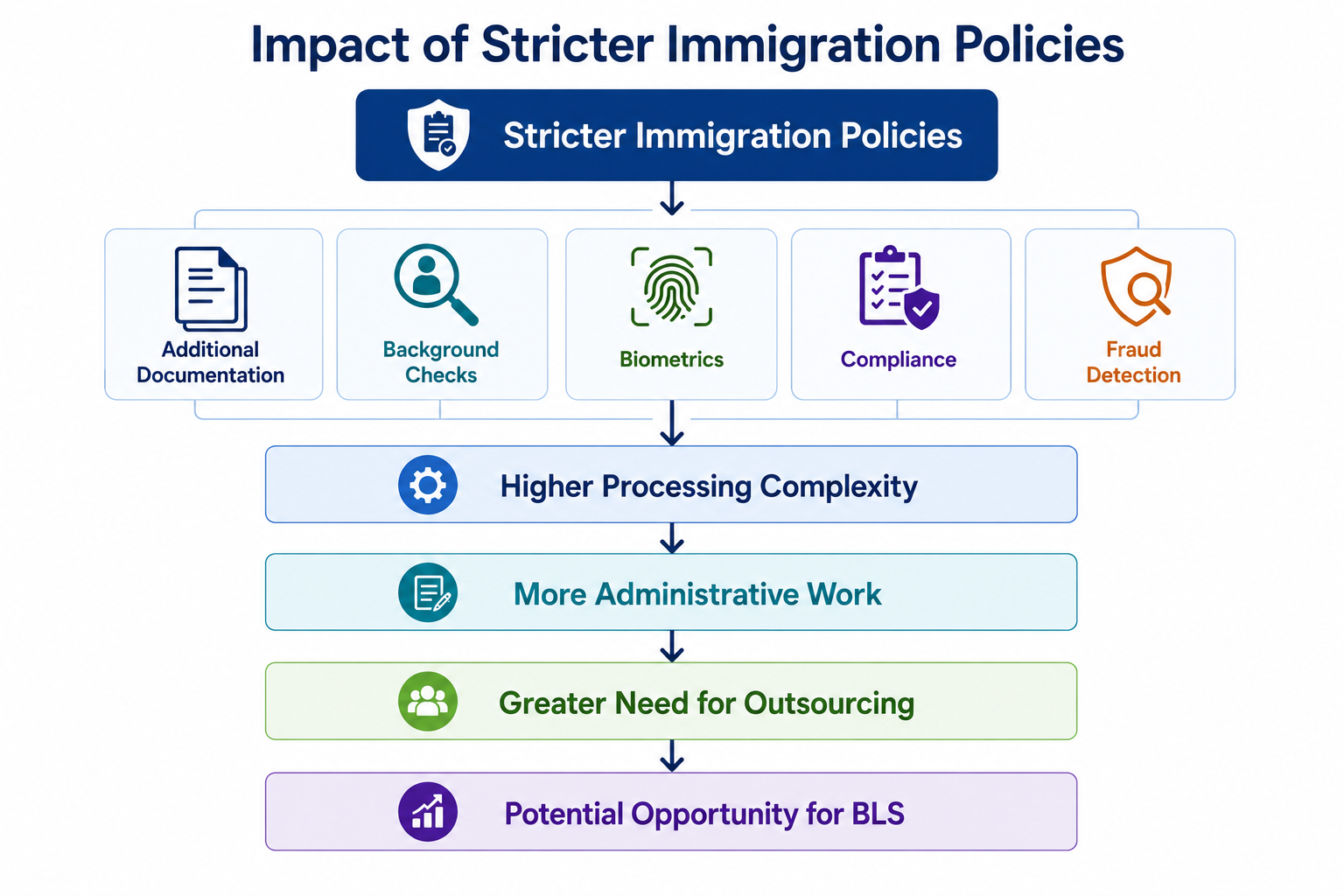
Some of the key changes that often accompany stricter immigration policies include:
Additional Documentation Requirements
Applicants may be required to submit more supporting documents such as financial statements, employment records, accommodation details, or travel histories. This increases the volume of paperwork that needs to be collected, reviewed, and processed.
More Detailed Background Verification
Governments may conduct deeper checks into an applicant's employment status, travel history, educational qualifications, or financial standing to assess eligibility and reduce risks.
Enhanced Biometric Checks
Many countries are expanding the use of biometric verification, including fingerprints, facial recognition, and identity authentication, to strengthen border security and reduce identity fraud.
Increased Compliance Procedures
Visa applicants may need to comply with additional regulatory requirements, declarations, interviews, or verification processes designed to ensure adherence to immigration policies.
Stronger Fraud Detection Mechanisms
Governments are increasingly investing in systems to identify forged documents, identity theft, and fraudulent applications, requiring more extensive screening and verification procedures.
Collectively, these measures increase the amount of work required to process each visa application.
For governments, building and managing this infrastructure internally can be expensive and operationally challenging. As a result, outsourcing providers like BLS International often play a critical role in handling the growing administrative burden.
This highlights an important distinction:
Visa volumes and visa processing complexity are not the same thing.
Even if the number of approved visas remains unchanged—or even declines slightly—the amount of work involved in processing each application may increase significantly.
For a company whose business model is built around facilitating applications, managing documentation, collecting biometrics, and supporting administrative workflows, rising complexity can create additional opportunities for service providers.
The Counterargument
A balanced analysis must also consider the downside.
If immigration policies become excessively restrictive, the total number of visa applications could decline meaningfully. Lower international travel, reduced student migration, and fewer work visa applications may eventually offset the benefits of increased processing complexity.
Therefore, stricter immigration policies should not automatically be viewed as a positive development for BLS International.
The key question is whether the increase in processing requirements is large enough to compensate for any decline in application volumes.
What Investors Should Watch?
To determine whether stricter immigration policies are helping or hurting BLS International, investors should monitor:
Visa application volumes
Visa application volumes remain one of the most important indicators for BLS International's core business. Since the company earns revenue by processing applications, a higher number of applicants generally translates into greater operational activity and revenue potential. Investors should monitor whether global travel, student mobility, tourism, and work-related migration trends are supporting application growth. While increasing processing complexity can benefit BLS, a prolonged decline in application volumes could eventually outweigh those benefits and limit revenue growth.
New contract wins
Government contracts form the foundation of BLS International's business model. Each new contract provides access to additional countries, visa programs, and applicant volumes, often generating recurring revenue over several years. New contract wins can also strengthen the company's market position and reduce dependence on a limited number of government clients. For investors, a consistent pipeline of contract wins demonstrates BLS's ability to compete effectively in the global visa outsourcing industry and sustain long-term growth.
Growth in visa processing revenue
Visa processing revenue provides a direct indication of the health of BLS International's core operations. Revenue growth may result from an increase in application volumes, expansion into new geographies, contract renewals, or higher-value services associated with more complex visa requirements. Tracking this metric helps investors understand whether the company is successfully converting industry trends and operational scale into financial growth. Consistent revenue growth also signals strong demand for the company's services.
Number of visa application centers
The size of BLS International's visa application center network reflects its operational footprint and global reach. A growing network indicates that the company is expanding into new markets and strengthening its relationships with governments and diplomatic missions. More centers also improve accessibility for applicants and increase the company's ability to handle larger application volumes. Investors should view network expansion as a sign of business scalability and increasing relevance within the visa outsourcing ecosystem.
Government outsourcing trends
The long-term growth potential of BLS International depends heavily on governments' willingness to outsource administrative functions. As immigration systems become more complex and resource-intensive, governments may increasingly rely on specialized service providers rather than managing these operations internally. Investors should monitor whether more countries are adopting outsourcing models, renewing existing partnerships, or expanding the scope of outsourced services. A broader shift toward outsourcing can significantly increase the addressable market available to BLS.
Growth in biometric and verification services
Biometric enrollment and identity verification are becoming increasingly important components of modern immigration systems. Governments are placing greater emphasis on security, fraud prevention, and identity authentication, driving demand for services such as fingerprint collection, facial recognition, and document verification. For BLS International, growth in these services can create additional revenue opportunities beyond traditional application processing. It may also strengthen the company's strategic importance to government clients by embedding it deeper into the visa and border security process.
▶️ Watch our video: BLS International: Complete Business & Stock Analysis -
Conclusion
While stricter immigration policies are often viewed as a headwind for businesses linked to international mobility, the impact on BLS International may be more nuanced. Since the company earns revenue from processing and administrative services rather than visa approvals themselves, increasing regulatory requirements can enhance the value of the services it provides.
As governments place greater emphasis on documentation, verification, biometrics, and compliance, the complexity of visa processing is likely to increase. This can create additional demand for specialized outsourcing partners such as BLS International.
However, the outcome is not entirely one-sided. If immigration policies become excessively restrictive and significantly reduce visa application volumes, the benefits of higher processing complexity could be offset. Ultimately, the long-term impact will depend on whether the increase in administrative workload outweighs any decline in application numbers.
For investors, the key takeaway is simple: BLS International may not just be a beneficiary of global mobility, but also of the growing complexity surrounding it. This makes immigration policy an important factor to monitor when evaluating the company's future growth prospects.
While stricter immigration policies are often perceived as a headwind for businesses linked to international mobility, the reality may be more nuanced.
Since BLS International earns revenue from processing and administrative services rather than visa approvals themselves, increasing regulatory complexity can enhance the value of the services it provides.
Ultimately, the impact will depend on the balance between two forces: rising processing complexity and overall visa application volumes. If complexity grows faster than volumes decline, stricter immigration policies could become an unexpected tailwind for BLS International.