Akash Missile: The Defence Export Opportunity and Stocks That Could Benefit
Most investors view Akash as a missile. The more important reality is that Akash is an entire air-defence ecosystem.
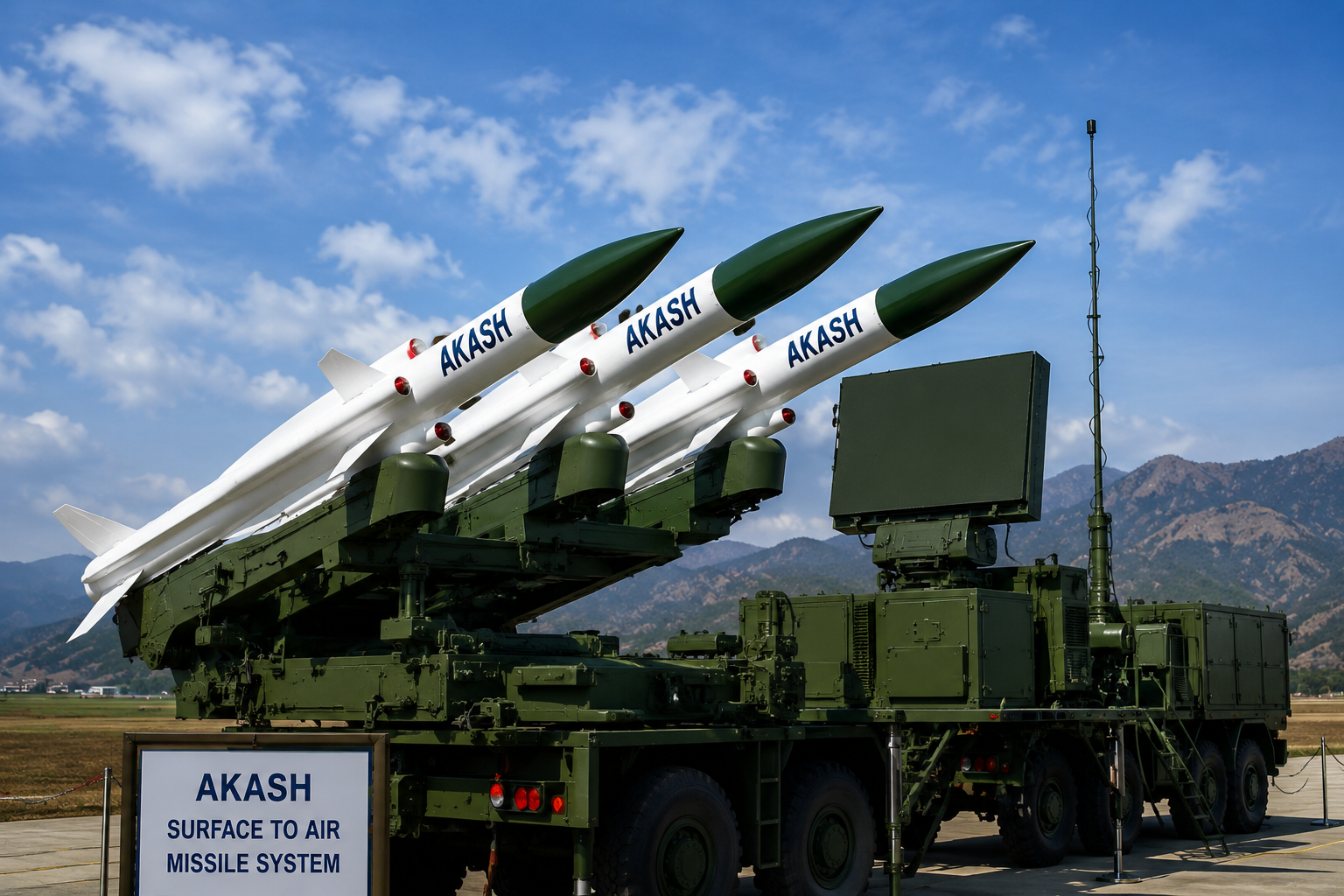
A complete Akash system includes missiles, radars, launchers, command-and-control systems, electronics, vehicles, software, maintenance infrastructure, and long-term support services. The missile is only one component of a much larger system.
This distinction matters because countries do not simply buy missiles. They buy a complete air-defence capability. As a result, an Akash order can benefit multiple companies across the defence supply chain.
If global demand for air-defence systems continues to grow, Akash could become one of India's most important defence export products. The opportunity may therefore extend far beyond missile production and into the broader defence manufacturing ecosystem.
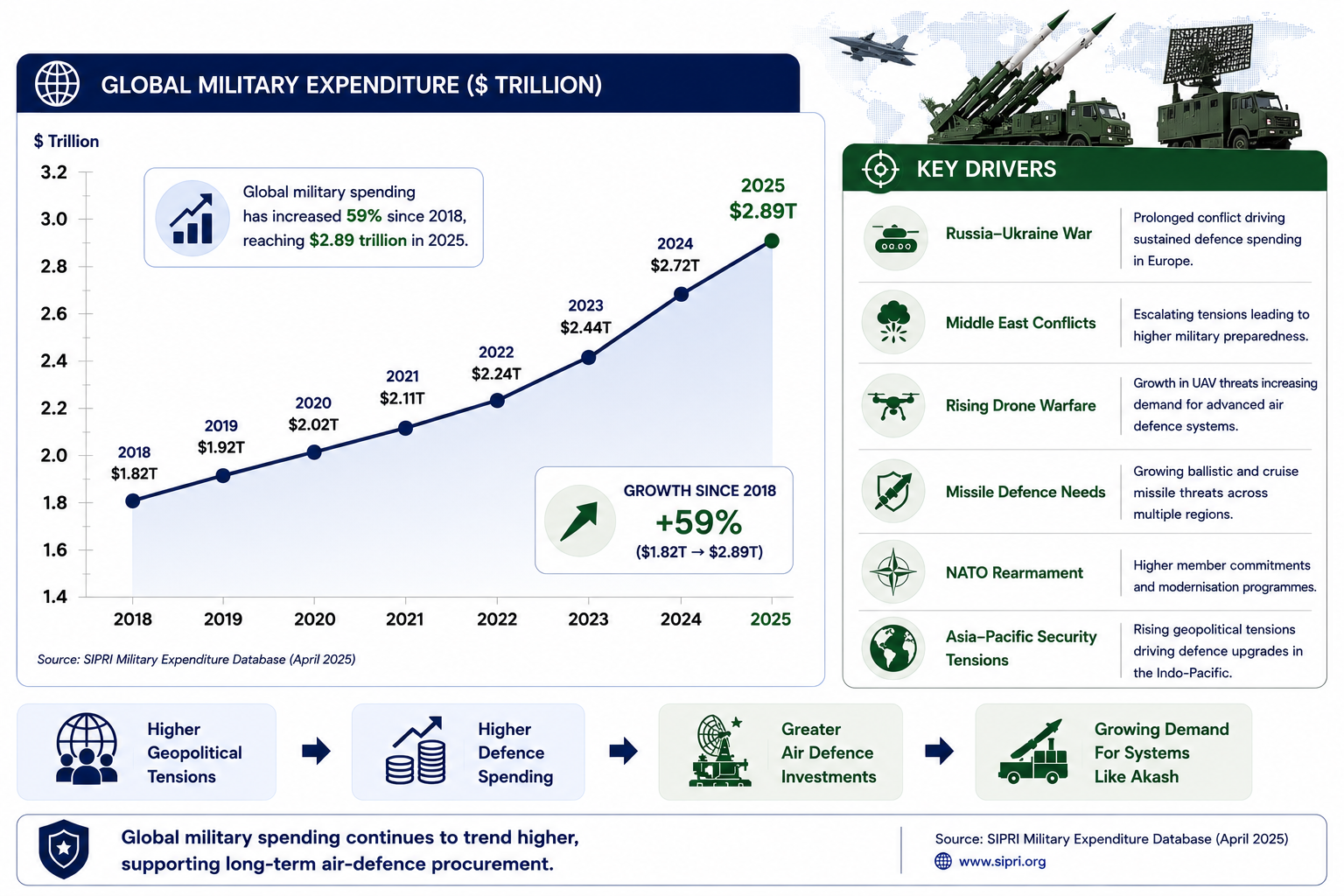
Why Air Defence Is Suddenly Becoming Critical?
Over the last decade, warfare has changed dramatically.
The Russia–Ukraine war showed that low-cost drones and missiles can threaten expensive military assets. Tanks, aircraft, ships, and critical infrastructure are now vulnerable to relatively cheap aerial attacks.
Recent events in the Middle East have reinforced the same lesson. The conflict involving Israel and Iran, along with U.S. missile defence operations in the region, highlighted the growing importance of air-defence systems. Countries witnessed how large numbers of drones, cruise missiles, and ballistic missiles can be launched in a short period, creating significant demand for interception capabilities.
Even non-state actors are increasingly using drones and other advanced aerial weapons. Technologies that were once limited to major militaries are becoming more widely available.
As a result, governments around the world are increasing investments in:
- Surface-to-air missiles
- Counter-drone systems
- Integrated air-defence networks
- Radar systems
- Electronic warfare capabilities
The focus is no longer just on offensive weapons. Protecting airspace has become an equally important priority.
This is creating what many analysts describe as an air-defence spending cycle rather than a temporary procurement trend. The lessons from Ukraine, the Middle East, and the Israel-Iran conflict suggest that demand for air-defence systems could remain strong for years to come.
Why Akash Exists?
Many investors do not fully understand why India spent decades developing the Akash air-defence system.
Historically, India relied heavily on imported air-defence platforms from:
- Russian systems
- Israeli systems
- Western systems
The challenge was not simply the cost of these imports. The larger issue was strategic dependence.
Imported defence systems can create exposure to:
- Supply chain disruptions
- Geopolitical pressure
- Upgrade restrictions
- Spare-part dependence
During periods of conflict or diplomatic tensions, access to critical equipment, upgrades, and maintenance support can become uncertain. This creates risks that go beyond the initial purchase price.
Akash emerged from India's effort to reduce this dependence and build an indigenous air-defence capability. The system was developed by the DRDO and later industrialized through a large network of public and private-sector manufacturers.
This is why Akash should not be viewed as just another missile program. It represents the development of domestic expertise across missiles, radars, electronics, command systems, software, and defence manufacturing.
The significance of Akash is therefore not only military. It is also industrial. Every Akash deployment helps strengthen India's domestic defence ecosystem, supports local manufacturing, and advances the country's long-term goal of defence self-reliance.
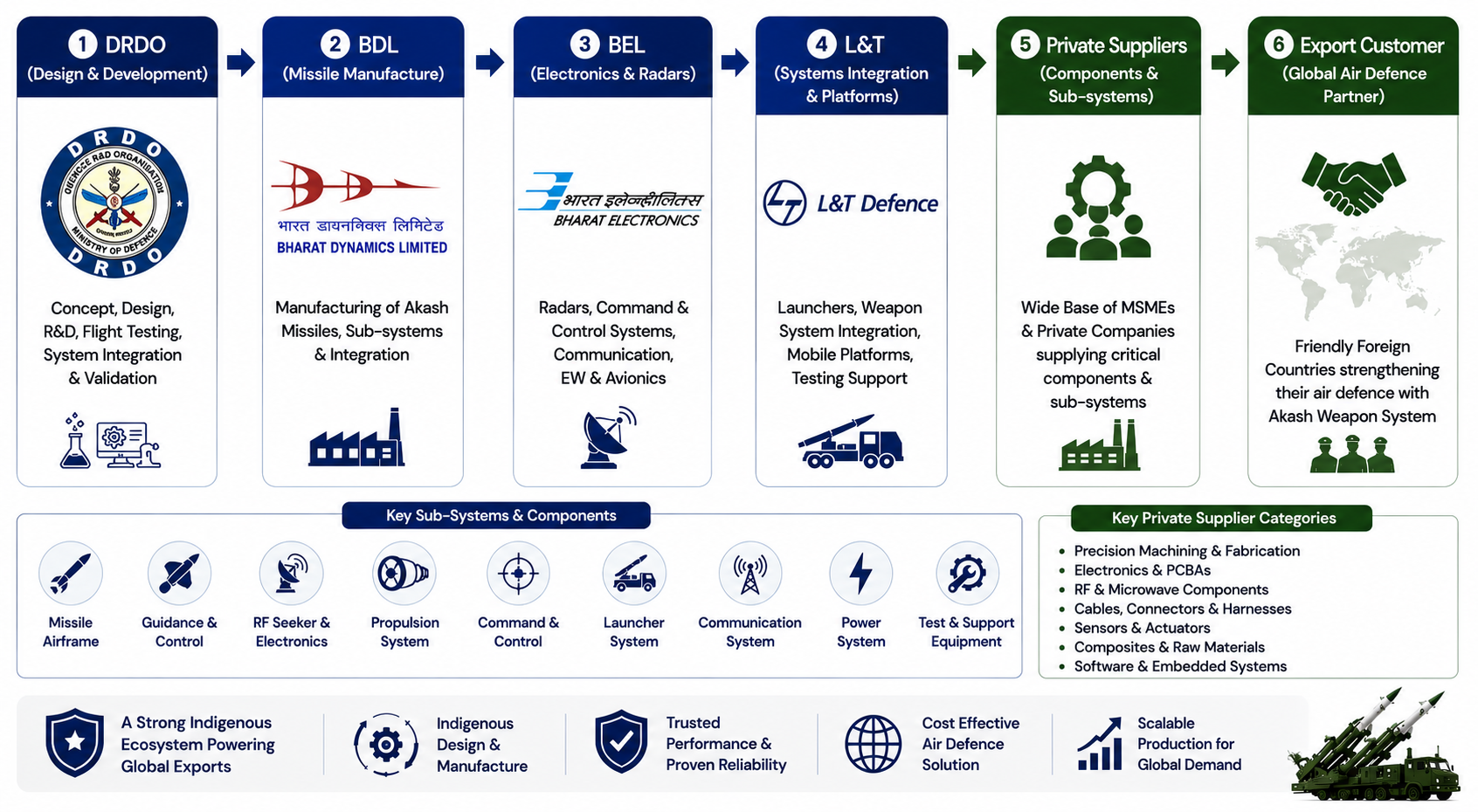
Understanding The Akash Ecosystem
This is where many discussions about Akash oversimplify the opportunity.
An air-defence battery is not just a missile. It is a complete system made up of multiple components that must work together seamlessly.
A typical Akash deployment includes:
Missile Interceptors
Primarily produced by Bharat Dynamics Limited. These are the actual missiles responsible for intercepting and destroying incoming aerial threats.
Radars and Command Systems
Primarily produced by Bharat Electronics Limited. These systems detect, track, identify, and guide missiles toward targets while coordinating the overall air-defence operation.
Launch Systems
Supported by Larsen & Toubro and Tata Advanced Systems. These mobile launch platforms deploy and fire the missiles in operational environments.
Communication Networks, Electronics, and Mobility Platforms
Supplied through a broader defence manufacturing ecosystem. These components enable secure communication, battlefield connectivity, transportation, and system integration.
This distinction is important because every Akash deployment generates demand across multiple segments of the defence industry. Countries are not simply buying missiles, they are acquiring an integrated air-defence capability consisting of radars, launchers, command systems, vehicles, and long-term support infrastructure.
For investors, the opportunity may therefore extend beyond missile production and into the wider defence supply chain that enables the entire Akash ecosystem.
The Export Story Is Bigger Than Most Investors Realize
This is arguably the most important part of the investment thesis.
For decades, India was primarily known as a defence importer. Today, that picture is changing rapidly as the country pushes to become a major defence manufacturing and export hub.
India's defence exports reached approximately ₹23,622 crore in FY25 and then surged to a record ₹38,424 crore in FY26, highlighting the accelerating global acceptance of Indian defence products.
This matters because defence exports can create several benefits:
- Higher Production Volumes – Larger export orders increase manufacturing scale and improve capacity utilization.
- Larger Order Books – Export contracts can provide long-term revenue visibility for defence companies.
- Better Manufacturing Economics – Higher volumes help spread fixed costs across more units, potentially improving profitability.
- International Credibility – Export success can strengthen confidence among other potential buyers.
The key insight is that the first export customer is often the most difficult to win. Once a system is successfully exported, it gains credibility in the global market.
This can make future export opportunities easier to pursue and potentially accelerate adoption over time.
Why Akash Could Be At The Center Of India's Defence Export Push?
Many countries need air-defence systems, but not every country can afford premium Western platforms.
Systems such as Patriot and SAMP/T offer advanced capabilities, but they are also expensive to acquire, operate, maintain, and replenish during conflicts. For many emerging economies, these costs can be difficult to sustain.
This creates a large gap in the market:
Premium Systems
- High capability with advanced interception, tracking, and networked defence features suitable for sophisticated military requirements.
- Very expensive to acquire, maintain, and operate throughout the system's lifecycle.
Low-End Systems
- More affordable and easier to procure for countries with limited defence budgets.
- Often provide limited range, lower engagement capability, and fewer advanced features.
Mid-Tier Systems
- Designed to offer a practical balance between operational capability and overall affordability.
- May provide sufficient performance for many countries without requiring premium-level defence spending.
This is where Akash potentially fits.
India is effectively positioning Akash around four key advantages:
Capability
Offers a credible air-defence solution capable of engaging multiple aerial threats while supporting broader air-defence operations.
Cost
Potentially delivers meaningful defensive capability at a lower acquisition and lifecycle cost than many premium systems.
Sovereign Support
Supported by India's defence ecosystem, manufacturing base, and long-term commitment to indigenous defence production.
Political Neutrality
May appeal to countries seeking defence suppliers outside traditional Western, Russian, or Chinese alignments.
For many emerging economies, the objective is not necessarily to purchase the most advanced system available. Instead, they often seek a solution that provides adequate capability, reliable support, and affordable long-term economics.
If Akash can successfully address these requirements, it could establish a meaningful position within the growing global market for mid-tier air-defence systems.
Akash-NG Changes The Story
This deserves a separate discussion because many investors are still analyzing the original Akash system.
The future opportunity may depend far more on Akash-NG, the next-generation version currently moving closer to large-scale induction following successful user evaluation trials.
Akash-NG is not simply an incremental upgrade. It is designed to address many of the evolving requirements of modern air warfare, particularly the growing threat from drones, cruise missiles, and other fast-moving aerial targets.
Expected advantages include:
Longer Engagement Range
A greater interception range can allow operators to engage threats earlier and defend larger areas.
Canisterized Storage
Missiles remain sealed and protected inside canisters, improving storage life, logistics efficiency, and operational readiness.
Improved Survivability
Enhanced mobility and modern system architecture can help reduce vulnerability in combat environments.
Better Drone Interception Capability
Designed with modern aerial threats in mind, including drones and other low-cost attack platforms.
Faster Deployment
Reduced deployment time can improve responsiveness during rapidly changing battlefield conditions.
From an investment perspective, the most important point is that Akash-NG may significantly improve the competitiveness of India's air-defence offering. A more capable system can potentially appeal to a larger group of international customers and allow India to compete in a broader segment of the global air-defence market.
In other words, the long-term export opportunity may not be determined by the original Akash alone. It may depend on how successfully Akash-NG expands the system's capabilities and addressable market over the coming decade.
Which Stocks Could Benefit?
Tier 1 Direct Beneficiaries
1. Bharat Dynamics Limited (BDL)
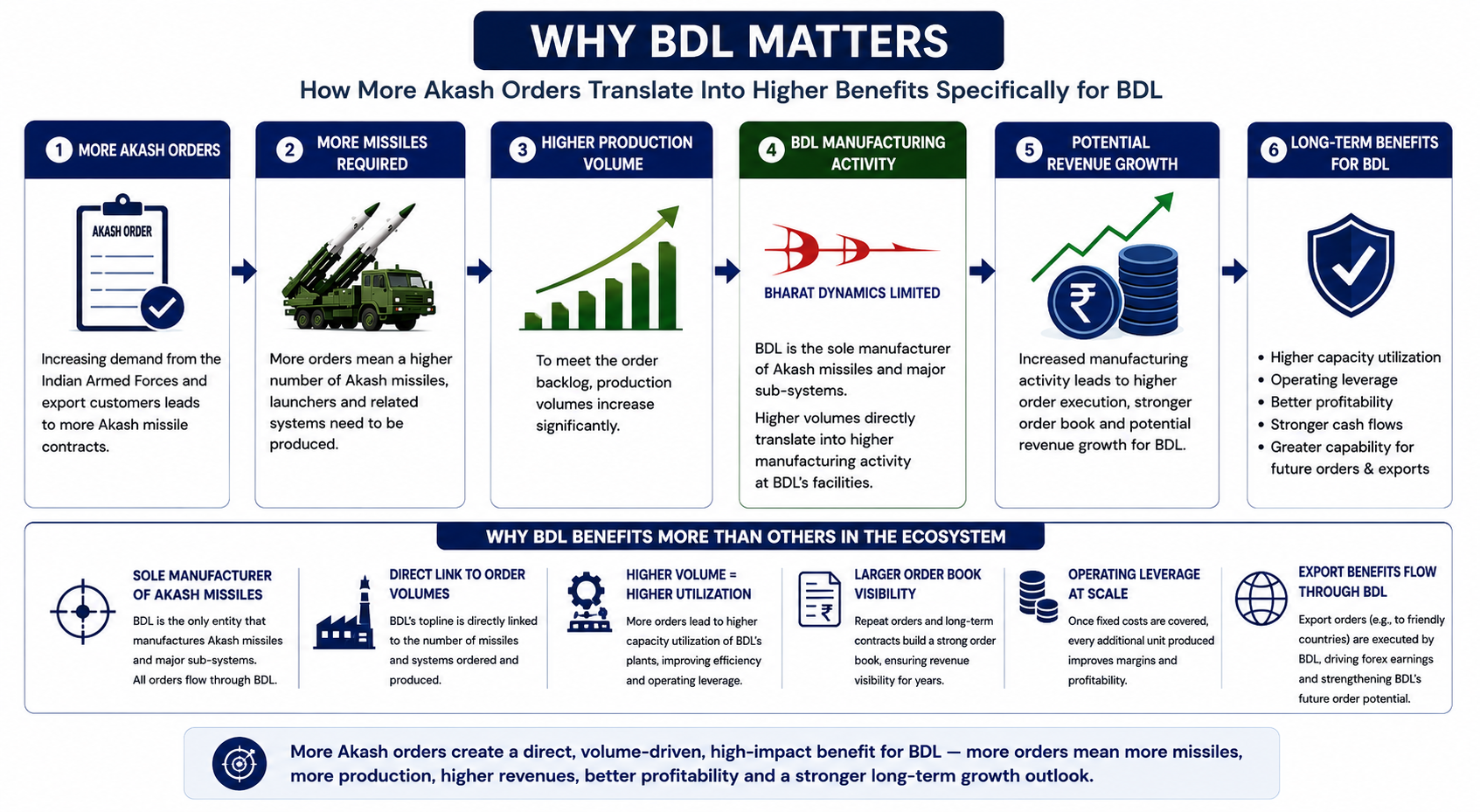
When investors think about Akash, Bharat Dynamics Limited is often the first company that comes to mind. That is because BDL occupies perhaps the most direct position in the Akash value chain. The company is responsible for manufacturing the missile itself, making it one of the clearest beneficiaries of increasing deployment or export demand.Historically, this relationship has already been visible through actual defence contracts.
For example, BDL signed a contract worth approximately ₹499 crore with the Ministry of Defence for supplying Akash missiles to the Indian Air Force.
While the contract value itself is noteworthy, the broader implication is more important. Every additional Akash regiment deployed by India or exported abroad requires missile production. That production requirement directly increases BDL's relevance. This is where the export story becomes particularly interesting.
According to Reuters, Armenia's Akash acquisition was valued at approximately $230 million, while the Philippines has reportedly been evaluating a deal worth over $200 million.
For investors, these developments raise an important question:
What happens if Akash evolves from a domestic defence program into a recurring export platform?
A successful export platform often generates significantly more economic value than a single contract.
Once a country adopts a defence system, future opportunities can include:
- Additional missile purchases
- Spare missile inventories
- System upgrades
- Replacement orders
- Long-term technical support
- Expanded deployment across additional military units
As a result, a customer acquired today may continue generating revenue opportunities for years.
Why BDL Could Be The Most Direct Beneficiary?
- Among listed defence companies, BDL likely has thie hghest correlation to increasing Akash deployment.
- If Akash exports expand from one or two countries to multiple international customers, missile production volumes would likely need to increase accordingly.
- This makes BDL one of the clearest operational beneficiaries of any future Akash export success.
2. Bharat Electronics Limited (BEL)
While BDL manufactures the missile, Bharat Electronics Limited may be equally important to the Akash ecosystem.
In fact, many investors arguably underestimate BEL's role.
The reason is simple:
Modern air-defence systems are increasingly electronics businesses rather than purely missile businesses.
A missile cannot engage a target unless the system can first:
- Detect the target
- Track the target
- Identify the threat
- Calculate an interception solution
- Coordinate the launch sequence
This is where BEL enters the picture. The company contributes several critical components including:
- Radars
- Fire-control systems
- Command-and-control systems
- Communication networks
- System integration
Without these capabilities, the missile itself has little practical utility. The importance of BEL's role can also be seen through actual contracts.
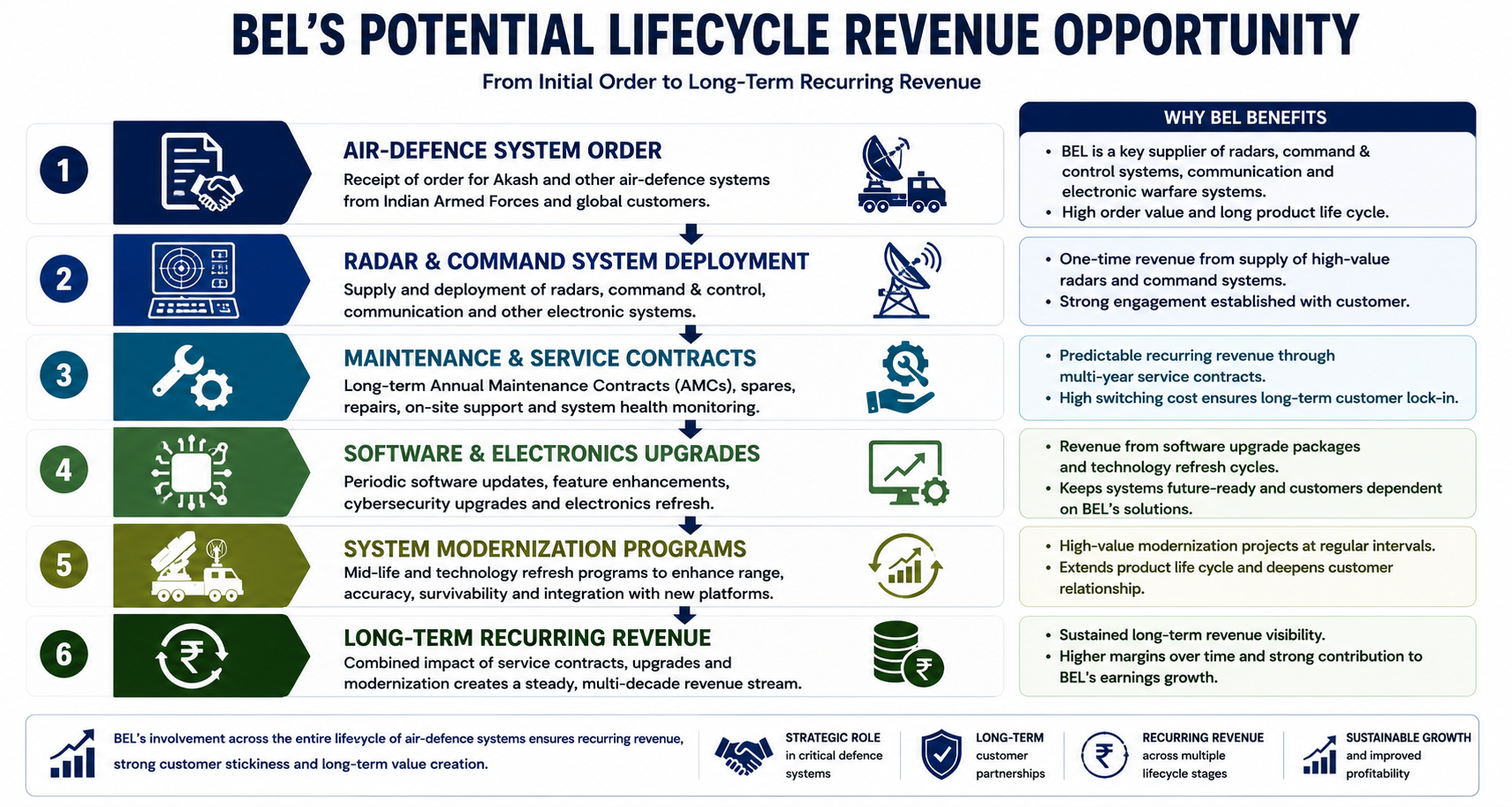
In April 2025, BEL secured a contract worth approximately ₹593 crore from the Indian Air Force for maintenance of the Akash Missile System.
This contract is particularly interesting because it highlights a part of the business that investors often overlook. Many people focus on the initial sale. However, complex defence systems often remain operational for decades.
Throughout that period they require:
- Software upgrades
- Radar calibration
- Maintenance services
- Spare components
- Technical support
- System modernization
These activities can create recurring revenue streams long after the original deployment.
Why BEL's Opportunity Could Be Larger Than Investors Assume?
- Radars and command systems remain operational for decades, creating upgrade, maintenance, and modernization opportunities beyond initial procurement.
- Modern air-defence systems increasingly depend on electronics and software, making these components more valuable over time.
- Emerging threats such as drones and cruise missiles require advanced sensing and tracking capabilities, strengthening demand for BEL's solutions.
- Lifecycle support, upgrades, and system integration can generate recurring revenue, extending opportunities far beyond missile sales.
Tier 2: Secondary Beneficiaries
While BDL and BEL sit closest to the center of the Akash ecosystem, several other companies could benefit indirectly as production volumes increase and India's defence manufacturing base expands.
Their exposure is generally less direct, but they remain part of the broader defence value chain that supports indigenous defence programs.
1. Larsen & Toubro
L&T has participated in multiple defence programs involving launch systems, mobility platforms, and engineering-intensive defence infrastructure. Its connection to Akash is not as direct as BDL or BEL, but it remains relevant because every air-defence system requires substantial physical infrastructure beyond the missile itself.
Potential exposure areas include:
- Launcher systems that provide the physical platform for missile deployment.
- Mobility platforms that enable rapid movement and operational flexibility.
- Mechanical assemblies and structures used across defence platforms.
- System integration capabilities that help combine multiple subsystems into a functioning air-defence solution.
As Akash production scales, demand for these supporting systems may also increase. For this reason, L&T should be viewed as an indirect beneficiary rather than a pure-play Akash investment.
2. Data Patterns (India) Limited
Data Patterns represents a different investment angle. Its relevance comes from the growing importance of electronics within modern military systems.
Today's air-defence platforms rely heavily on:
- Embedded electronics that control critical system functions.
- Signal processing technologies used for detection and tracking.
- Surveillance and sensing systems that improve battlefield awareness.
- Communication technologies that connect multiple defence assets.
As India's indigenous defence ecosystem expands, demand for advanced electronics may increase across a wide range of programs. Therefore, the investment case for Data Patterns is tied more closely to defence-electronics growth than to Akash alone.
3. Paras Defence and Space Technologies
Paras Defence operates in several technology-intensive segments that are becoming increasingly important in modern warfare.
Key areas include:
- Defence optics used in targeting and surveillance applications.
- Electro-optical systems that support threat detection and tracking.
- Imaging technologies used across military platforms.
- Advanced sensors that improve situational awareness.
While its direct exposure to Akash may be limited, the company participates in technologies that are increasingly critical to next-generation defence systems. Its opportunity therefore lies within broader defence modernization trends rather than Akash production specifically.
4. Solar Industries India Limited
Solar Industries represents another example of how India's defence manufacturing ecosystem is expanding beyond traditional players.
The company has gradually increased its presence in defence manufacturing and ammunition-related segments while leveraging its expertise in industrial explosives.
Potential relevance comes from:
- Growing participation in defence manufacturing programs.
- Expansion into military-grade products and systems.
- Exposure to rising domestic defence spending and exports.
- Participation in India's broader defence-indigenization strategy.
Although Solar Industries is not a primary Akash supplier, it reflects a wider theme: if India's defence production and exports continue to grow, ecosystem participants across multiple categories could benefit.
Key Takeaway
Investors should think of Akash as a platform rather than a single product. BDL and BEL are the most direct beneficiaries, but a successful Akash export story could create demand across a much wider network of defence manufacturers, electronics suppliers, engineering companies, and technology providers. The broader the Akash ecosystem becomes, the larger the potential opportunity for India's defence supply chain.
The Scenario Most Investors Are Ignoring
Most discussions surrounding Akash focus on a simple question:
Will exports increase?
A potentially more important question is:
What happens if Akash becomes India's first globally successful air-defence export platform?
The implications could extend far beyond a single missile program.
Successful defence exports often create a credibility effect. When a country successfully exports and supports a complex defence system, it demonstrates capabilities that go well beyond manufacturing. Potential buyers gain confidence in the country's technology, production capacity, maintenance ecosystem, and long-term commitment to defence support.
As confidence grows, future export opportunities can become easier to pursue because customers have a real-world reference point rather than just technical specifications and marketing material.
Countries evaluating a defence system often look for evidence of:
- Product Quality – Has the system been successfully deployed and operated?
- Manufacturing Capability – Can the supplier deliver large orders on time?
- Support Infrastructure – Are maintenance, training, and spare parts readily available?
- Upgrade Availability – Will the system remain relevant as threats evolve?
- Long-Term Reliability – Can the supplier support the platform for decades?
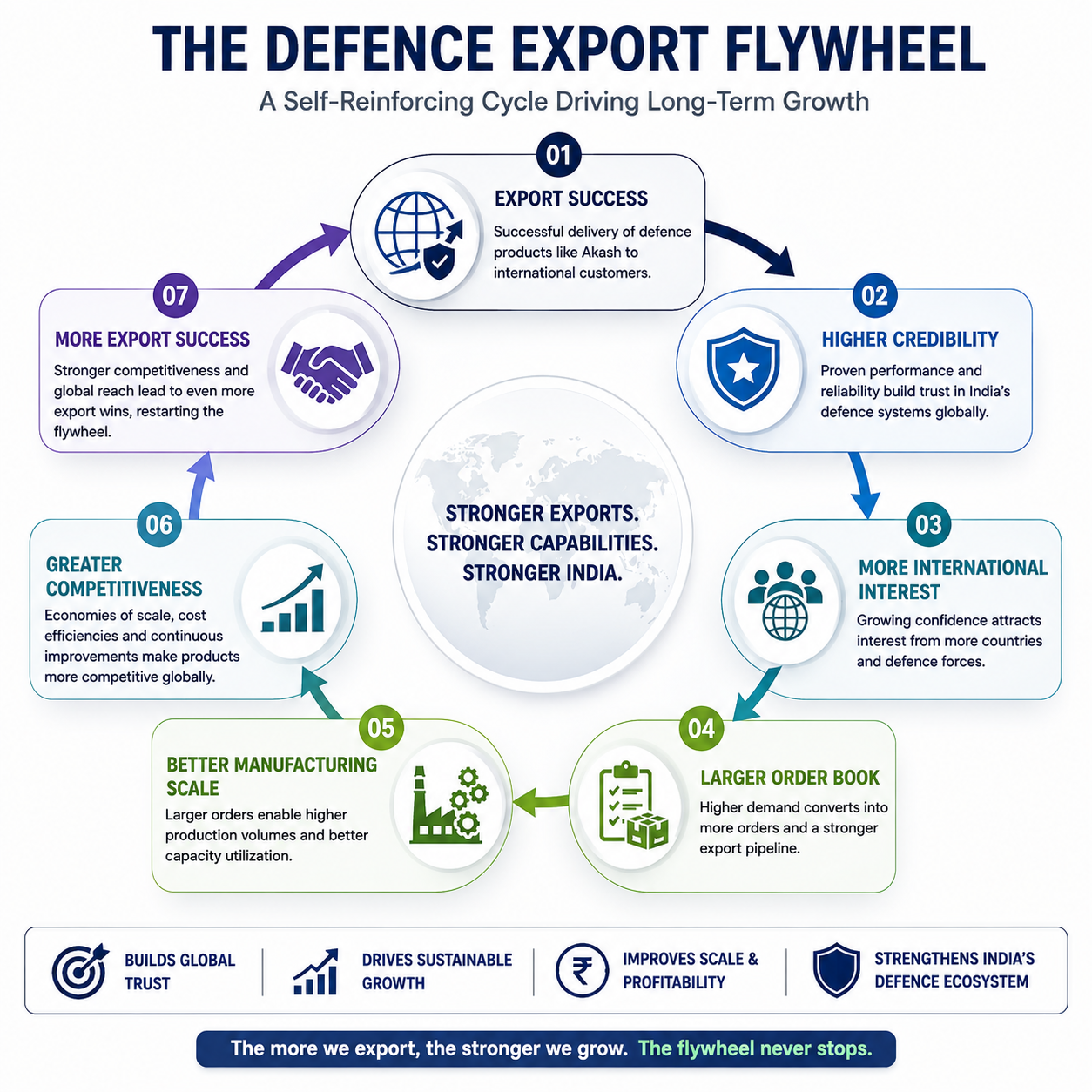
For investors, this is the scenario worth watching. The opportunity may not simply be a few additional export orders. If Akash establishes itself in international markets, it could strengthen the credibility of India's broader defence industry and potentially create opportunities for multiple future defence platforms.
How Big Could The Opportunity Become?
The exact size of the Akash export opportunity remains uncertain. However, investors can think about the potential upside through different adoption scenarios.
Scenario 1
2–3 Export Customers
Result:
Primarily benefits BDL and BEL through incremental orders.
At this stage, the impact is likely concentrated among the companies most directly involved in missile production, radars, and command systems. The opportunity is meaningful but remains largely tied to individual export contracts.
Scenario 2
5–10 Export Customers
Result:
Meaningful scaling of production.
As export adoption broadens, manufacturing volumes could increase substantially. Larger production runs may improve capacity utilization and strengthen order visibility across the ecosystem.
Potential benefits may begin extending beyond BDL and BEL to suppliers involved in launchers, electronics, mobility platforms, components, and system integration.
Scenario 3
10+ Export Customers
Result:
Akash potentially becomes one of India's flagship defence export platforms.
At this stage, the opportunity becomes much larger than individual export orders. A broad international customer base could strengthen India's credibility as a defence exporter and create a self-reinforcing growth cycle.
Higher production volumes, stronger supply chains, and greater manufacturing scale could begin influencing the economics of the entire defence ecosystem. In this scenario, Akash evolves from a successful missile program into a platform that supports the growth of India's broader defence industry.
Key Variables Investors Should Monitor
Rather than reacting to individual headlines, investors may benefit more from tracking the underlying drivers that could determine whether the Akash opportunity ultimately becomes large or remains limited.
Bullish Indicators
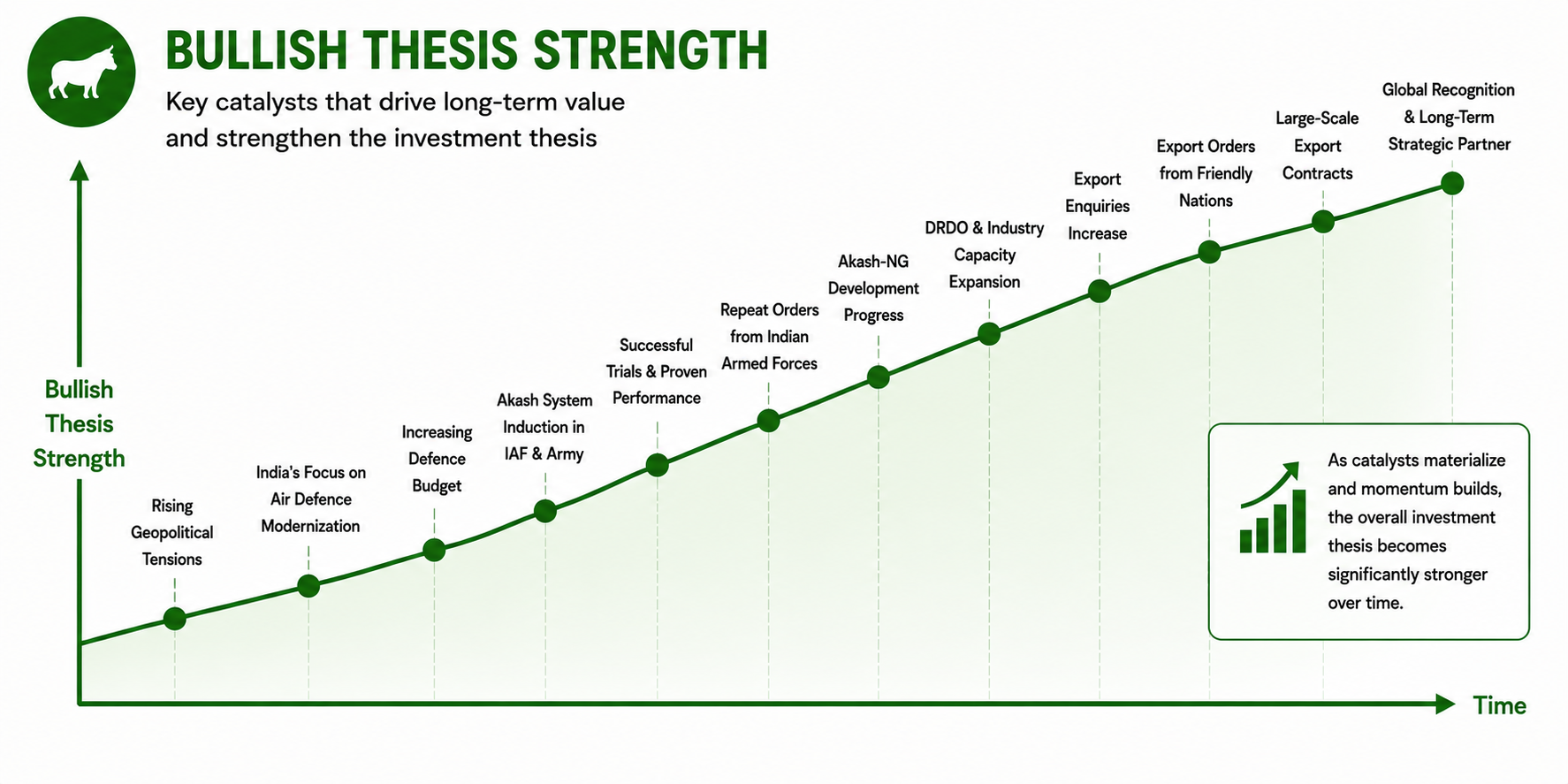
- New Export Contracts – The strongest signal that international demand for Akash is translating into actual orders rather than discussions.
- Repeat Orders From Existing Buyers – Often more important than the first order because they indicate customer satisfaction and operational confidence.
- Akash-NG Induction – Successful induction could improve the system's competitiveness and expand its potential export market.
- Export Approvals – Government approvals are often a necessary step before export opportunities can convert into contracts.
- Defence Export Growth – Rising defence exports can indicate improving global acceptance of Indian defence products.
- Increasing Order Books At BDL And BEL – Larger order books may provide visibility into future revenue growth and production activity.
- Manufacturing Capacity Expansion – Capacity additions can signal management's confidence in future demand and production requirements.
Risks
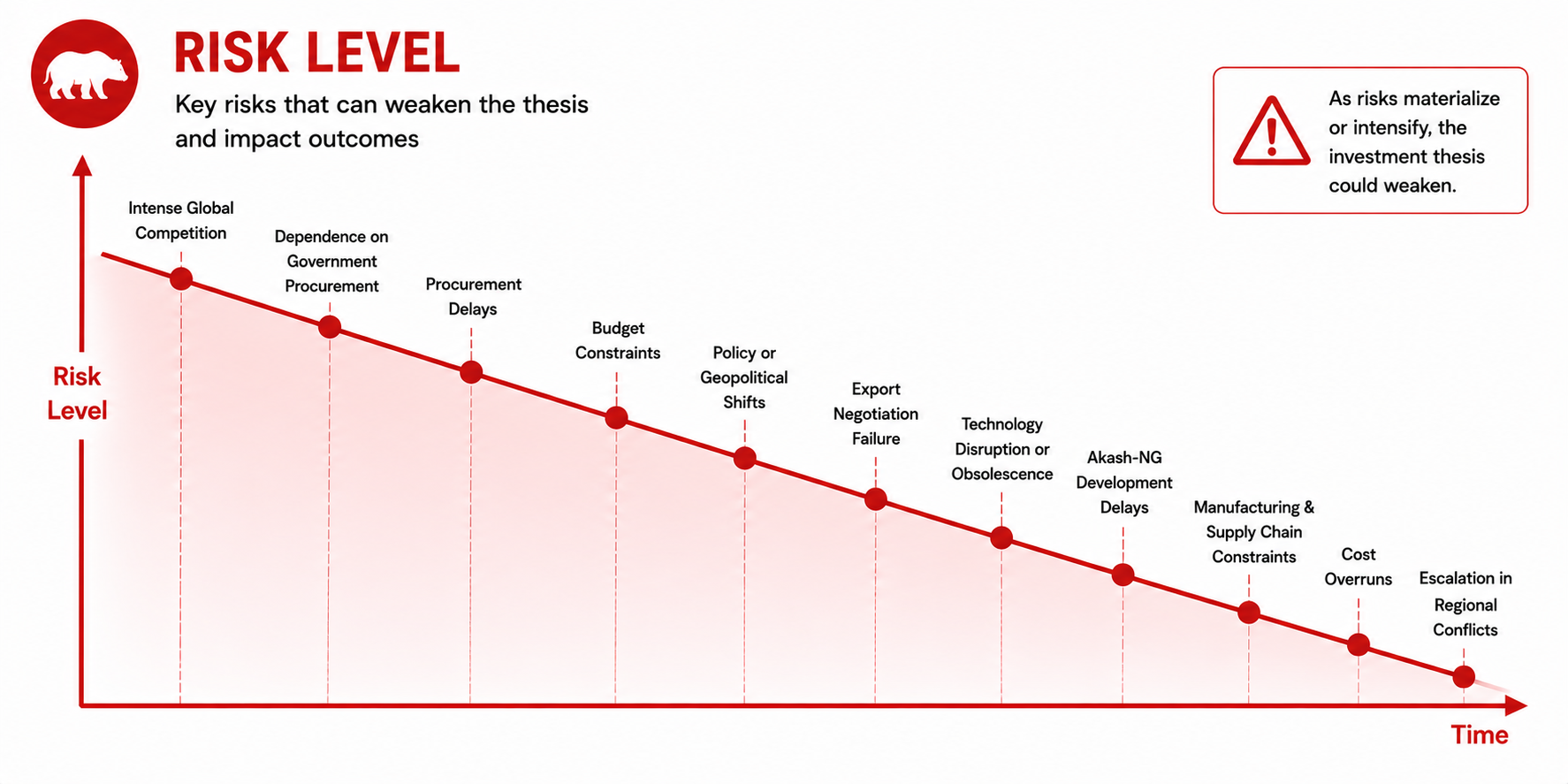
- Delays In Akash-NG Deployment – Delays could postpone future orders and slow the expansion of the export opportunity.
- Export Negotiations Not Converting Into Contracts – Interest from potential buyers is valuable, but signed contracts ultimately matter more.
- Competition From Global Defence Players – Akash competes against established systems from Israeli, American, Turkish, Chinese, and European manufacturers.
- Budgetary Changes – Defence procurement decisions can be affected by government spending priorities and fiscal constraints.
- Procurement Delays – Defence contracts often involve lengthy approval processes, which can delay order execution and revenue realization.
Key Insight:-
The most important variable may not be missile production itself. It may be whether Akash successfully establishes a growing international customer base. If that happens, many of the other positive indicators could follow naturally.
Conclusion
The biggest mistake investors may make is viewing Akash as simply another missile program. The larger opportunity lies in understanding the ecosystem surrounding it. Every Akash deployment creates demand for missiles, radars, launchers, electronics, maintenance, upgrades, and long-term support.
This is why the potential beneficiaries extend beyond a single company. Among listed players, Bharat Dynamics and Bharat Electronics currently appear to have the most direct exposure.
However, if Akash succeeds in establishing itself as a globally competitive air-defence export platform, the broader winner may ultimately be India's defence manufacturing ecosystem itself.
In that scenario, Akash may be remembered not merely as a missile system, but as one of the products that helped accelerate India's transition from a major arms importer to an increasingly important defence exporter.

Harjot Singh
Harjot Singh is BBA graduate with a background in finance and business studies. He has developed knowledge in financial analysis, business operations, and corporate finance through academic training and practical exposure. His professional interests include financial planning, investment analysis, and business strategy. He is committed to continuous professional development and contributing effectively within dynamic organizational environments.
LinkedIn