Top countries with Largest Rare Earth Reserves
Rare earth elements (REEs) have become one of the world's most strategic resources. Despite their name, most rare earths are relatively abundant in the Earth's crust. The challenge lies in finding economically viable deposits and processing them efficiently. These 17 metallic elements are essential for electric vehicles, wind turbines, smartphones, missile guidance systems, advanced radar systems and artificial intelligence infrastructure.
As countries race to secure critical mineral supply chains, ownership of rare earth reserves has become a major geopolitical advantage. According to global mineral reserve estimates, a handful of nations control the majority of the world's known rare earth resources.
These deposits contain valuable elements such as neodymium, praseodymium, dysprosium, terbium, lanthanum, and cerium, which power modern technologies ranging from electric vehicle motors to renewable energy systems.
However, as the global resource war intensifies, the definition of power is shifting. In the past, owning the resource was enough. Today, the race has evolved into a multi-billion-dollar sprint toward 'mine-to-magnet' independence.
Here are the top countries with the largest, rare-earth reserves in the world.
#1 China - The Undisputed Titan
China holds 44 million tonnes of rare earth reserves, the largest in the world. It also dominates global mining and processing. The Bayan Obo deposit in Inner Mongolia is the world's largest known rare earth deposit and serves as the backbone of China's rare earth industry.
The key rare earth elements found are - Neodymium (Nd), Praseodymium (Pr), Dysprosium (Dy), Terbium (Tb), Lanthanum (La), Cerium (Ce)
China’s northern reserves are incredibly rich in Neodymium (Nd) and Praseodymium (Pr), which are synthesized to create ultra-strong Neodymium-Iron-Boron (NdFeB) permanent magnets.
Think of the drivetrain inside an electric vehicle (EV) like a Tesla Model 3 or a Porsche Taycan. To achieve lightning-fast acceleration and high energy efficiency, these vehicles rely on NdPr permanent magnets within their synchronous motors. Without these elements, EV motors would be significantly heavier and far less efficient.
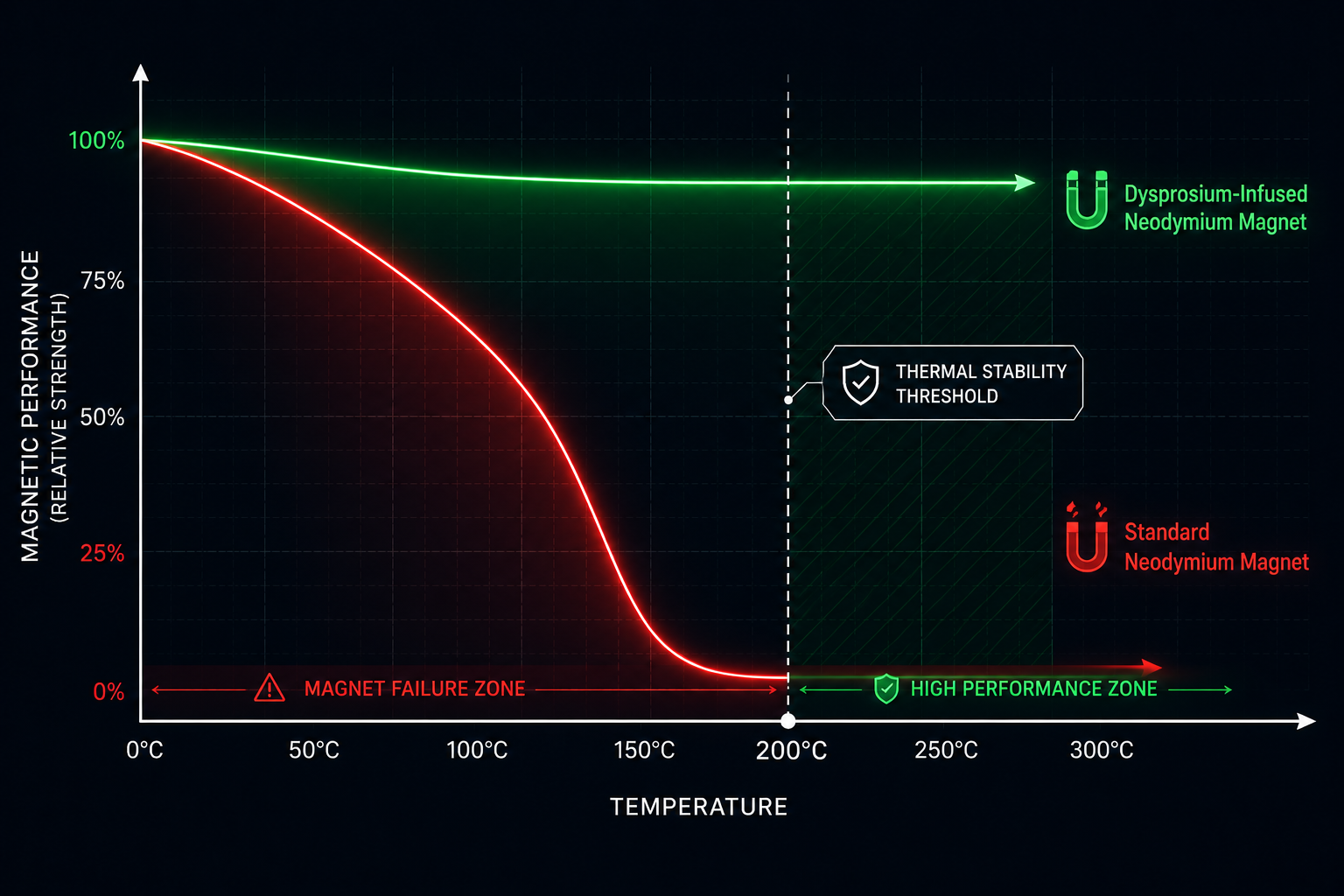
In the south, China's ionic clays yield Dysprosium (Dy) and Terbium (Tb). These elements act as thermal stabilizers. When an EV drives up a steep mountain pass or operates at sustained high speeds, its motor generates intense heat. Standard neodymium magnets lose their magnetism when overheated; adding a fraction of Dysprosium allows the magnet to retain its strength at temperatures surpassing 200°C.
The Hidden Price of Dominance
China’s total market control came at a staggering environmental cost. The heavy rare earth ionic clays in Jiangxi were historically mined using 'in-situ leaching' - a process where hundreds of thousands of tons of toxic chemicals, like ammonium sulfate, were pumped directly into the mountainsides to dissolve the metals out of the soil.
This left a legacy of contaminated groundwater and vast ecological dead zones. Today, as Beijing consolidates these operations under the state-owned mega-conglomerate China Rare Earth Group, the global industry is realizing that the hardest part of mining rare earths isn't finding them—it is figuring out how to refine them without destroying the local environment.
#2 Brazil - The Sleeping Giant of South America
Brazil holds the second-largest rare earth reserves globally. Much of its resource base is associated with carbonatite complexes rich in rare earth-bearing minerals
Brazil reserve number estimates to be 11 million ton to 21 million ton. This fluctuation happens because it is dependent on whether localized regulatory framework audits or broad geological assessments are cited by the USGS (United States Geological Survey
The key rare earth elements found in Brazil areNeodymium, Praseodymium, Cerium,
Brazil boasts massive untapped critical mineral wealth. Its primary active asset is the Pela Ema Deposit (the Serra Verde project), located in the municipality of Minaçu, Goiás State (Central Brazil
Brazil also holds massive carbonatite complexes like the Araxá Deposit in Minas Gerais (Southeastern Brazil), which is famously intertwined with the world's largest Niobium reserves
The Pela Ema deposit is uniquely structured as an ionic adsorption clay deposit. Outside of Southern China, it is one of the exceptionally rare places on Earth capable of producing all four critical magnet rare earths: Neodymium, Praseodymium, Terbium, and Dysprosium in a single location.
The 2026 Corporate Power Play
While Brazil's Pela Ema deposit (the Serra Verde project) in Goiás was long considered a sleeping giant, it has suddenly become the epicenter of Western critical mineral strategy. In a blockbuster move, USA Rare Earth entered a definitive agreement to acquire the Serra Verde Group for approximately $2.8 billion
Backed by a $565 million financing package from the U.S. Backed by financing from the U.S. International Development Finance Corporation (DFC) and a 15-year, 100% offtake agreement with a U.S. government-backed entity, this Brazilian asset has moved beyond potential. It is now the cornerstone of the world's first fully integrated, non-Asian permanent magnet supply chain.
Example (Medical Tech & Surgical Robotics) - High-end medical devices, particularly Magnetic Resonance Imaging (MRI) machines and robotic surgical systems (like the DaVinci surgical robot), require flawless, compact electric motors. The articulate joints of a robotic surgical arm must move with sub-millimeter precision without any mechanical backlash. Brazilian-sourced magnet rare earths are crucial for manufacturing these miniature, ultra-high-torque servomotors.
#3 India - The Coastal Monazite Wealth
India has 6.9 million tonnes of Rare Earth Reserves. The major deposits are Monazite Sands of Kerala, Tamil Nadu Coastal Deposits, Odisha Beach Sands and the heavy mineral sand of Andhra Pradesh
The key rare elements which are found in India are Monazite-hosted Neodymium, Cerium, Lanthanum, Samarium, Thorium-bearing rare earth minerals
Indian monazite sands are exceptionally rich in light rare earth oxides, primarily Cerium (Ce) and Lanthanum (La), alongside significant quantities of Neodymium.
Example (Smartphone Camera Lenses): Every time you snap a sharp, crystal-clear photo with your phone, you have Cerium Oxide to thank. Cerium oxide is the global gold standard for precision chemical-mechanical planarization (CMP).
It is used as a microscopic polishing abrasive to buff smartphone glass screens and complex multi-layered camera lenses down to atomic smoothness, removing any imperfections that would distort light.
The Monazite Sandbox Challenge
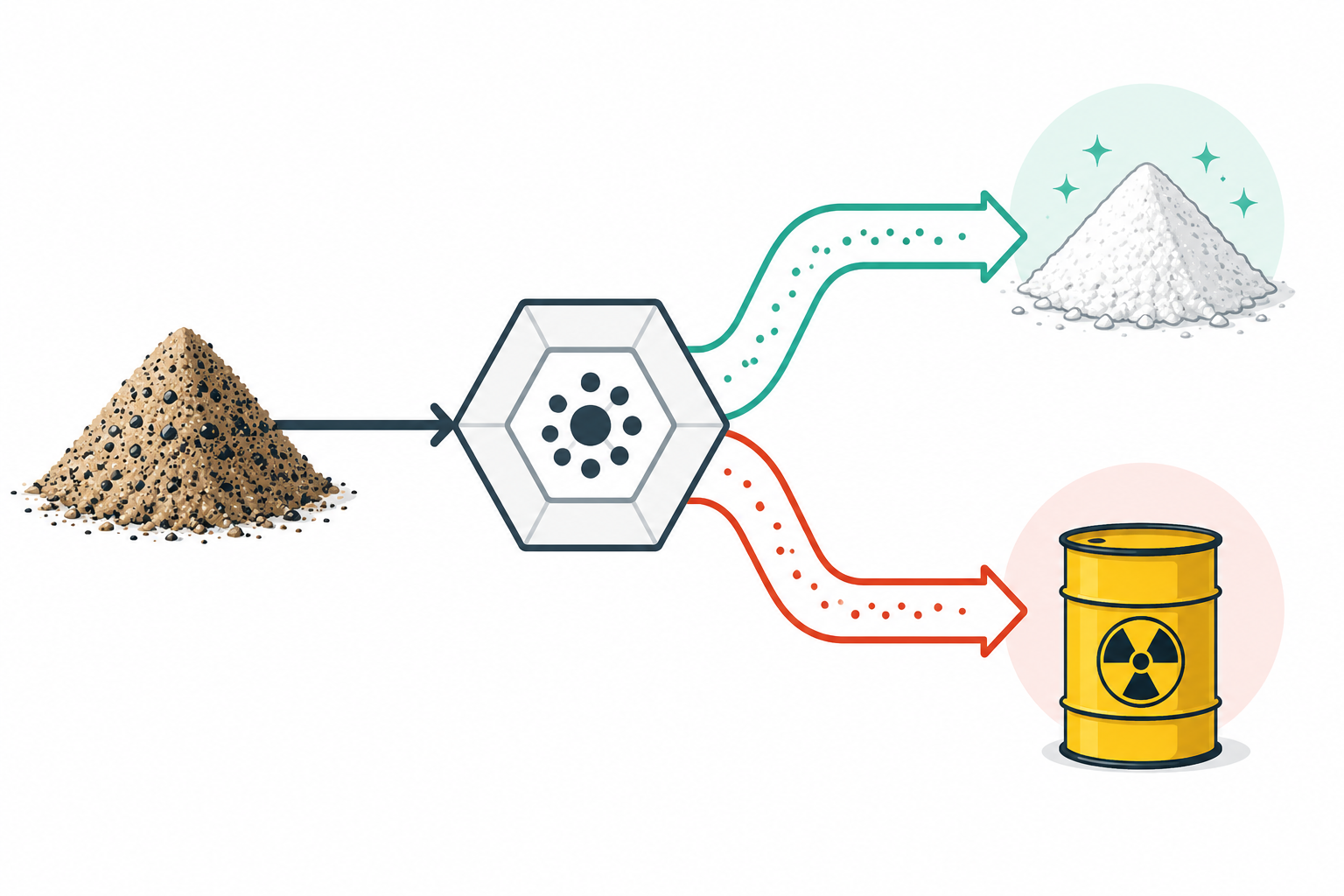
Despite holding a staggering 6.9 million metric tons of reserves, India's state-owned operator, IREL (India) Limited, faces a massive technical and environmental hurdle. Monazite beach sands are not pure rare earths; they are naturally laced with Thorium, a highly radioactive element.
Extracting Cerium and Lanthanum requires chemically isolating and safely storing thousands of tons of radioactive Thorium waste. This regulatory and environmental nightmare requires specialized radioactive handling infrastructure, which is why India's vast coastal wealth has remained largely locked up in the sand rather than flowing into the global tech pipeline.
India's rare earth opportunity also raises an important investment question: which listed Indian companies could benefit from the country's push into critical minerals? We explore that topic in our detailed analysis of NMDC Stock
#4 Australia - The Western Frontier
The exact reserve number of Australia is 5.7 million tonnes. Australia is the world's most successful non-Chinese producer of rare earths, anchored by world-class infrastructure.Its premier site is the Mount Weld Mine , an incredibly rich carbonatite pipe deposit located in the Goldfields-Esperance region of Western Australia (near Laverton).
Additionally, Australia holds the Browns Range Deposit in the East Kimberley region of Western Australia, which focuses primarily on heavy rare earth extraction, and the massive Eneabba Project managed by Iluka Resources.
The Corporate Blue-Chip Pioneer
Australia’s success isn’t an accident; it is driven by Lynas Rare Earths, the world's premier non-Chinese producer. While companies globally are still trying to figure out how to separate rare earth oxides, Lynas is actively doing it
They mine high-grade carbonatite at Mount Weld, concentrate it on-site, and historically shipped it to Malaysia for cracking and separation. To fortify their supply chain against geopolitical tensions, Lynas - alongside competitors like Iluka Resources - is aggressively investing in massive domestic separation facilities like the Kalgoorlie project in Western Australia to ensure that the entire refinement loop remains within Allied territories.
Australia's Mount Weld is prized for its incredibly high-grade ore, yielding large quantities of NdPr, while Browns Range is rich in Yttrium and Dysprosiumyle="font-weight: 400;">.
Practical Example (Green Energy & Wind Turbines): Mega-scale offshore wind turbines - the kind anchored in the North Sea or off the coast of Rhode Island that produce 12 to 15 megawatts of electricity - utilize direct-drive generatorsyle="font-weight: 400;">. A single one of these giant wind turbines can require up to two metric tons of rare earth permanent magnets.
Relying on premium Australian NdPr and Dysprosium, these direct-drive systems eliminate the need for mechanical gearboxes, meaning the turbines rarely break down in the harsh, salty environment of the open ocean.
#5 Russia - The Frozen Siberian Hoard
Russia has 3.8 million tonnes of reserves. Russia’s rare earth footprint is defined by isolated, high-grade deposits buried deep within challenging geographic terrains. The most significant asset is the massive Tomtor Deposit, located in the remote Sakha Republic (Yakutia, Siberia). Tomtor is celebrated as one of the highest-grade unmined niobium-rare earth deposits on the planet.
For active production, Russia relies heavily on the Lovozero Mine, situated on the Kola Peninsula within the Murmansk Oblast (Northwest Russia).
Russian reserves contain an abundance of Yttrium (Y), Europium (Eu), and various heavy lanthanides.
Example (Jet Engines & Aerospace Metallurgy): Yttrium is an indispensable component in the aerospace sector. It is used to manufacture Yttrium-Stabilized Zirconia (YSZ), an advanced ceramic compound sprayed onto the turbine blades of commercial airlines and military fighter jets as a Thermal Barrier Coating (TBC).
The interior of a jet engine operates at temperatures hot enough to melt the underlying superalloy blades; the Yttrium-based ceramic layer acts as an atomic heat shield, allowing engines to run hotter, faster, and with greater fuel efficiency without suffering catastrophic structural failure.
#6 Vietnam: The Mountainous Reserve
Vietnam has 3.5 million tonnes of rare element reserve and that is the reason why Vietnam sits on an immense belt of rare earth geology running along its northern spine. The primary deposits are the Dong Pao Deposit and the Nam Xe Deposit, both situated in the rugged, mountainous terrain of the Lai Chau Province (Northwestern Vietnam, sharing a border network with China).
Vietnam's deposits consist primarily of bastnaesite minerals, which yield significant quantities of Lanthanum, Cerium, and Samarium (Sm).
Example (Hypersonic Missiles & Defense Systems): While Neodymium magnets are famous for their sheer magnetic power at room temperature, Samarium-Cobalt (SmCo) permanent magnets are the undisputed kings of extreme environments.
SmCo magnets can operate flawlessly in temperatures up to 350°C and are completely immune to rust and oxidation. This makes Vietnamese Samarium incredibly valuable for defense hardware—specifically inside the electronic actuators that steer the guidance fins of precision-guided missiles, smart munitions, and deep-space satellite transponders.
The Most Important Rare Earth Elements and Their Uses
| Rare Earth Element | Main Uses | Real-World Example |
| Neodymium | Permanent magnets | Tesla EV motors |
| Praseodymium | Aerospace alloys | Jet engine components |
| Dysprosium | Heat-resistant magnets | Offshore wind turbines |
| Terbium | LED displays | Smartphones and TVs |
| Cerium | Glass polishing | Mobile phone screens |
| Lanthanum | Oil refining catalysts | Petroleum refineries |
| Samarium | Military magnets | Missile guidance systems |
| Yttrium | Lasers and medical imaging | MRI machines |
Final words
The global race for rare earths is no longer just about mining. It is a battle for control over the technologies that will shape the future. Rare earth elements power electric vehicles, wind turbines, AI infrastructure, semiconductors, fighter jets, and advanced defense systems.
Yet, large reserves do not automatically guarantee market dominance. Countries such as Brazil, India, Australia, Russia, and Vietnam collectively hold tens of millions of tonnes of rare earth resources. However, mining the ore is only the first step. The bigger challenge lies in processing and refining. Because rare earth elements have very similar chemical properties, separating them into high-purity metals is a complex, capital-intensive, and environmentally demanding process.
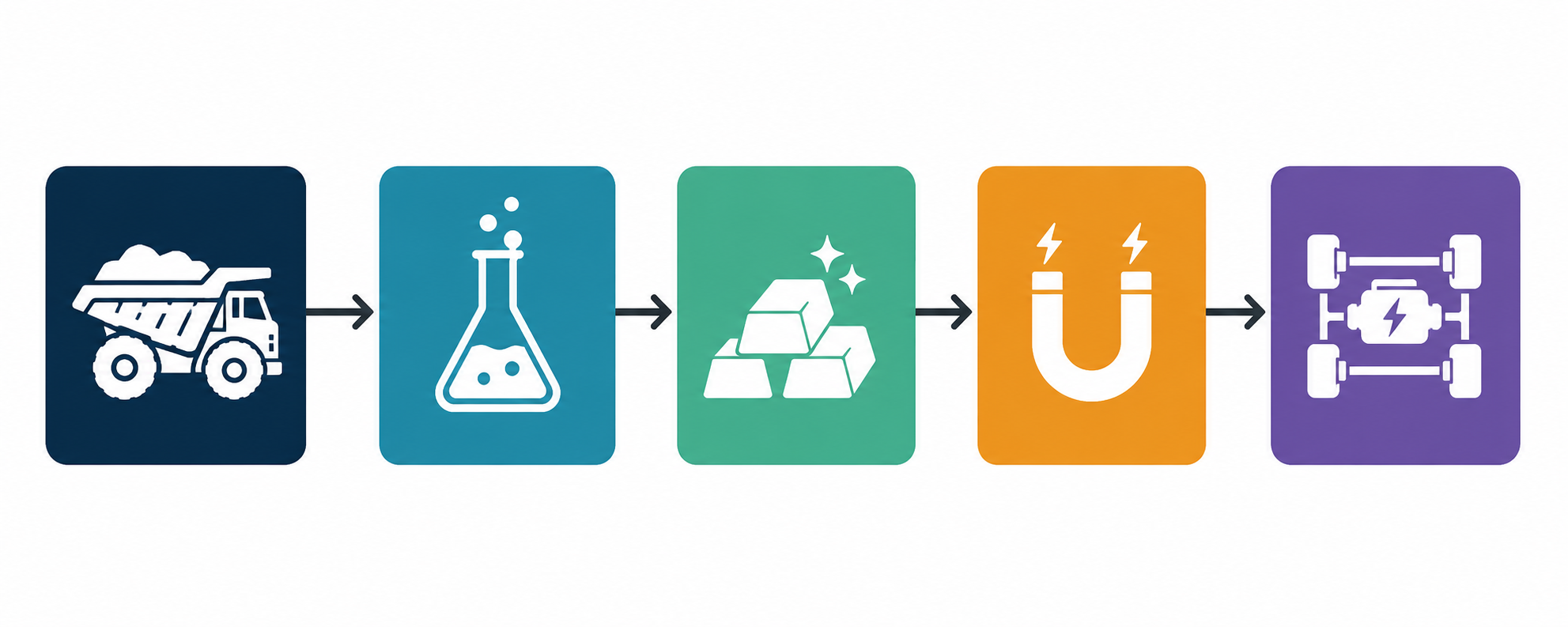
This is where China maintains its advantage. Despite holding around 44 million tonnes of reserves, China's true strength lies in its industrial ecosystem. The country currently accounts for roughly 70% of global rare earth mine production and an estimated 85–90% of downstream refining capacity, giving it unparalleled influence over global supply chains.
Yet, the geopolitical landscape is shifting. Australia (Mount Weld), India (coastal monazite), Brazil, and Vietnam are aggressively expanding their infrastructure to challenge the status quo.
Over the next decade, global technology and energy leadership won't belong to nations that simply sit on raw reserves, but to those that control the complete supply chain. Ultimately, the map of global energy security is being rewritten - not by who digs the dirt, but by who possesses the processing power to transform it into finished, high-tech materials.