NMDC’s Overseas Acquisition Strategy: Why Buying Mines Abroad Could Be More Important Than Expanding In India
For decades, NMDC's growth story was relatively straightforward.
Mine iron ore.
Sell iron ore.
Expand production.
That strategy helped transform NMDC into India's largest iron ore producer and one of the country's most important mining companies.
But the next phase of growth may look very different.
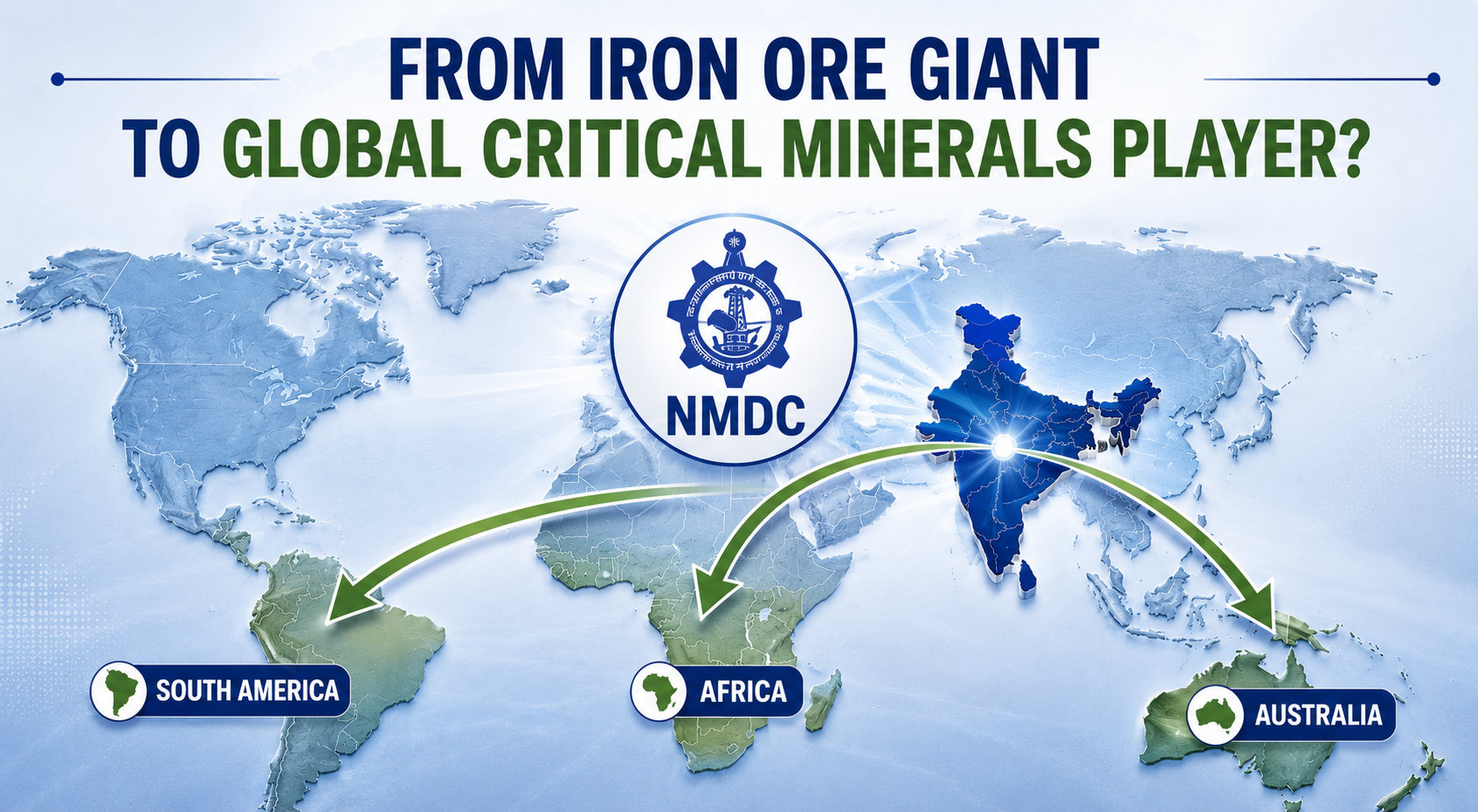
The company is now evaluating overseas mineral assets and has indicated a potential capital deployment of approximately ₹2,000–3,000 crore toward international acquisitions.
At first glance, this may appear to be a routine expansion initiative.
However, the strategic implications could be far more significant.
Rather than simply increasing iron ore production, NMDC appears to be exploring a future built around resource security, critical minerals, and global asset ownership.
This shift comes at a time when countries around the world are competing for access to minerals that are essential for electric vehicles, batteries, renewable energy systems, electronics, and advanced manufacturing.
In such an environment, controlling mineral resources may become just as important as controlling production capacity.
The key question for investors is no longer whether NMDC can produce more iron ore.
The more important question is whether the company is beginning a transformation from a domestic iron ore producer into a broader global mining and critical minerals platform.
If that is the case, the implications could extend far beyond the next acquisition.
Why Would Australia Want NMDC To Mine There?
At first glance, it may seem unusual that a mineral-rich country like Australia would welcome an Indian miner such as NMDC.
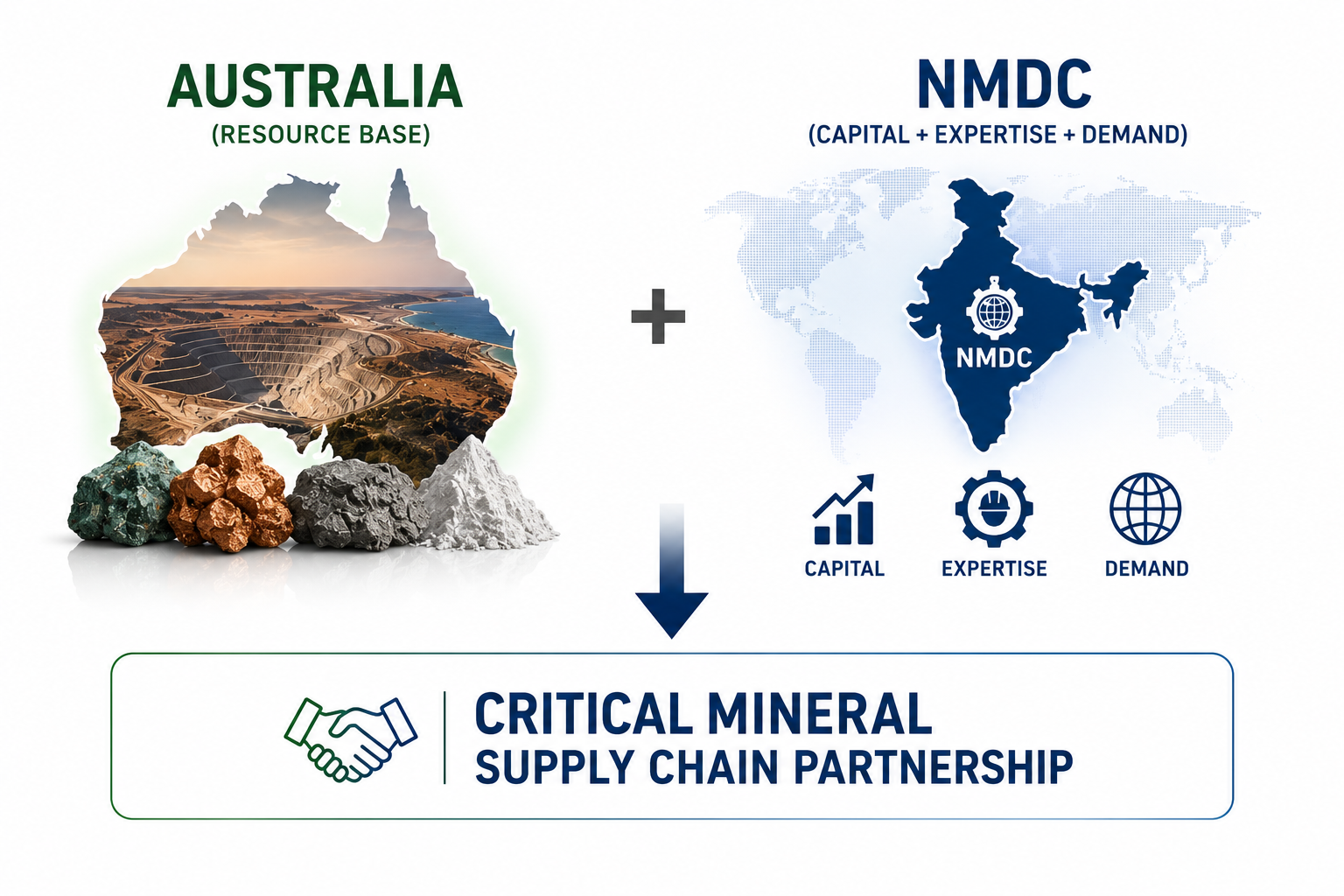
The reason is simple: Australia already has abundant mineral resources, but developing them requires capital, expertise, and long-term buyers.
1. Capital For Resource Development
Australia has significant reserves of lithium, nickel, copper, and rare earth minerals. However, many deposits require substantial investment before they can become producing mines.
NMDC can provide the capital and mining expertise needed to help develop these resources.
2. Access To India's Future Demand
India is expected to become a major consumer of critical minerals due to electric vehicles, renewable energy, and manufacturing growth.
By partnering with NMDC, Australia gains access to a large and growing long-term customer.
3. Diversifying Supply Chains Beyond China
Australia has been actively seeking to reduce dependence on China-dominated mineral supply chains.
Partnerships with Indian companies such as NMDC help create alternative supply chains for critical minerals and strengthen economic ties between the two countries.
The Bigger Picture
Australia brings the resources.
NMDC brings capital, mining expertise, and access to India's growing demand.
Together, the partnership can create a more secure and diversified critical minerals supply chain for the future.
The ₹2,000–3,000 Crore Question?
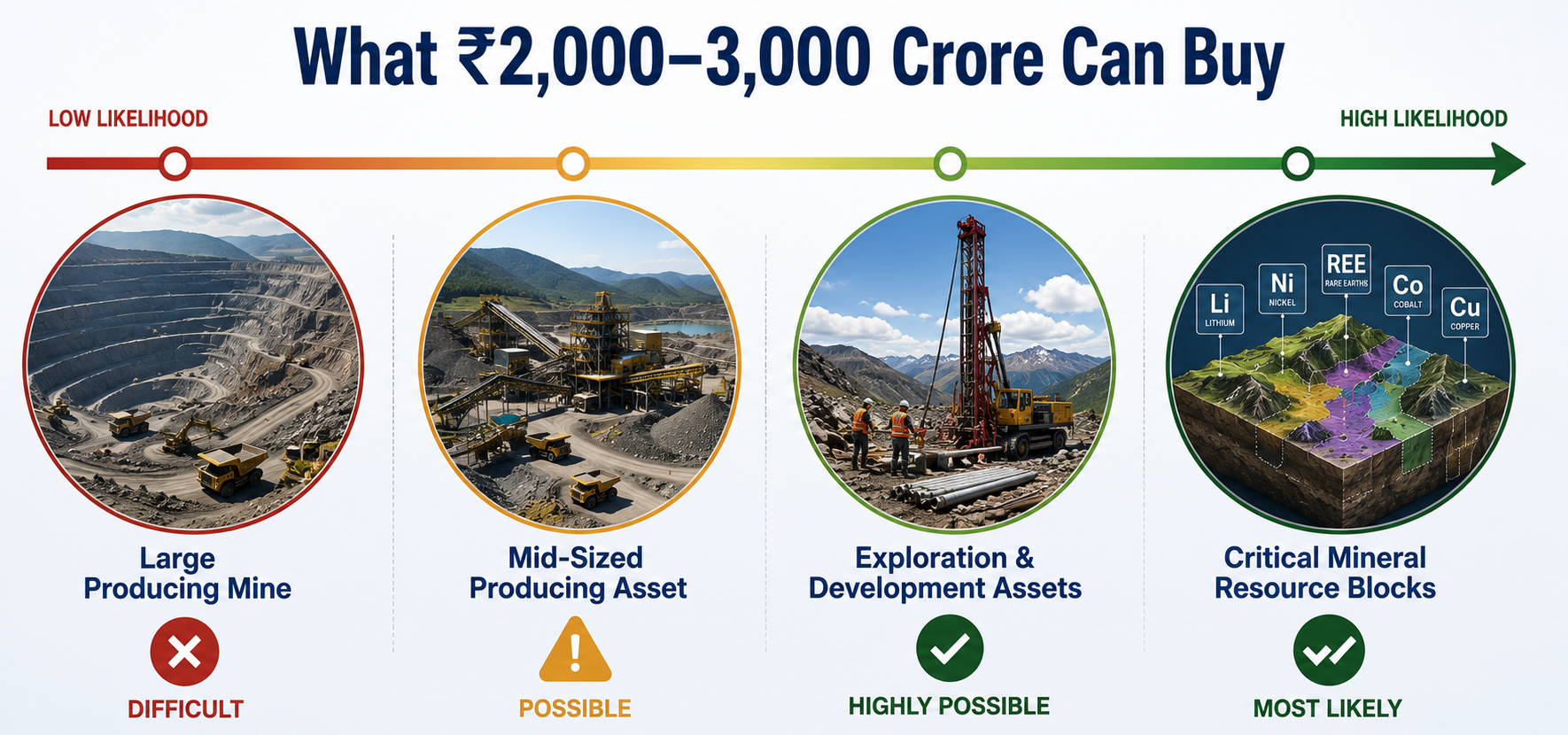
The acquisition amount itself is relatively modest when viewed against NMDC's broader growth ambitions.
The company has outlined much larger long-term investment plans aimed at increasing production capacity, diversifying mineral exposure, and pursuing strategic growth opportunities. Recent management commentary suggests NMDC could deploy tens of thousands of crores across expansion projects over the coming years.
Therefore:
The objective is unlikely to be purchasing massive producing mines.
Instead, the likely focus is:
- Early-stage mineral assets
- Exploration projects
- Resource development opportunities
- Strategic minority stakes
- Critical mineral blocks
This distinction matters.
Producing mines are expensive.
Exploration-stage resources are cheaper but offer significantly higher long-term optionality.
Why Overseas Assets?
India's critical mineral challenge is relatively straightforward.
Many of the minerals required for future industries are not available in sufficient quantities within the country.
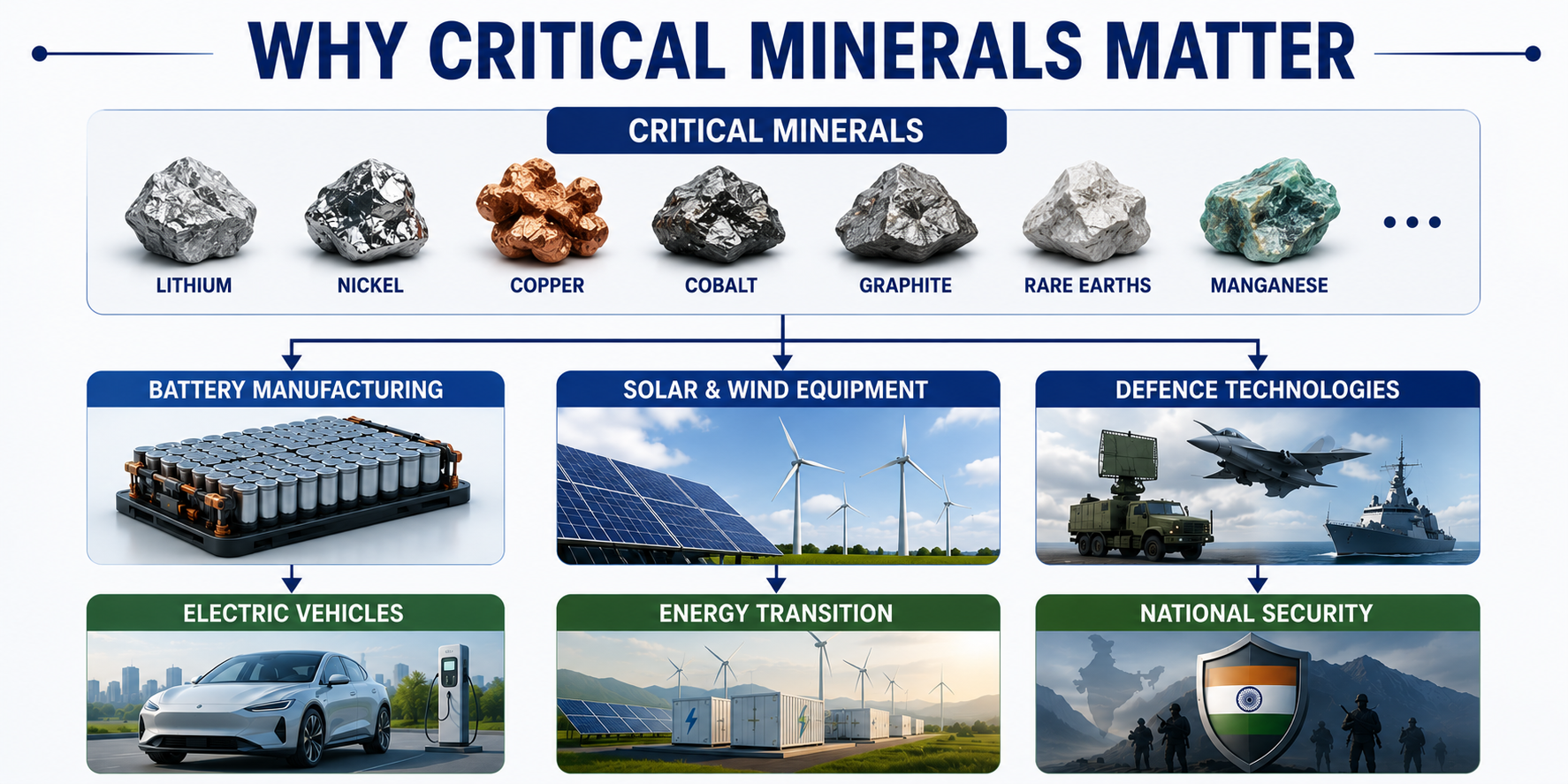
These minerals are essential for:
- Electric Vehicle Batteries
- Renewable Energy Systems
- Grid Storage Infrastructure
- Electronics Manufacturing
- Defence and Aerospace Applications
Some of the most strategically important resources include:
- Lithium
- Cobalt
- Copper
- Rare Earth Elements
- Coking Coal
This is where NMDC's overseas strategy becomes important.
The company has stated that it is evaluating mining opportunities across Africa, Australia, and South America, while also examining coking coal assets in Australia and Indonesia. To support these efforts, NMDC has established a Dubai office focused on identifying opportunities, conducting due diligence, and building relationships across global mining markets.
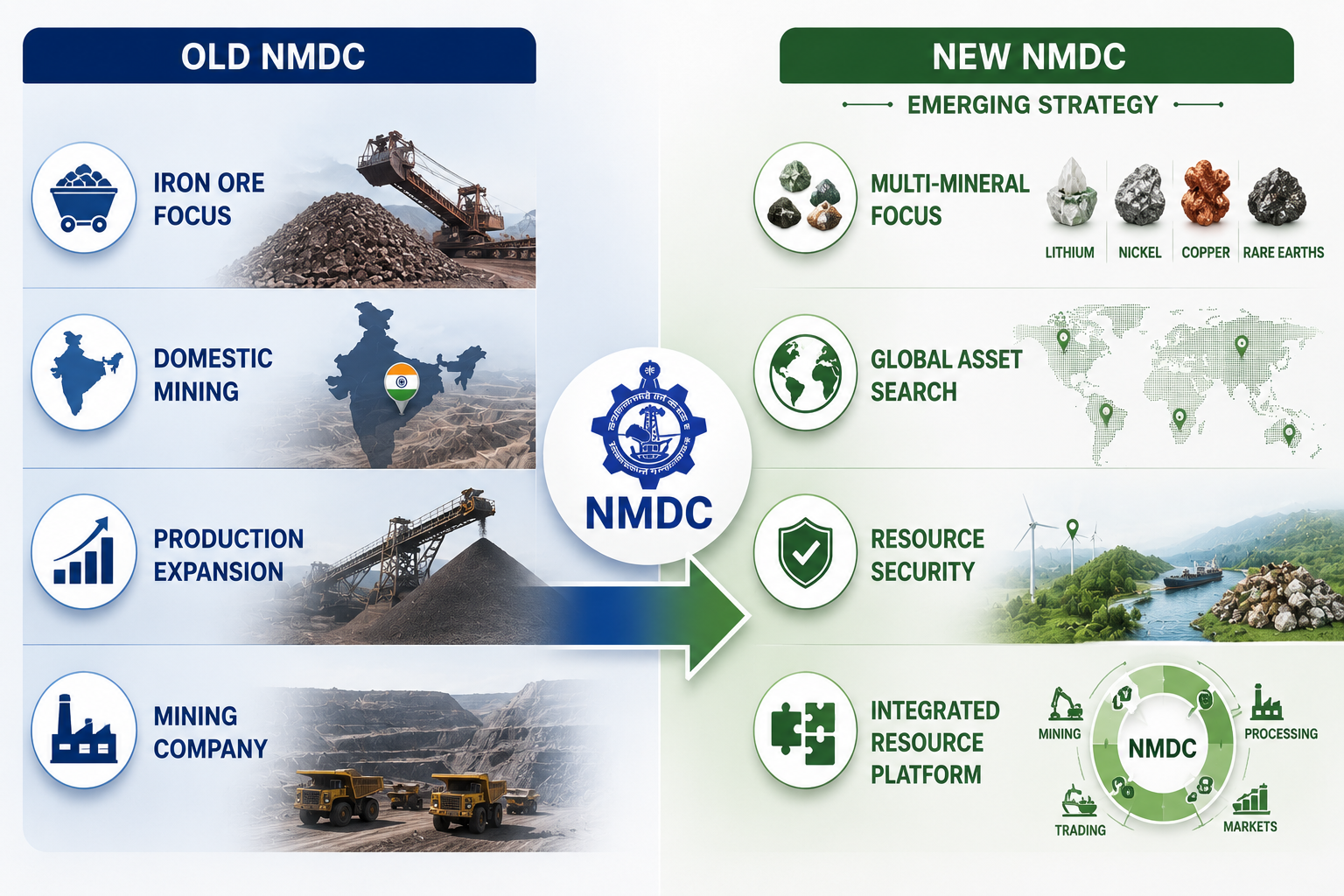
Historically, NMDC's growth was tied primarily to domestic iron ore reserves.
The emerging strategy appears broader.
Instead of focusing only on increasing production, the company is exploring ways to secure access to resources that could become increasingly important to India's industrial and energy transition.
The Key Insight
This is not simply a geographic expansion strategy.
It is a resource security strategy.
By acquiring or investing in overseas mineral assets, NMDC could gain access to resources that are difficult to secure domestically while also diversifying beyond its traditional iron ore business.
That shift has the potential to reshape how investors think about the company's long-term growth trajectory.
India's rare earth opportunity also raises an important investment question: which listed Indian companies could benefit from the country's push into critical minerals? We explore that topic in our detailed analysis of NMDC Stock
The More Interesting Shift: Exploration before Processing
This may be the most important aspect of NMDC's overseas strategy.
Many investors assume value creation begins with acquiring a mine and immediately investing in processing infrastructure.
In reality, that approach can be risky and capital intensive.
Before committing billions of rupees to downstream facilities, companies first need confidence that sufficient resources exist to support long-term operations.
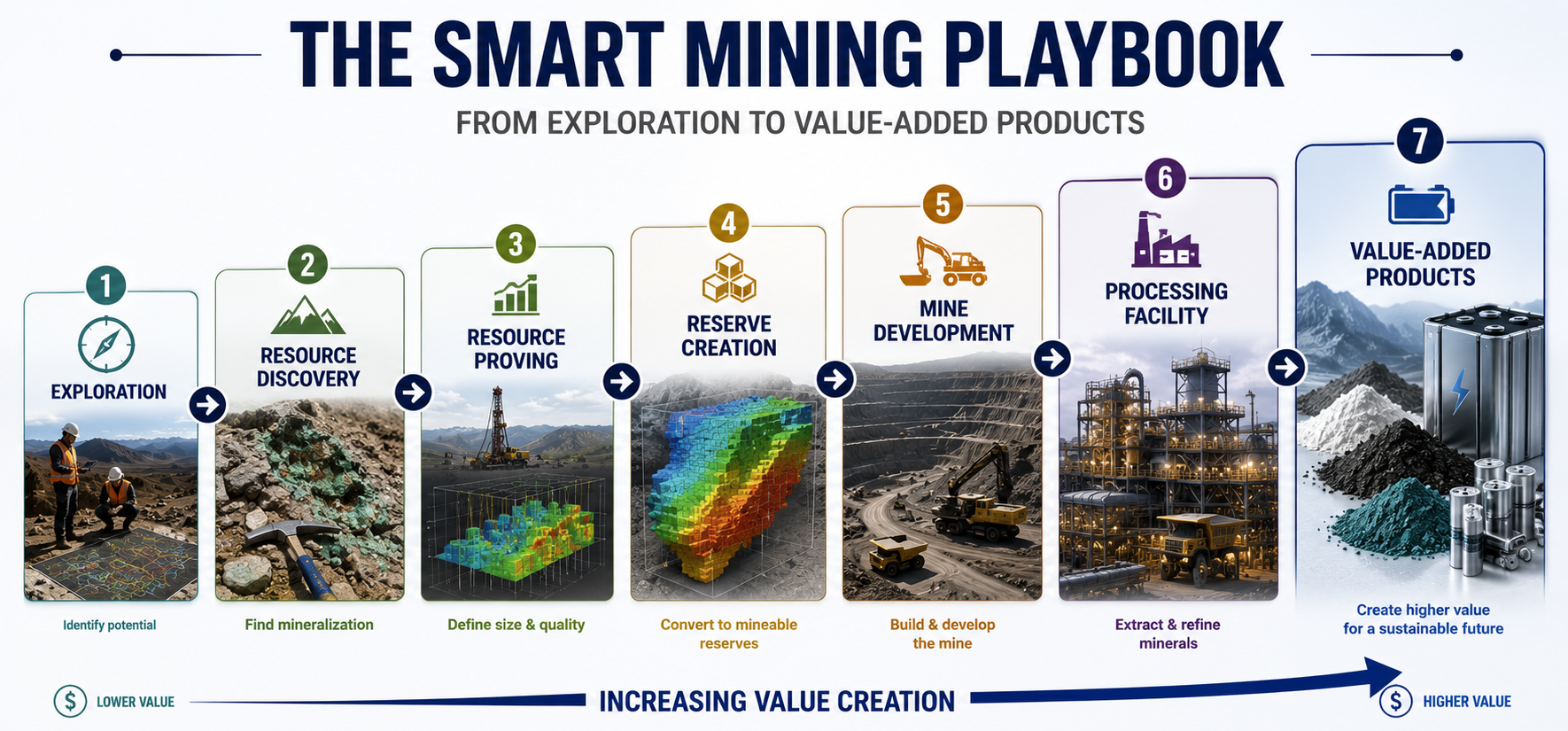
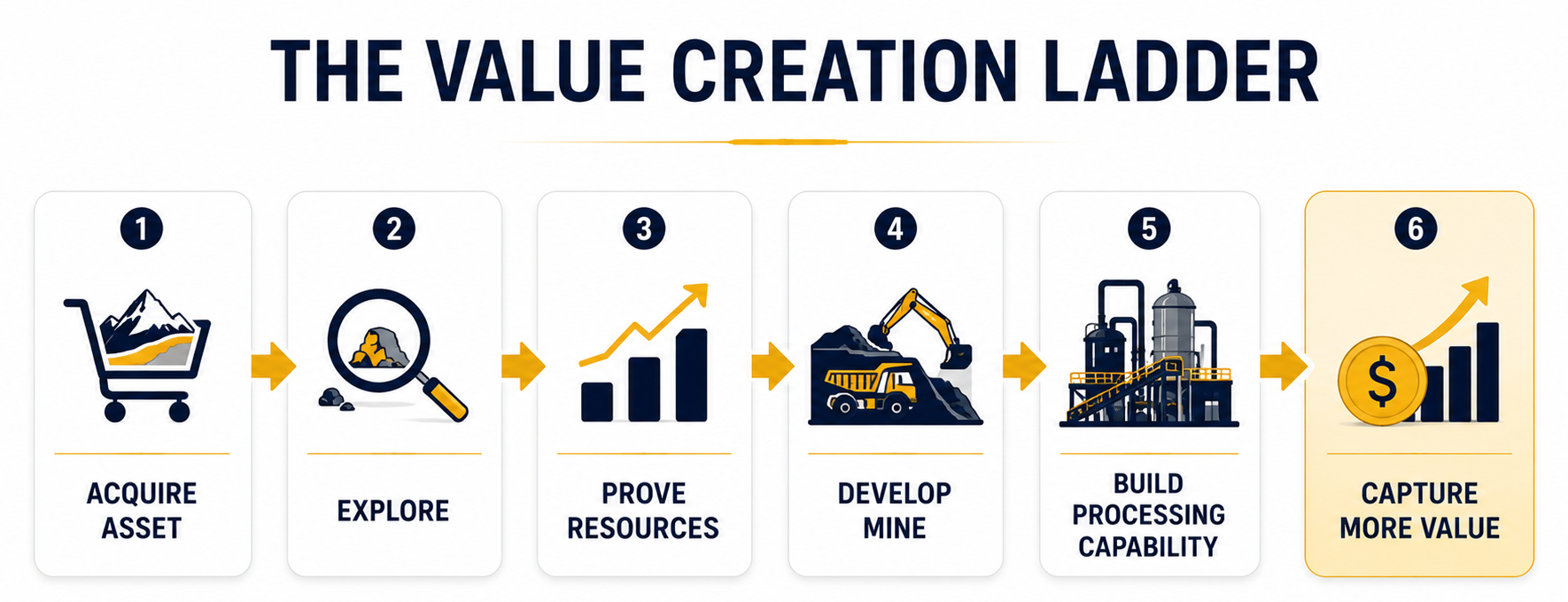
The typical mining value chain looks something like this:
- Identify prospective mineral assets
- Conduct exploration and geological studies
- Estimate resource size and quality
- Upgrade resource confidence levels
- Secure long-term reserves
- Develop mining operations
- Invest in downstream processing
Evidence increasingly suggests NMDC is following this more disciplined approach internationally.
Rather than rushing to acquire large operating assets or build processing facilities, the company appears focused on asset scouting, due diligence, exploration opportunities, and resource development.
Exploration may not attract the same attention as mine acquisitions or refinery announcements, but it is often where the foundation for long-term value creation is established.
A successful exploration program can:
- Improve visibility on resource quality and quantity.
- Reduce the risk of overpaying for assets.
- Support more informed capital allocation decisions.
- Create optionality for future mining and processing projects.
The Key Insight
The real story may not be the next acquisition.
It may be the resource base that NMDC is attempting to build over the next several years.
If the company can successfully identify and prove economically viable mineral resources, it would create a stronger foundation for future mining operations, processing facilities, and downstream value addition.
In that sense, exploration is not the end goal.
It is the first step in building a much larger critical minerals platform.
Why Resource Proving Matters?
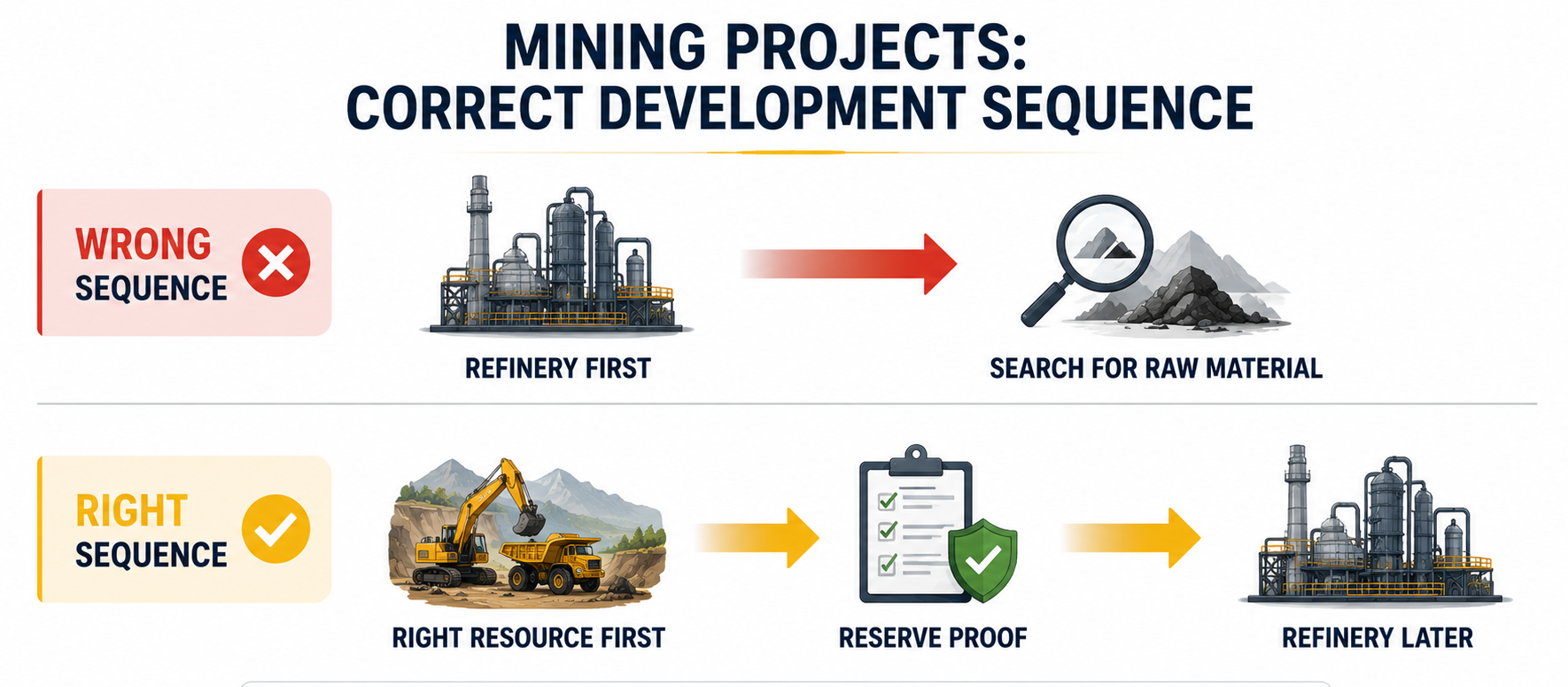
A refinery without resources is a risk.
A refinery backed by proven resources is an asset.
Before investing billions into downstream processing facilities, companies generally need confidence regarding:
- Ore quality
- Resource size
- Mine life
- Production economics
That is why exploration can often be more valuable than production in the early stages.
If NMDC successfully proves meaningful critical mineral resources overseas, it creates the foundation for future downstream investments.
Without proven resources, building processing capacity would involve significantly greater uncertainty.
How this Fits into India's Bigger Strategy?
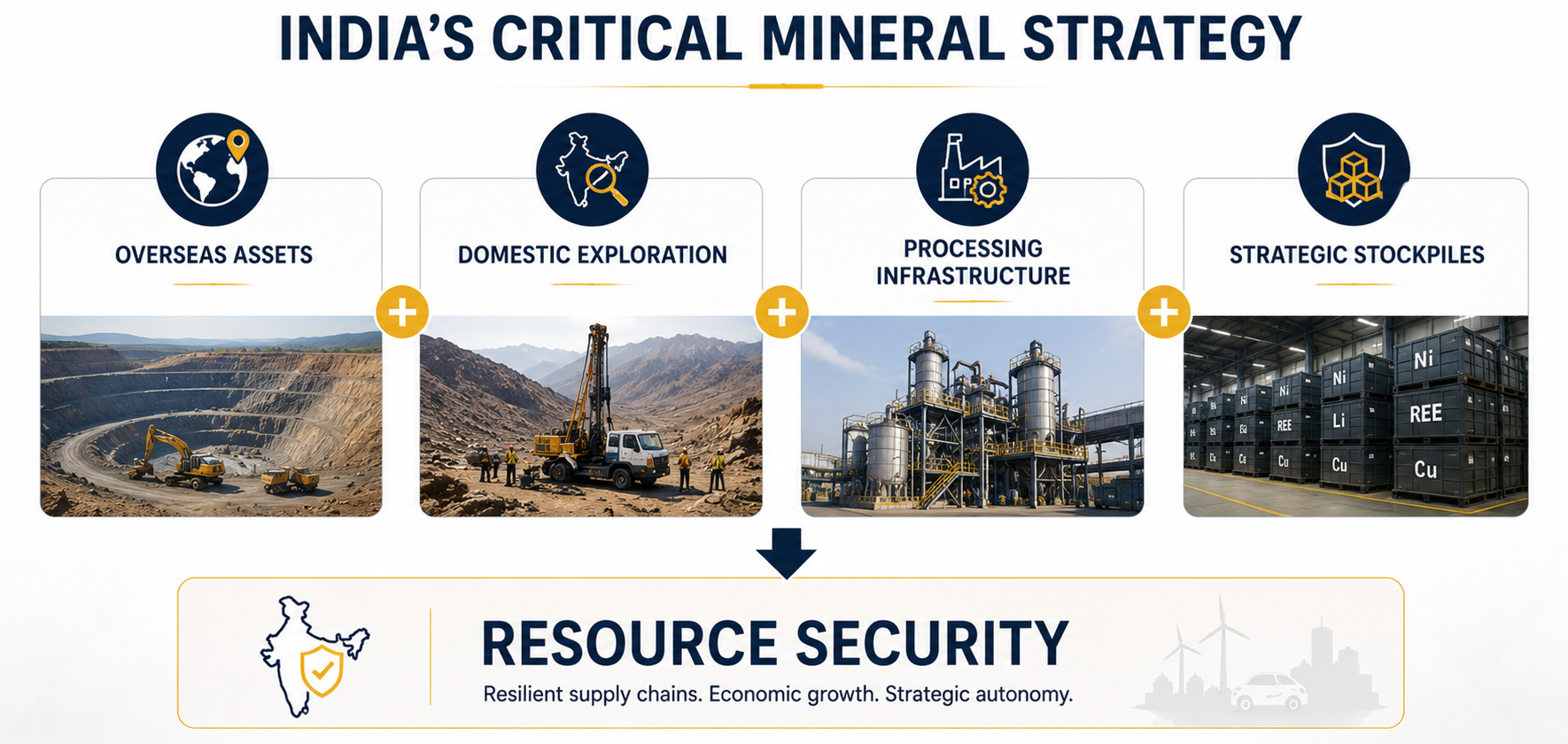
NMDC's overseas efforts are occurring alongside a broader national push toward critical mineral security.
India has launched initiatives focused on securing long-term access to strategic minerals, encouraging overseas asset acquisitions, expanding exploration, and building domestic processing capabilities. Government policy discussions have increasingly supported overseas resource acquisition as part of the country's critical minerals strategy.
Viewed through this lens, NMDC's international strategy appears less like a standalone corporate decision and more like part of a wider effort to secure future mineral supply chains.
The Real Opportunity Investors may be Missing
Most discussions focus on:
"Which mine will NMDC acquire?"
A more important question may be:
"What value chain is NMDC trying to build?"
If the company successfully acquires and proves critical mineral resources overseas, several opportunities emerge:
- Mining revenues
- Resource appreciation
- Strategic partnerships
- Downstream processing
- Refining opportunities
- Global mineral trading
The acquisition itself may therefore represent only the first step.
The larger value creation could come years later.
Key Risks
The strategy is promising but not risk-free.
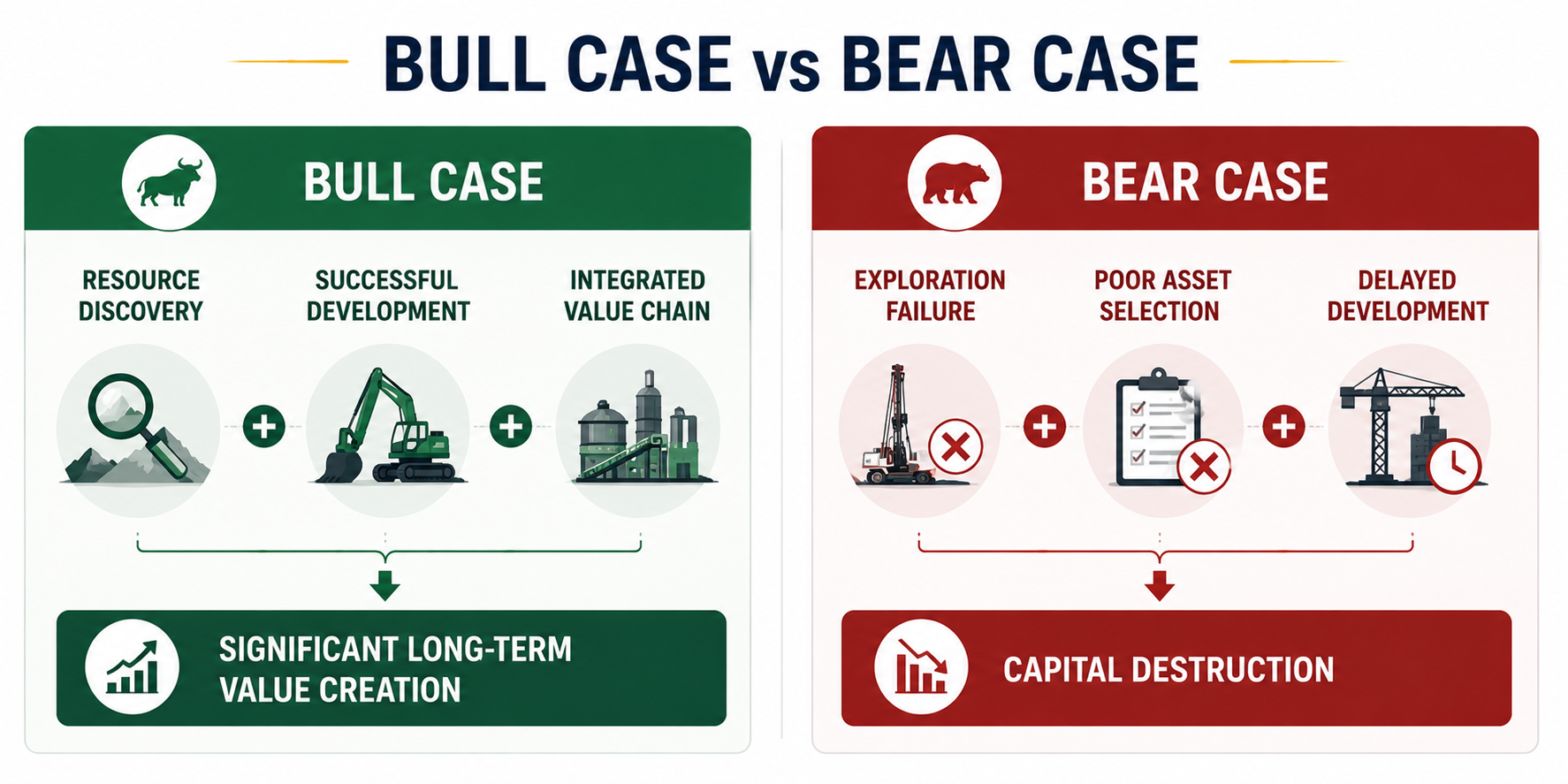
Potential challenges include:
- Exploration failure
- Resource overestimation
- Political risk
- Commodity price volatility
- Regulatory hurdles
- Delayed project development
Not every exploration project becomes an economic mine.
And not every mineral discovery supports a refinery.
Therefore, execution remains critical.
Conclusion
The headline number of ₹2,000–3,000 crore may attract attention.
But the capital deployment itself is not the most important part of the story.
The more significant development is NMDC's evolving strategy.
The company appears to be moving beyond a traditional iron ore growth model toward a broader resource security and critical minerals platform.
And the emphasis on exploration and resource proving suggests management understands a key principle of mining economics:
The most valuable refinery is often the one built after the resources are proven—not before.
If that approach succeeds, overseas acquisitions may become the foundation for NMDC's next growth chapter rather than simply another mining investment.