Project Aalingana: How Tech Integrators Keep AI’s Massive Power Demands in Check
AI’s next challenge isn’t intelligence, it’s energy.
As businesses accelerate AI adoption, the demand for computing power continues to rise. The question is no longer whether companies can scale AI, but whether they can do so sustainably.
Project Aalingana highlights how TCS is tackling this challenge by combining renewable energy adoption with operational efficiency, showing that digital growth and sustainability can move together.
Why AI Needs So Much Power?
Modern AI systems depend on vast computational resources. Training large language models requires thousands of processors working simultaneously for extended periods. Once deployed, these models continue to consume significant computing resources as millions of users interact with them daily.
The growth of AI also increases demand for data centers. These facilities must not only power servers and networking equipment but also maintain cooling systems that keep infrastructure operating efficiently. As AI adoption accelerates across industries, electricity demand from digital infrastructure continues to rise.
This trend creates a difficult balancing act for technology companies. They must expand computing capacity to meet growing demand while also limiting the environmental consequences of that expansion.
The AI Sustainability Paradox
AI promises significant benefits for businesses and society. It can improve productivity, optimize resource allocation, enhance customer experiences, and accelerate innovation. At the same time, the infrastructure required to support AI places greater pressure on energy systems.
This creates a sustainability paradox. The same technology that helps organizations operate more efficiently can also increase energy consumption if companies fail to manage infrastructure growth responsibly.
Many observers assume that higher AI adoption automatically leads to higher energy consumption and emissions. However, the relationship is not that simple. Companies can offset growing digital demand through renewable energy adoption, infrastructure optimization, and improved operational efficiency.
The challenge lies in ensuring that AI growth does not come at the expense of sustainability goals.
The Real Divide in AI Sustainability
AI sustainability is often treated as a single-system issue, but the ecosystem is split into two layers.
The first layer includes hyperscalers like Microsoft, Google, Amazon, and Meta. They build and operate large-scale data centers for training and running AI models. Their core challenge is securing electricity, managing cooling loads, and scaling infrastructure without straining grids.
The second layer includes enterprise IT services firms like TCS. These companies help businesses deploy AI, modernize systems, and optimize operations. Their focus is not raw compute expansion but improving efficiency of technology use.
Project Aalingana belongs to this second layer. Its importance lies in reducing the environmental footprint of digital transformation through efficiency and renewable energy adoption rather than directly powering AI models.
A growing concern for this layer is Scope 3 emissions, the indirect footprint generated when client workloads run on third-party cloud infrastructure.
Project Aalingana and the TCS Approach
TCS has integrated sustainability into its long-term strategy through Project Aalingana and related initiatives, focusing on emissions reduction, efficiency gains, and renewable energy expansion.
According to its FY2025-26 Annual Report:
- ~79% of total energy came from renewable sources
- 84.5% of electricity consumption was renewable
Importantly, this progress came alongside business expansion. TCS reported:
- AI revenue run rate of >$2.3 billion (FY2026)
- Strengthened partnerships with OpenAI, NVIDIA, AMD, and Cisco
The key point: sustainability and growth were pursued simultaneously, not sequentially.
Efficiency Matters as Much as Renewable Energy
Renewable energy often dominates sustainability discussions, but efficiency plays an equally important role.
The FY2025-26 Annual Report reveals that TCS reduced its total electricity consumption by 3% year-over-year. Total energy consumption declined from 194.1 crore megajoules in FY2025 to 188.5 crore megajoules in FY2026.
The company’s energy intensity also improved. Energy consumption per rupee of turnover declined from 0.000760 MJ to 0.000710 MJ.
These figures matter because they show that sustainable growth depends on more than switching to clean energy sources. Organizations must also improve how efficiently they use energy.
As AI adoption increases, efficiency gains become increasingly valuable. Every improvement in infrastructure utilization, cooling systems, workload optimization, and facility management helps reduce the energy required to support digital growth.
The Metrics at a Glance
| Metrics | FY2024-25 | FY2025-26 | Directional changes |
| Total Energy Consumed | 194.1 Crore MJ | 188.5 Crore MJ | -3.0% (Absolute Reduction) |
| Energy Intensity (per ₹ Turnover) | 0.000760 MJ | 0.000710 MJ | -6.6% (Efficiency Gain) |
| Renewable Electricity Share | _ | 84.5% | Stable High-Base Baseline |
| Annualized AI Revenue Run Rate | _ | >$2.3 Billion | Aggressive Business Scaling |
Building Sustainable AI Infrastructure
Sustainable AI requires reducing energy per workload, not just switching energy sources.
At the software layer, techniques like:
- quantization (reducing numerical precision)
- knowledge distillation (compressing large models into smaller ones)
help reduce compute requirements without major performance loss.
At the operational layer, workload scheduling is increasingly aligned with renewable energy availability, shifting non-urgent tasks to periods of cleaner grid supply.
At the infrastructure layer, advances like:
- direct-to-chip liquid cooling
- immersion cooling
improve thermal efficiency and reduce Power Usage Effectiveness (PUE).
Project Aalingana also emphasizes energy sourcing diversity:
- Rooftop solar
- Renewable procurement
- Green tariffs
- Energy Attribute Certificates (EACs)
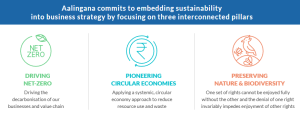
Together, these enabled ~79% renewable energy and 84.5% renewable electricity in FY2026.
However, sourcing mechanisms differ in impact. On-site generation has direct physical impact, PPAs support new capacity, while EACs provide accounting-based claims that may not always reflect local consumption. These distinctions are important for accurately evaluating sustainability performance.
A Blueprint for Sustainable Technology Growth
The technology industry often frames sustainability and growth as competing objectives. Project Aalingana challenges that assumption.
TCS maintained a renewable energy share of nearly 79%, increased the share of renewable electricity to 84.5%, reduced total energy consumption, improved energy efficiency, and expanded its AI business at the same time.
These results suggest that sustainable technology growth is not merely an aspiration. With the right strategy, companies can increase digital capacity while reducing environmental impact.
As AI becomes a larger part of the global economy, this balance will become increasingly important. Organizations that successfully align innovation with sustainability will be better positioned to meet stakeholder expectations, manage long-term energy risks, and support responsible digital transformation.
Conclusion
The future of AI will depend not only on more powerful models and faster processors but also on how efficiently organizations deploy them.
While hyperscalers confront the challenge of powering massive AI infrastructure, enterprise technology companies face a different responsibility: helping businesses adopt AI without unnecessarily increasing their environmental footprint. Project Aalingana demonstrates how that balance can work in practice.
TCS expanded its AI business, maintained a renewable energy share of nearly 79%, improved energy efficiency, and reduced overall energy consumption during FY2026. These results suggest that sustainable growth does not depend solely on consuming more power. It depends on using power more intelligently.
As AI adoption accelerates across industries, the companies that combine innovation with efficiency will likely create the most durable model for long-term digital growth.