Netflix revenue model – Breaking down the numbers and future projections
Netflix is often described as a streaming company, but that description no longer captures the full picture of what the business has become.
Over the last decade, Netflix has transformed itself from a simple subscription-based video platform into a global entertainment ecosystem with multiple revenue engines. While monthly subscription fees remain the company's primary source of revenue, Netflix is steadily building new ways to monetize its massive audience and increase revenue per user.
Beyond traditional streaming, Netflix is expanding into live entertainment through sports programming, comedy specials, concerts, and other real-time events that can attract large audiences and create new advertising opportunities. The company is also investing heavily in gaming, aiming to extend user engagement beyond video content and eventually create another monetization channel through its intellectual property.
Let's break down the entire revenue model of Netflix and get all the questions answered.
#1. Subscription Revenue (The Core Business)
Subscription revenue is still Netflix's largest source of income. Customers pay monthly fees for access to the platform.
Netflix offers different plans:
- Standard with Ads
- Standard
- Premium
Higher-tier plans generate more revenue per user.
How Important Is Subscription Revenue?
In 2025, Netflix generated approximately $45.2 billion in total revenue, with the vast majority of that revenue still coming from its subscription business.
By the end of 2025, Netflix had surpassed 325 million paid memberships worldwide, making it one of the largest subscription platforms in the world. This massive global user base gives the company a powerful competitive advantage that few businesses can match.
This scale creates an enormous advantage for Netflix. Imagine Netflix raises prices by just $1 per month.
325 million subscribers × $12 per year = $3.9 billion of additional annual revenue. Very few companies in the world can create billions of dollars of revenue with a small pricing adjustment.
Why Netflix's Subscription Business Is So Powerful
Netflix got benefits from majorly two factors which are its massive content library and global reach.
Massive content library: A subscriber paying for Netflix isn't paying for one show. They are paying for - Movies, TV series, Anime, Documentaries, Kids content, Live events and sports programming. The more content Netflix offers, the harder it becomes to cancel their subscription.
Global reach: A hit show can be monetized worldwide. Shows like - Money Heist, Lupin and Squid game. A single successful production can attract viewers across dozens of countries. This dramatically improves return on content spending.
#2: Advertising (Netflix's Fastest Growing Business)
Advertising is rapidly emerging as one of Netflix's most important long-term growth drivers. For most of its history, Netflix operated on a very simple business model: customers paid a monthly subscription fee, and in exchange they received unlimited access to content without advertisements.
However, the launch of Netflix's advertising-supported tier has fundamentally changed that model. Instead of earning money from only one source - the subscriber - Netflix can now generate revenue from two different sources at the same time: the customer and the advertiser.
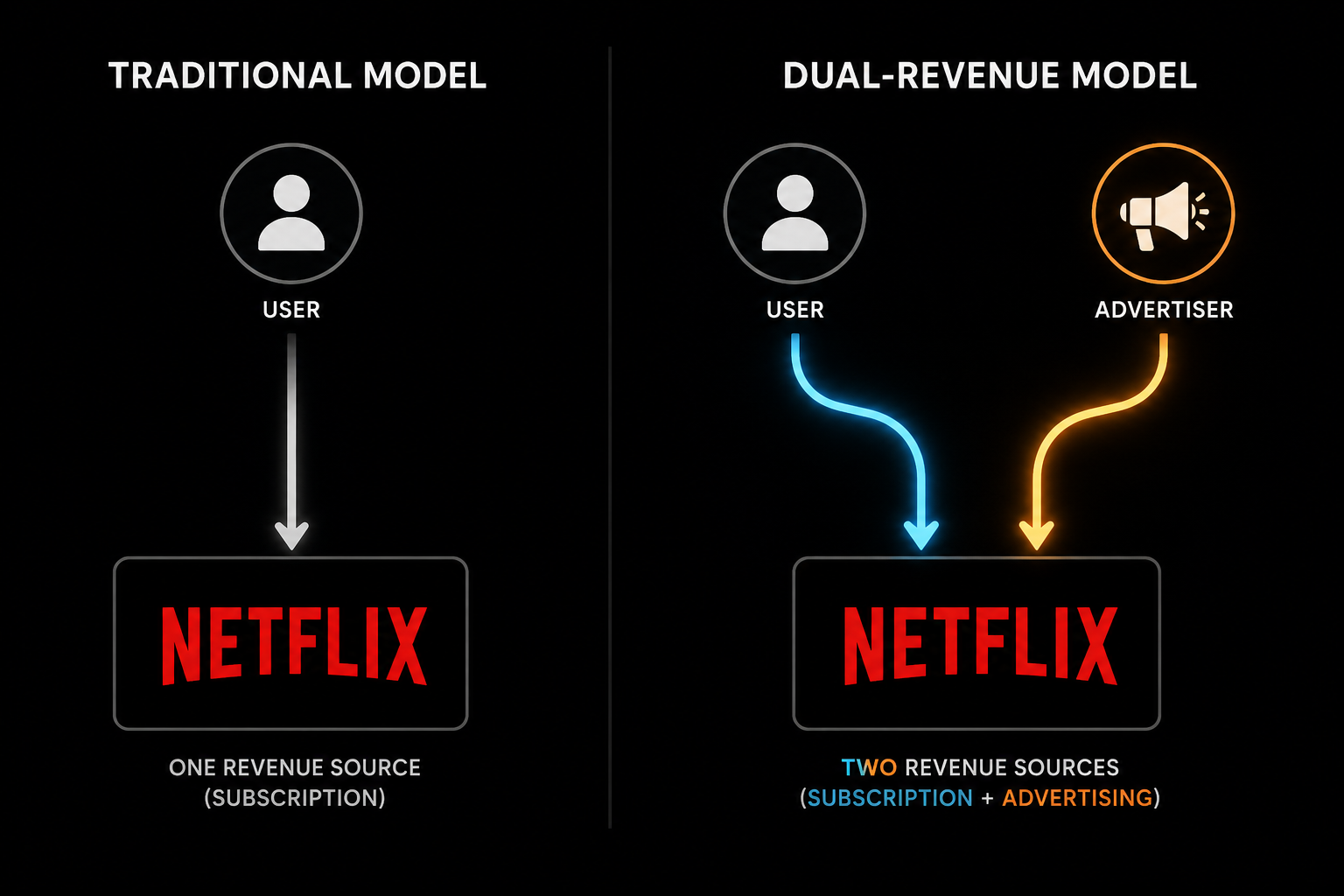
The advertising model works in a straightforward way. Customers who want a lower monthly price can choose a cheaper subscription plan that includes advertisements. In exchange for paying less, they agree to watch a limited number of ads while streaming movies and TV shows.
An easy way to think about this is to imagine a customer paying $8 per month for an ad-supported plan instead of $15 for an ad-free plan. At first glance, Netflix appears to be earning less money. However, if advertisers pay Netflix several additional dollars each month to reach that viewer, the company's total revenue from that customer could actually exceed what it would have earned from a traditional ad-free subscriber.
However, this dual-revenue strategy relies on a volatile advertising market. Unlike predictable monthly subscriptions, ad spending fluctuates with the broader economy. Furthermore, Netflix faces immense competition for digital ad dollars from established giants like Google, Meta, and Amazon, meaning its high ad-rates (CPMs) may face downward pressure as the market saturates.
But this model of Netflix isn't currently available in every region. This plan is only available in 12 countries right now - the United States, the United Kingdom, Australia, Brazil, Canada, France, Germany, Italy, Japan, Mexico, South Korea, and Spain.
The Growth Has Been Explosive
Netflix's advertising business has scaled rapidly.
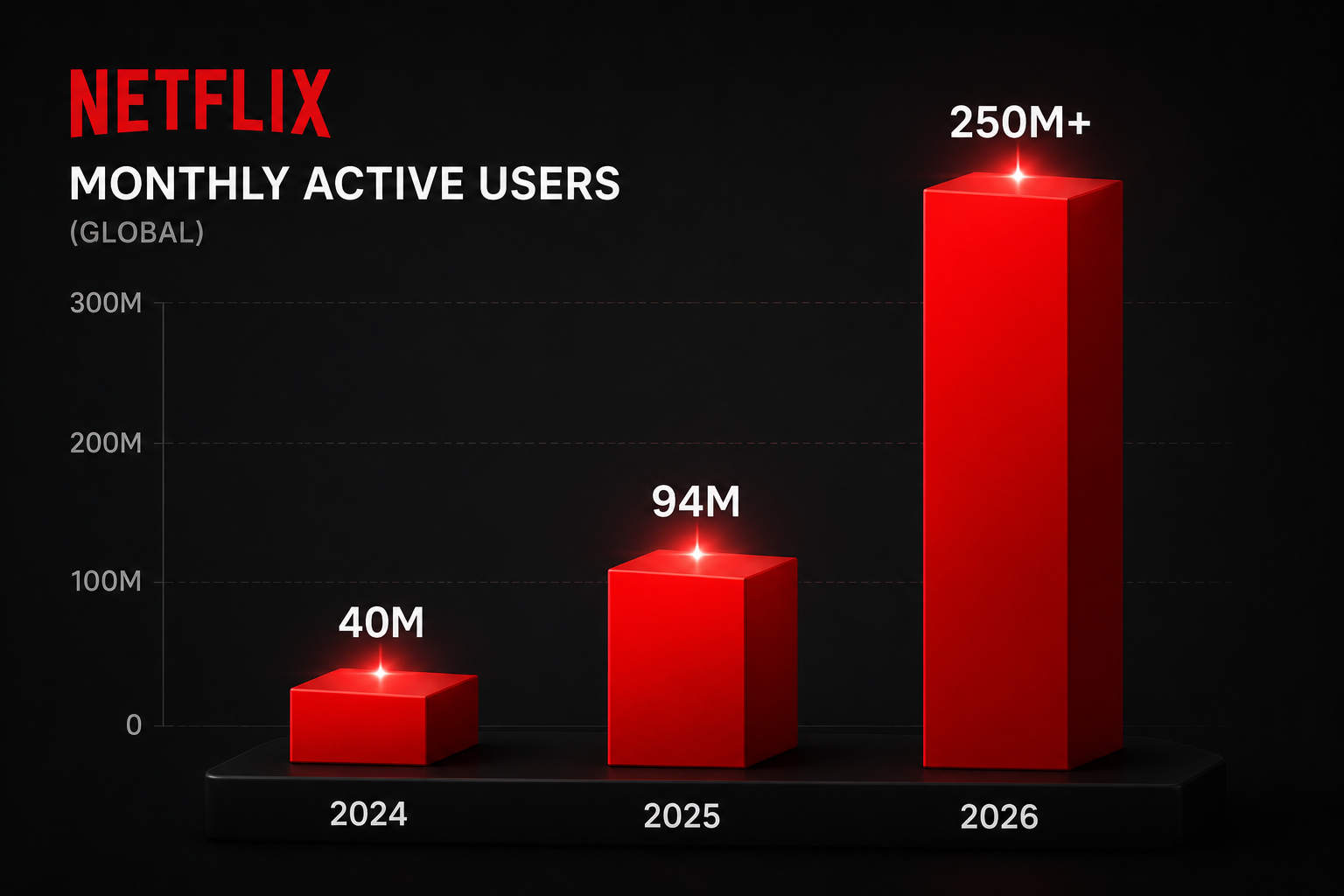
Netflix revealed during its 2026 Upfront presentation that its ad-supported tier now reaches more than 250 million monthly active viewers globally, with over 80% of ad-plan members watching every week.
Source - Netflix.com
#3: Paid Sharing (Growth lever)
For many years, password sharing was one of Netflix's biggest challenges. Millions of people watched Netflix using accounts paid for by friends or family members living outside their household. While this expanded Netflix's audience, it also meant that a significant number of viewers were consuming content without directly contributing to revenue.
Rather than banning account sharing outright, Netflix introduced a paid-sharing model that allows subscribers to add members outside their household for an additional monthly fee. This approach helped the company monetize existing viewing behaviour while minimizing customer disruption.
How the Model Works
The paid-sharing system is relatively straightforward:
- A primary subscriber keeps their existing account.
- Users outside the household can no longer access the account for free.
- The account owner can add those users as extra members for an additional fee.
- Alternatively, those users can create their own standalone Netflix subscriptions.
This allows Netflix to generate revenue from viewers who previously paid nothing.
The Bigger Picture
Paid sharing demonstrates Netflix's ability to find new revenue streams within its existing ecosystem. Rather than relying solely on subscriber growth, the company identified a large group of active viewers who were receiving value from the platform without paying for it.
By converting even a portion of these users into paying customers, Netflix unlocked billions of dollars in potential revenue while keeping content costs largely unchanged. This makes paid sharing one of the highest-return monetization initiatives the company has implemented in recent years.
While paid sharing has successfully unlocked billions in near-term revenue, it represents a 'one-time pull' growth lever. Once Netflix finishes converting the existing pool of password-sharers into extra members or standalone accounts, this growth engine will plateau. It is a finite optimization strategy rather than a permanent driver of new audience acquisition.
#4: Live Events and Sports (Growth Frontier)
For most of its history, Netflix deliberately stayed away from live sports. Management believed that major sports rights were extremely expensive, highly competitive, and often generated lower returns than investing in original movies and television series.
However, in recent years Netflix has started experimenting with a variety of live content formats. The company has secured rights to select NFL games, partnered with WWE programming, and hosted major live comedy specials, celebrity events, and other real-time broadcasts. While these initiatives are still relatively small compared to traditional sports broadcasters, they signal a significant shift in Netflix's strategy.
Why Live Content Matters
Most Netflix content is watched on demand. A subscriber can start a show whenever they want, pause it, and return later. Live events are different.
When a major sporting event or live show is taking place, viewers are encouraged to tune in at a specific time. This creates what media companies call appointment viewing - content that audiences feel compelled to watch live rather than later.
Appointment viewing is extremely valuable because it can attract large audiences simultaneously, generate social media buzz, and increase engagement on the platform.

Building a New Revenue Engine
Netflix is not trying to become a traditional sports network overnight. Instead, the company appears to be selectively acquiring content that can strengthen its broader ecosystem.
Live events can help Netflix:
- Attract new subscribers
- Reduce subscriber churn
- Increase viewing hours
- Create premium advertising opportunities
- Strengthen engagement with the platform
- Enhance the value of its ad-supported plans
The company's 2026 Upfront presentation further highlighted this strategy, emphasizing additional NFL programming and expanding live-event capabilities. This suggests that management sees live content not just as entertainment, but as a powerful tool for driving both subscription growth and advertising revenue.
#5: Licensing, Merchandise, and Brand Partnerships (Value Beyond Streaming)
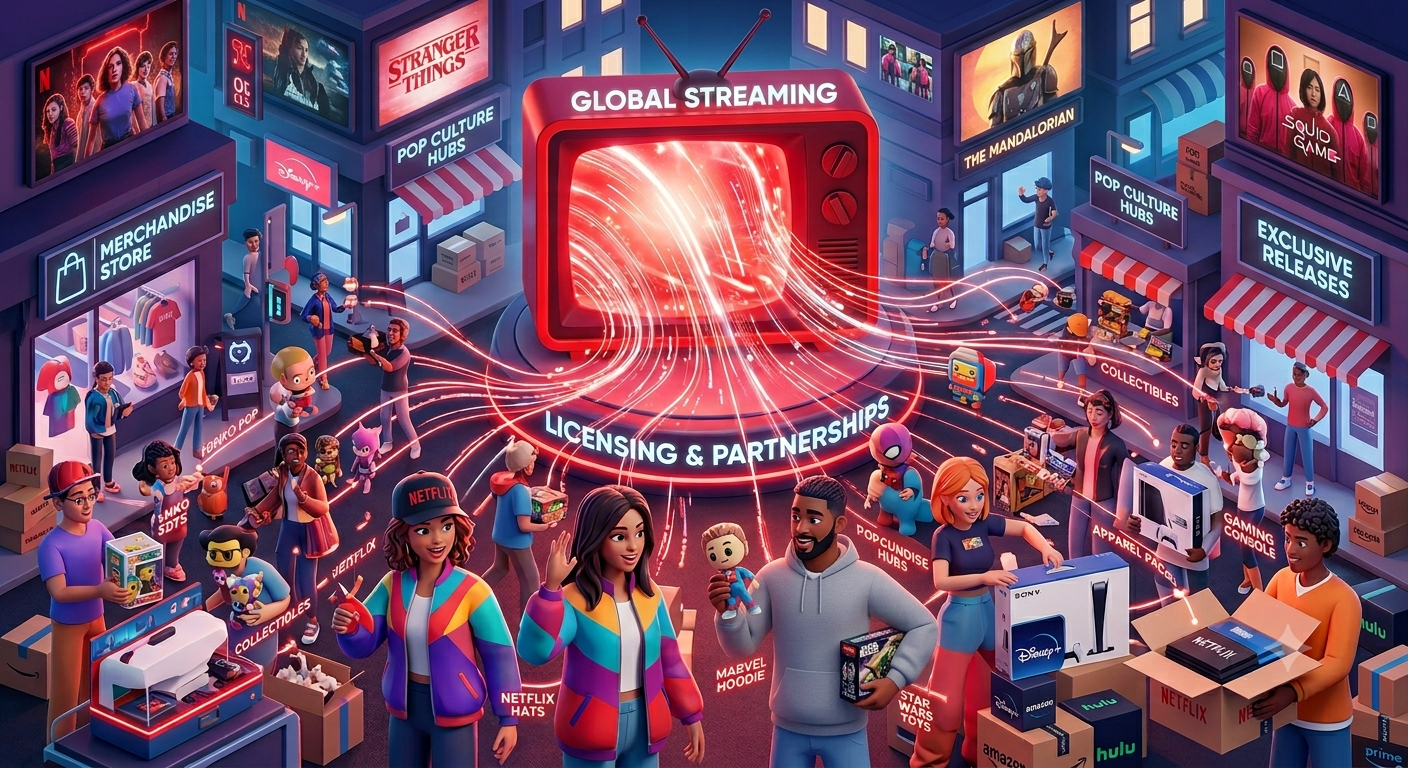
Although subscriptions and advertising generate the vast majority of Netflix's revenue today, the company is gradually building additional monetization channels around its most successful content franchises. These revenue streams are still relatively small compared to the core business, but they have the potential to become increasingly important over time.
Monetizing Popular Franchises
When a Netflix series becomes a global phenomenon, its value extends far beyond viewing hours. Popular titles such as Stranger Things, Squid Game, and Wednesday have developed massive fan communities around the world.
Instead of generating revenue only when someone watches a show, Netflix can earn money whenever fans purchase products or engage with the brand outside the platform.
Content Licensing
While Netflix is primarily known for licensing content from other studios and producing its own originals, the company can also license its intellectual property to third parties.
For example, a successful Netflix franchise could be used in:
- Video games
- Toys and collectibles
- Apparel and accessories
- Publishing deals
- Theme-based attractions
- International promotional campaigns
These agreements allow Netflix to earn licensing fees while expanding the reach of its content.
Brand Partnerships and Promotions
Netflix has increasingly partnered with major global brands to promote its most popular shows. Companies often pay to associate their products with hit Netflix franchises because of the enormous audiences those titles attract.
These partnerships create additional revenue opportunities while simultaneously increasing awareness of Netflix content. In many cases, both Netflix and its corporate partners benefit from the increased exposure.
The Disney Playbook
A useful comparison is The Walt Disney Company. Disney does not simply create movies - it monetizes successful intellectual property through merchandise, licensing, theme parks, games, and countless consumer products.
For example, a blockbuster superhero film can generate billions of dollars in revenue long after its theatrical release through toys, clothing, licensing deals, and attractions.
Netflix is still far behind Disney in this area, but it is gradually moving in a similar direction. Yet, replicating the Disney Playbook is structurally difficult for a streaming-first company. Disney's franchises (like Marvel or Star Wars) target generational, child-to-adult longevity that easily translates to theme parks and merchandise.
Netflix’s hits, while massive, tend to be fleeting cultural moments (e.g., Squid Game or Wednesday) that dominate social media for a month but lack the decades-long staying power required to anchor physical consumer ecosystems.
If you're interested in investing in companies like Netflix but aren't sure how to get started, I've created a step-by-step guide explaining how to invest in U.S. stocks from India. You can watch it here: How to Invest in US Stocks
Future Revenue Projections: What Analysts Expect
In 2026, Netflix is expected to generate between $50.7 billion and $51.7 billion in revenue. Which would represent approximately 12% - 14% growth compared to 2025. This indicates that management still sees significant room for expansion despite the company already having hundreds of millions of subscribers worldwide.
Netflix believes this growth will come from three primary sources. First, the company expects to add more paying subscribers across both developed and emerging markets. Second, Netflix continues to gradually increase subscription prices, which boosts revenue even if subscriber growth slows.
The third and potentially most important growth driver is advertising. Netflix's ad-supported plan has been gaining traction, and management expects advertising revenue to roughly double in 2026 the current revenue from ad subscription is $1.5 billion. As more users choose the lower-priced ad tier and advertisers increase spending on the platform, advertising is becoming an increasingly meaningful part of Netflix's business model.
In simple terms, Netflix plans to grow revenue by attracting more members, charging slightly higher prices, and significantly expanding its advertising business.
What Netflix's 2026 Upfront Revealed About The Future
Netflix's 2026 Upfront presentation provided a clearer picture of how the company plans to grow beyond traditional subscriptions. The biggest focus areas were advertising, international expansion, ad technology, and live content.
Massive Advertising Scale
Netflix's ad-supported tier has reached more than 250 million monthly active viewers, making it one of the largest streaming advertising platforms in the world.
This growing audience gives advertisers access to a massive global user base, increasing the value of Netflix's ad inventory and creating a significant new revenue stream.
International Ad Expansion
Netflix plans to launch its advertising tier in 15 additional countries starting in 2027. These countries are - Austria, Belgium, Colombia, Denmark, Indonesia, Ireland, the Netherlands, New Zealand, Norway, Peru, Philippines, Poland, Sweden, Switzerland and Thailand.
Expanding into new markets increases the number of advertisers that can use the platform while also creating more opportunities to monetize international viewers through advertising.
Better Advertising Technology
Netflix is investing heavily in improving its advertising ecosystem. Key areas include:
- More precise ad targeting
- Better measurement and performance analytics
- Interactive advertising formats
- AI-powered advertising tools
These improvements help advertisers achieve better results, allowing Netflix to charge higher advertising rates and increase revenue per user.
More Live Content
Netflix continues expanding into live programming, including NFL games, WWE events, and other live entertainment.
Live content typically attracts large real-time audiences, making it especially valuable for advertisers. It also helps increase viewer engagement and strengthens Netflix's position as a broader entertainment platform rather than just an on-demand streaming service.
Why It Matters
The presentation highlighted that Netflix's future growth will increasingly come from advertising, international expansion, and live content, reducing its reliance on subscription growth alone and creating multiple paths for long-term revenue growth.

Conclusion
Netflix's business model is entering a new phase. While subscriptions remain the foundation of the company, they are no longer the only driver of growth. Advertising, paid sharing, live events, licensing, merchandise, and brand partnerships are all becoming increasingly important parts of the Netflix ecosystem.
What makes Netflix particularly powerful is its ability to monetize the same audience in multiple ways. A subscriber can generate revenue through monthly fees, advertising impressions, paid-sharing conversions, live-event engagement, and eventually through products, games, and licensed intellectual property. Few entertainment companies possess a global audience of this scale and the technology platform needed to monetize it across so many channels.
Looking ahead, management's revenue projections and the company's 2026 Upfront presentation suggest that advertising could become Netflix's most important growth engine over the next decade. Combined with international expansion, improved ad technology, and a growing portfolio of live content, Netflix is building a business that is less dependent on subscriber growth alone.
In short, Netflix is no longer simply selling access to movies and TV shows. It is building a global entertainment ecosystem designed to generate revenue from every stage of audience engagement. The success of that strategy will likely determine whether Netflix remains one of the world's most valuable media companies in the years ahead.