Why are some analysts bullish on Lenskart?
What if a simple pair of glasses could represent one of the biggest consumer growth stories in India?
Lenskart is increasingly being seen by analysts as more than just an eyewear retailer. It sits at the intersection of a large underpenetrated market, a shift from unorganised to organised retail, and a tech-enabled shopping experience that blends online and offline channels.
But what exactly is driving this optimism and is the story as strong as it looks on paper?

Financial Highlights
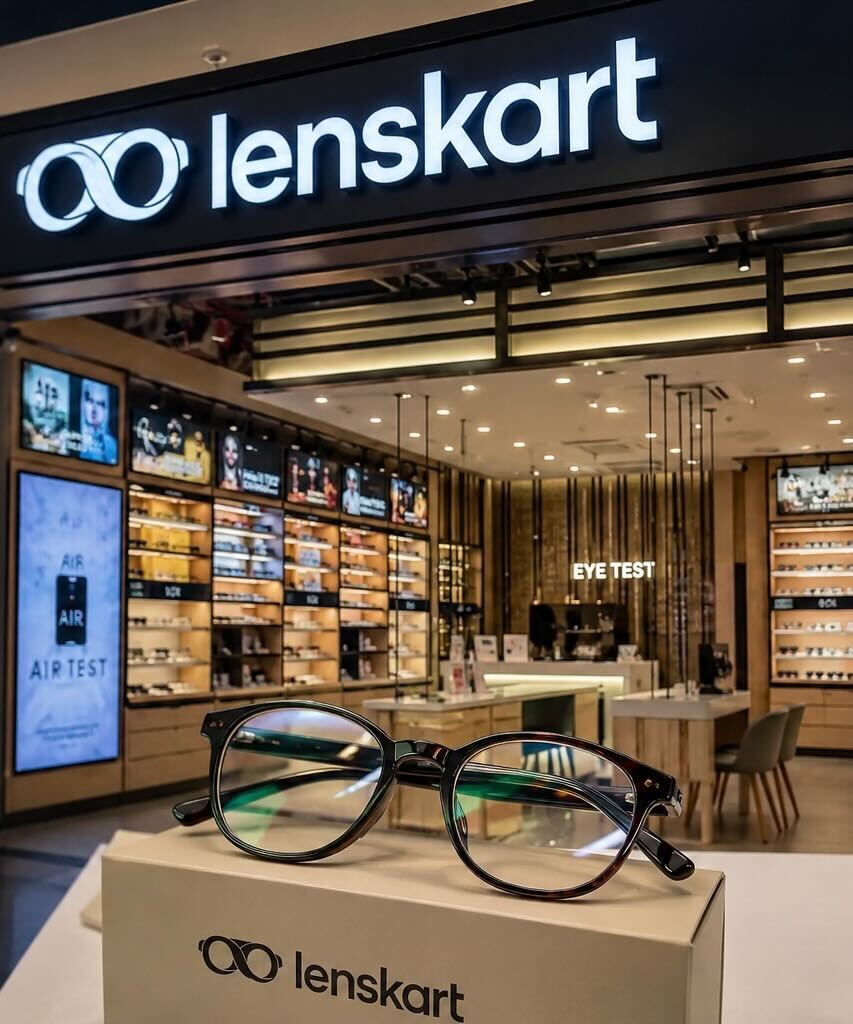
Lenskart’s strong financial performance has boosted analyst confidence.
The company reported revenue of around ₹2,308 crore, up 37% YoY.
EBITDA (pre-Ind AS 116 basis) rose nearly 90% YoY to ₹462 crore, with margins crossing 20% for the first time.
PAT stood at ₹133 crore, more than tripling YoY, while 9M PAT increased to ₹326 crore from ₹137 crore last year, reflecting strong earnings momentum.
India Profitability & Operating Leverage
Lenskart’s India business has shown strong improvement in profitability. Pre-Ind AS EBITDA margins increased to 14.9% from 10% last year, expanding by nearly 490 basis points.
The company described this margin improvement as “structural” rather than temporary.
Lower marketing costs, stronger repeat purchases, and better employee productivity driven by technology and AI were key contributors.
A Large & Underpenetrated Market Opportunity
India’s eyewear market is still far from being fully developed. A large part of the population either doesn’t use prescription glasses regularly or relies on unorganised local opticians.
This creates a long runway for growth for organised players like Lenskart. As awareness about eye health increases and screen usage rises, demand for eyewear is expected to grow steadily.
Because of this, analysts see a strong long-term opportunity rather than a short-term trend.
A Shift from Unorganised to Organised Market
The eyewear market in India is still largely dominated by local opticians and unorganised sellers. However, this structure is slowly changing.
Consumers are increasingly moving towards organised brands like Lenskart for better quality, transparent pricing, and reliable after-sales service. Trust and consistency are becoming key decision factors.
This shift from unorganised to organised retail is a major long-term growth driver for the company.
“Store-led Digital Brand” Model
Lenskart follows a “store-led digital brand” model, where online and offline channels work together instead of competing.
Customers often discover products online but complete their purchase in physical stores after trying them. This solves a key issue of fit and comfort in eyewear.
This hybrid approach helps Lenskart improve trust, customer experience, and conversion rates at the same time.
Repeat Purchase Economics
Eyewear is not a one-time purchase product, which works in Lenskart’s favour.
Customers return for multiple reasons such as changes in prescription, lifestyle or fashion upgrades, and occasional replacements due to damage.
This creates a steady stream of repeat demand, which improves long-term revenue visibility and makes the business model more stable.
Control Over the Value Chain + Technology push
Lenskart’s strong control over its value chain is a key advantage. It manages major parts of design, manufacturing, and distribution itself instead of depending heavily on third parties.
This helps the company reduce costs, improve margins, and maintain consistent product quality.
On the technology side, tools like virtual try-ons, AI-based recommendations, and data-driven insights improve customer experience and increase conversion rates.
Global Expansion Adds Diversification
Lenskart’s expansion into international markets is an important growth driver beyond India.
The company is entering regions like Southeast Asia and the Middle East, where demand for organised eyewear retail is also growing.
This global push not only supports future growth but also reduces dependence on the Indian market, adding geographical diversification to the business.
Key Risk Investors are Ignoring
Despite the positive outlook, there are risks that investors may be underestimating.
One key concern is the high cost of expanding physical stores, which can put pressure on profitability if growth slows.
Competition is also increasing in the organised eyewear space, which could impact margins over time.
Lastly, valuations may already be pricing in strong growth, leaving limited room for disappointment if execution does not meet expectations.
Conclusion
Overall, analysts are bullish on Lenskart because it is operating in a structurally growing and underpenetrated market while benefiting from a clear shift towards organised retail.
Its omnichannel model, strong control over the value chain, and technology-led approach further strengthen its competitive position.
At the same time, the long-term story is not risk-free. High expansion costs, rising competition, and valuation concerns mean that execution will be critical going forward.
In simple terms, Lenskart looks well-positioned for growth, but sustaining that growth profitably will decide how strong the story really becomes.