Top 5 Global Producers of Uranium – Where does India Stand?
Natural resources have always played a crucial role in shaping economies, industries, and national development. From fossil fuels and metals to energy minerals, access to critical resources often drives economic growth, industrial development, and energy security. As energy demand rises and countries pursue cleaner growth, strategic minerals are becoming increasingly important.
Among all strategic resources, uranium holds a unique position because it fuels nuclear power generation. Although it represents a small part of the global commodities market, it remains an important resource for countries seeking reliable and low-carbon electricity. Its importance has increased as many nations turn to nuclear energy to support the clean energy transition.
However, only a few countries produce most of the world's uranium. As a result, the global uranium supply chain remains highly concentrated. This concentration influences energy security, international trade, and the future growth of nuclear power worldwide.
Before discussing India's position, it is important to understand the countries that dominate uranium production. A small group of nations supplies most of the world's uranium. These countries play a critical role in supporting the global nuclear energy industry.
Kazakhstan - The Undisputed Leader
Kazakhstan is by far the largest uranium-producing country in the world. The country has produced roughly 40% of global uranium supply for many years, making Kazakhstan the dominant player in the industry.
Why Kazakhstan Leads?
Kazakhstan leads global uranium production because it has a unique combination of large uranium reserves, low-cost mining, favorable geology, and decades of expertise in In-Situ Recovery (ISR) mining. These factors allow it to produce uranium much more cheaply and efficiently than most other countries.
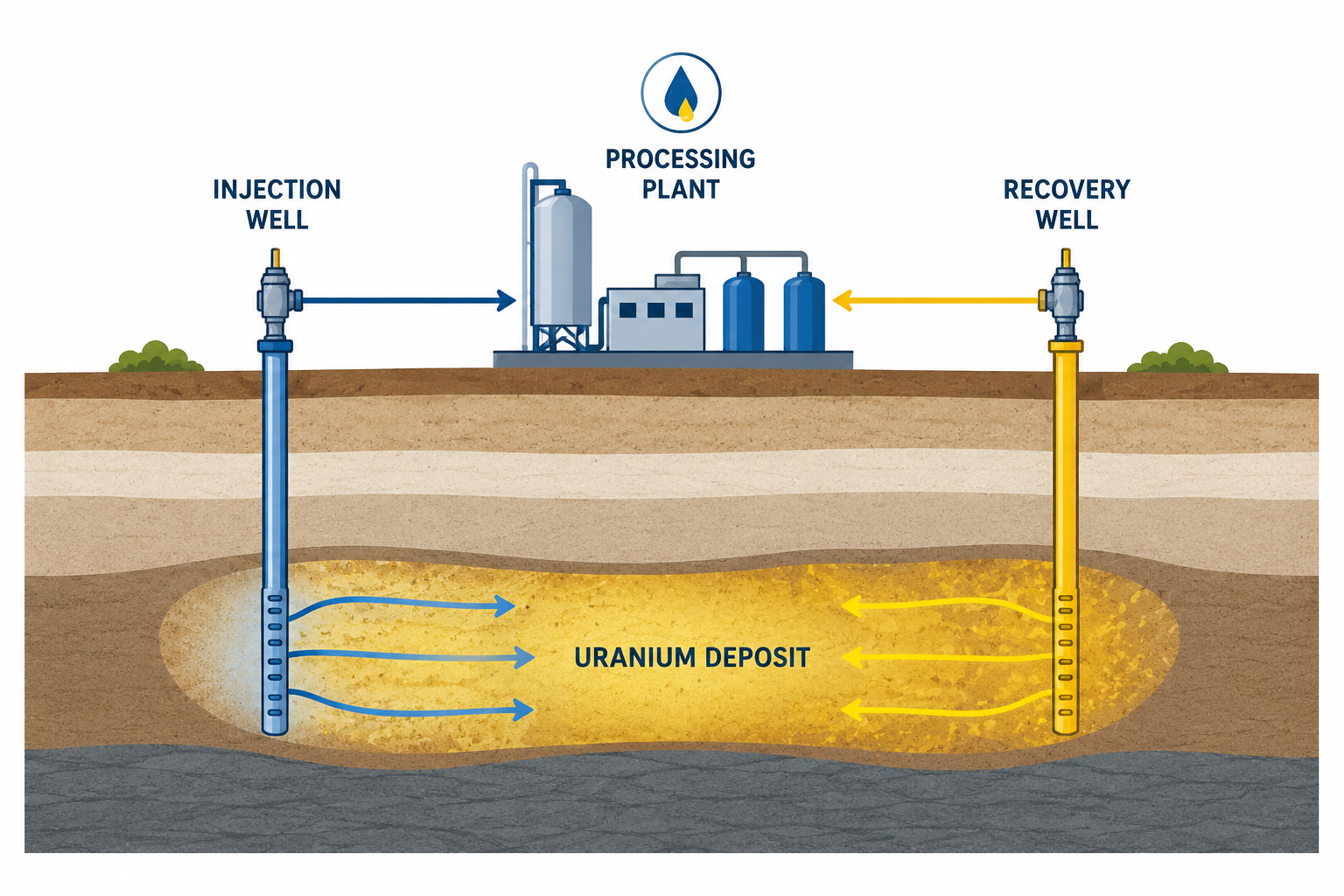
Perfect Geology for Low-Cost Mining - Most of Kazakhstan's uranium deposits are located in sandstone formations that are ideal for In-Situ Recovery (ISR) mining.
Instead of operating massive open-pit or underground mines, companies drill wells and pump a solution underground to dissolve uranium. They then bring the uranium-rich solution back to the surface for processing. This significantly reduces mining costs and gives Kazakhstan a major competitive advantage.
Massive Resource Base - The country possesses one of the world's largest uranium resource bases. Kazakhstan has roughly 50 to 60 identified uranium deposits spread across six geological provinces, with around 14 deposits currently in active use. These deposits collectively hold about 14% of the world's proven uranium resources.
Strong Government Support - The state-owned company Kazatomprom has played a major role in developing the industry. Government support, foreign partnerships, and long-term investment helped uranium production grow dramatically after the early 2000s. Kazakhstan became the world's largest uranium producer in 2009 and has maintained that position since then.
Heavy Use of ISR Technology - Nearly all uranium production in Kazakhstan comes from ISR mining. If we compare ISR mining with traditional mining. ISR Requires lower capital investment, causes less environmental disturbance and can be brought into production faster.
Canada – Home to the World's Richest Uranium Deposits
Canada stands out for the exceptional quality of its uranium deposits. In fact, Canada is home to some of the richest uranium resources ever discovered, making it one of the most strategically important uranium-producing nations in the world.
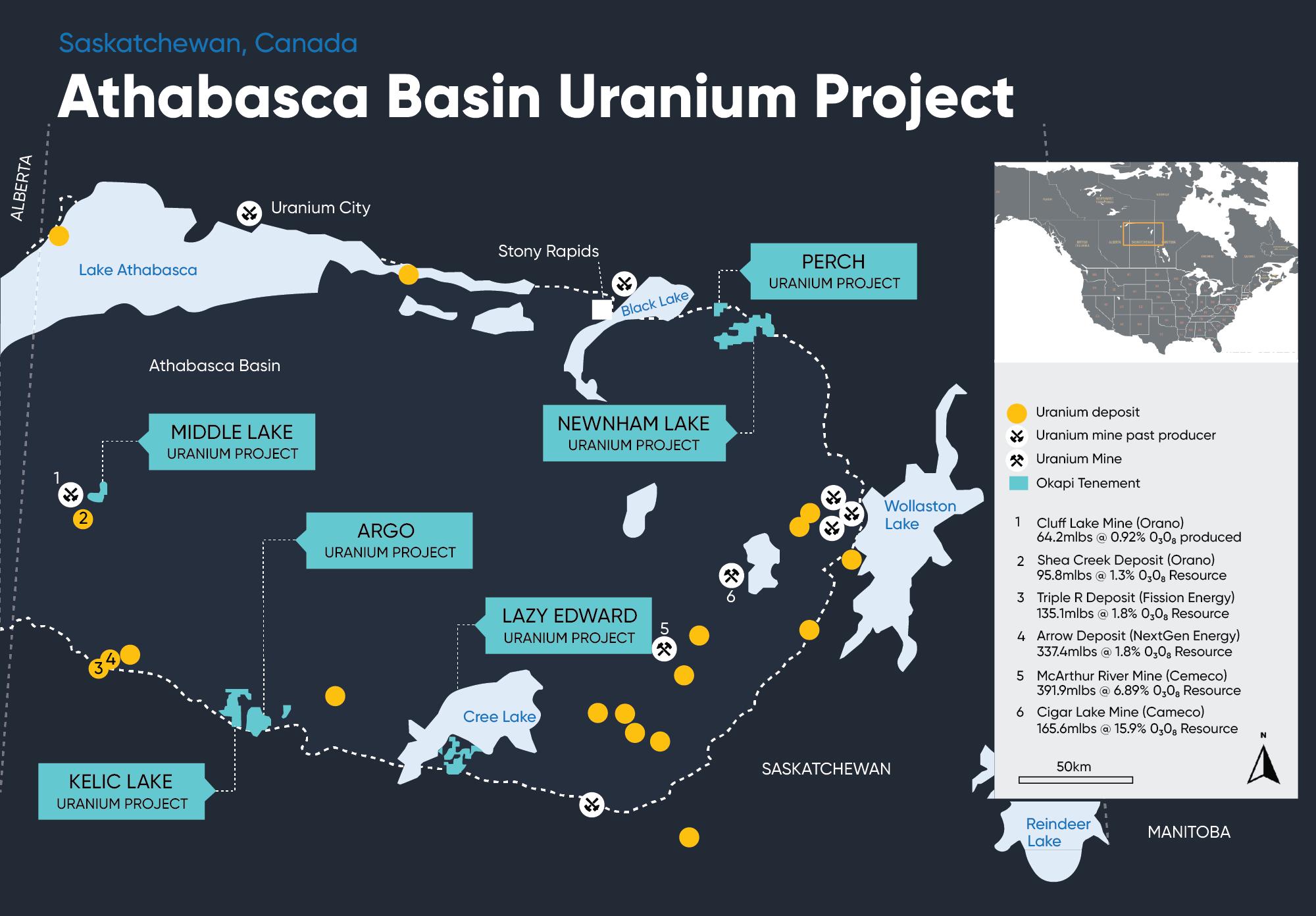
The Athabasca Basin - The foundation of Canada's uranium strength lies in the Athabasca Basin, a vast geological region located in the province of Saskatchewan. This basin is widely regarded as the world's premier uranium mining district due to the extraordinary concentration of uranium found within its deposits.
Why Investors Like Canadian Uranium?
Political Stability - Canada is one of the world's most politically stable countries. This reduces the risk of sudden policy changes, nationalization, or disruptions that could affect mining operations.
Long-Term Investment Visibility - Mining companies often invest billions of dollars in uranium projects that can take years to develop. Canada's stable business environment gives investors confidence that projects can operate over decades without major regulatory surprises.
Global Credibility - Canadian uranium is widely respected in international markets due to the country's reputation for responsible mining practices, regulatory oversight, and operational transparency.
Why Does Kazakhstan Produce More Uranium Than Canada?
The key factor is extraction cost. Although Canada's uranium deposits contain significantly higher uranium concentrations, many of these deposits require complex underground mining operations. Kazakhstan's deposits, while lower in grade, can often be mined using simpler and more economical techniques. This allows producers to extract uranium more efficiently, scale production quickly, and remain competitive in global markets. As a result, Kazakhstan's cost advantage translates into higher overall production.
Namibia – Africa's Uranium Powerhouse
Namibia has quietly become one of the most important uranium-producing countries in the world. While it receives less attention than major producers such as Kazakhstan and Canada, its extensive uranium reserves, large-scale mining operations, and growing strategic importance have made it a key supplier to the global nuclear energy industry.
Why does Namibia Matter?
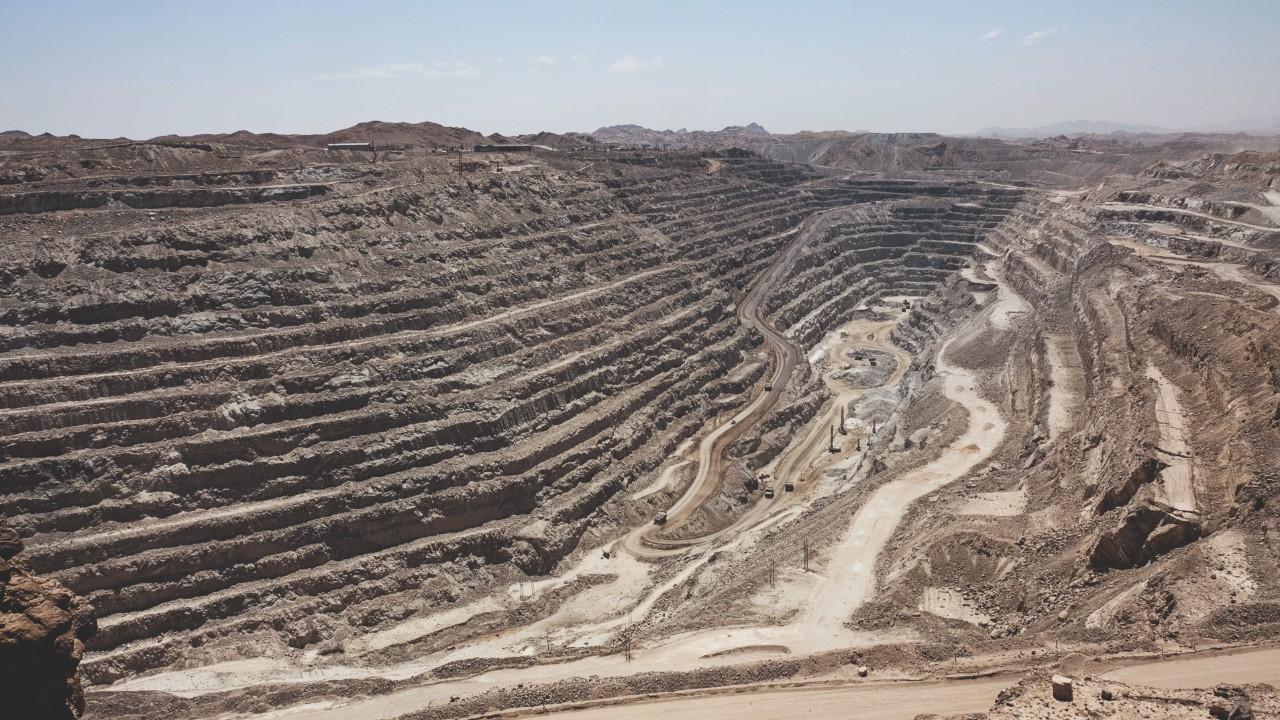
Vast Uranium Resources - Namibia's strength comes from the Namib Desert, which contains some of the world's largest uranium-bearing geological formations. These deposits support several large mining operations that contribute significantly to global uranium production. The size of these resources allows Namibia to maintain a strong and stable position in the uranium market.
Export-Oriented Industry - Uranium contributes significantly to Namibia's export earnings and remains one of the country's most valuable export commodities and a major source of foreign exchange earnings. Namibia exports most of its uranium to countries that operate nuclear power plants, Including countries in Europe and Asia. This makes uranium mining an important pillar of Namibia's economy.
Attractive Mining Destination - The country has a long history of uranium mining, supportive mining policies, and well-established export infrastructure. These factors have attracted substantial investment from international mining companies, further strengthening Namibia's position as a major uranium producer.
Strategic Significance
Namibia has become increasingly important as countries seek to diversify uranium supply away from a few dominant producers.
Australia – The Resource Giant
Australia is one of the most resource-rich countries in the world and holds a unique position in the global uranium industry. While countries such as Kazakhstan and Canada often dominate annual uranium production rankings, Australia stands out because of the sheer size of its uranium reserves. In fact, the country possesses some of the largest known recoverable uranium resources on the planet.
Australia’s share in global uranium production is often much smaller than its share of global uranium reserves. In simple terms, Australia has far more uranium in the ground than it currently produces. This means the country has substantial untapped potential that could be developed in the future if market conditions become favourable.
Huge Reserve Base
Australia's greatest strength is its enormous uranium resource base. The country is estimated to hold a significant portion of the world's recoverable uranium reserves. Unlike some countries, where resources may become depleted over time, Australia's large reserve base gives it the ability to remain a major player in the uranium industry for decades.
Why Does Australia Matter?
Strong Mining Expertise - Australia is one of the world's leading mining nations and has decades of experience in developing and operating large-scale resource projects. The country has a highly skilled workforce, advanced mining technology, and extensive operational knowledge, all of which support efficient uranium production.
Massive Untapped Potential - Unlike some leading producers that are already operating at high production levels, Australia still possesses a large amount of undeveloped uranium resources. This gives the country significant flexibility to increase production in the future if uranium prices rise and demand continues to grow.
Stable Regulatory Environment - Australia is known for its transparent legal system, strong property rights, and well-defined mining regulations. For mining companies and investors, regulatory stability is extremely important because uranium projects often require large investments and can take years to develop.
Reliable Global Supplier - Countries operating nuclear power plants need dependable long-term uranium suppliers. Australia's political stability, strong governance, and mining expertise make it one of the most trusted uranium-producing nations in the world.
Established Export Infrastructure - Australia has well-developed ports, transportation networks, and logistics systems that allow mining companies to export resources efficiently to global markets. This infrastructure advantage helps reduce costs and improves the country's ability to serve international customers.
Uzbekistan – The Rising Producer
Uzbekistan has quietly emerged as one of the world's leading uranium producers. While it does not receive the same level of attention as major producers such as Kazakhstan, Canada, or Australia, the country has steadily expanded its uranium industry over the past decade and established itself as an increasingly important player in the global nuclear fuel market.
Competitive Advantages
Cost Efficiency Through ISR Mining - One of Uzbekistan's biggest advantages is its use of In-Situ Recovery (ISR) mining, the same low-cost mining technique that has helped Kazakhstan become the world's largest uranium producer.
Government Support - The Uzbek government views uranium as an important strategic resource and continues to support the development of the country's mining sector.
Government support encourages investment in uranium projects, expands exploration activities, modernizes mining operations, and strengthens export capabilities. This commitment provides a foundation for future growth and helps ensure the long-term development of the uranium industry.
Growing Export Market - Uzbekistan exports its uranium production to international markets. where it is used as fuel for nuclear power plants. As countries seek reliable and diversified uranium suppliers, Uzbekistan is becoming an increasingly important source of supply. Its growing production capacity and competitive costs have helped strengthen its position within the global nuclear fuel supply chain.
Strategic importance
Uzbekistan's production remains significantly smaller than that of neighbouring Kazakhstan, but its importance continues to grow.
The country combines several attractive characteristics:
- Low-cost uranium production.
- Large uranium resource base.
- Government-backed industry development.
- Growing presence in international markets.
- Strategic location within a major uranium-producing region.
As global nuclear energy demand increases, Uzbekistan is well positioned to expand its role in the uranium market. While it may not challenge Kazakhstan's dominance in the near future, it is increasingly viewed as one of the most promising growth stories in the global uranium industry.
Why These Five Countries Dominate Global Uranium Production?
The dominance of Kazakhstan, Canada, Namibia, Australia, and Uzbekistan can be attributed to a combination of factors that support large-scale uranium production.
These countries possess substantial uranium reserves, providing a strong resource foundation for long-term mining operations. Over decades, they have developed specialized mining expertise, helping improve efficiency and reduce production costs.
They also benefit from well-established infrastructure, including mining facilities, processing plants, transportation networks, and export systems. In addition, governments often treat uranium as a strategic resource and support industry development through stable policies. Access to significant capital further enables investment in large and complex uranium mining projects, strengthening their competitive advantage.
Where Does India Stand?
Despite being one of the world's fastest-growing economies and having ambitious nuclear energy plans, India remains a relatively small uranium producer on the global stage.
According to the latest global uranium production data for 2024, worldwide uranium mine production was approximately 60,213 tonnes of uranium. India's production was estimated at just 500 tonnes, accounting for less than 1% of global supply.
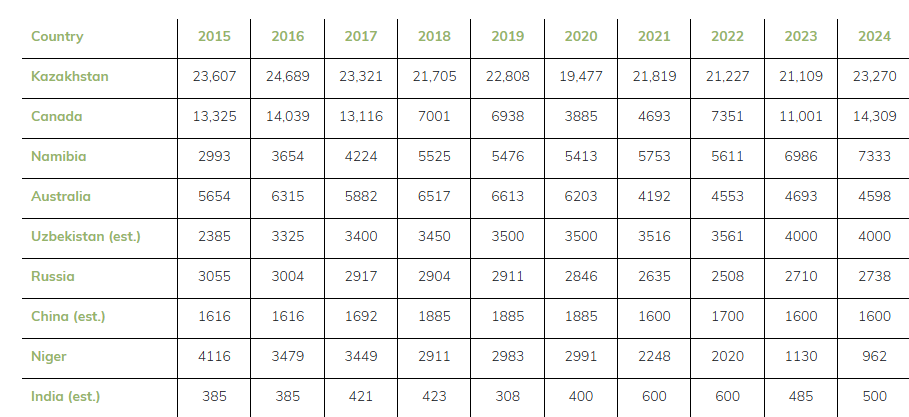
Source of the above chart - https://world-nuclear.org/information-library/nuclear-fuel-cycle/mining-of-uranium/world-uranium-mining-production
Based on these figures, India ranks well outside the world's top five producers and trails even countries such as China and Russia by a significant margin. Kazakhstan alone produces nearly 47 times more uranium than India, while Canada's output is almost 29 times higher.
However, judging India's position solely by production volumes would be misleading. India's importance in the uranium market stems not from what it produces today, but from what it is expected to consume in the future.
India currently operates one of the world's largest nuclear expansion programs. As the country seeks to diversify its energy mix and reduce dependence on fossil fuels, nuclear power is expected to play a larger role in electricity generation. This means uranium demand is likely to grow much faster than domestic production. As a result, India continues to rely heavily on imports from countries such as Kazakhstan, Canada, Australia, and Russia to fuel its reactors.
The reason domestic production remains limited is largely geological and economic. While India possesses identified uranium resources of nearly 293,000 tonnes, many deposits are lower-grade and more expensive to develop than the world-class deposits found in Canada or Kazakhstan.
Conclusion
The global uranium industry is dominated by a handful of countries. Kazakhstan, Canada, Namibia, Australia, and Uzbekistan lead global uranium production. These countries possess rich uranium reserves, benefit from favorable geology, use efficient mining methods, and receive strong government support. They have also built robust infrastructure, which helps them maintain their leadership in the global uranium market.
India stands in a very different position. Despite having uranium resources and ambitious nuclear power plans, the country remains a small producer. It contributes less than 1% of global uranium output. Lower-grade deposits, higher extraction costs, and rising domestic demand have limited production growth.
However, India's importance goes beyond current production levels. The country is rapidly expanding its nuclear power capacity to meet growing energy needs. As a result, its uranium consumption is expected to increase significantly in the coming years.
This makes uranium security a key part of India's long-term energy strategy. Expanding domestic production and securing international supply agreements will both play an important role. While India is not yet a major uranium producer, it is becoming one of the major uranium consumers.