Diffusion Engineers Ltd: How do they Make Money?
Industrial companies spend billions of dollars every year on new machinery. But buying new equipment is only half the story.
The bigger challenge begins after the machines are installed.
Cement plants, steel mills, power plants, mining companies, and engineering firms operate equipment under extremely harsh conditions. Constant exposure to abrasion, impact, corrosion, and high temperatures gradually damages critical components. Left unchecked, this wear can reduce efficiency, force unplanned shutdowns, and require expensive replacements.
For most industries, replacing an entire machine isn't practical.
Instead, they look for ways to repair, protect, and extend the life of existing equipment.
This is exactly where Diffusion Engineers Ltd. has built its business.
Unlike conventional welding companies that primarily sell standard welding electrodes, Diffusion specializes in wear management and life-extension solutions. The company develops specialized welding consumables, wear-resistant products, engineered components, and heavy engineering equipment that help industrial customers increase equipment life while reducing maintenance costs and downtime.
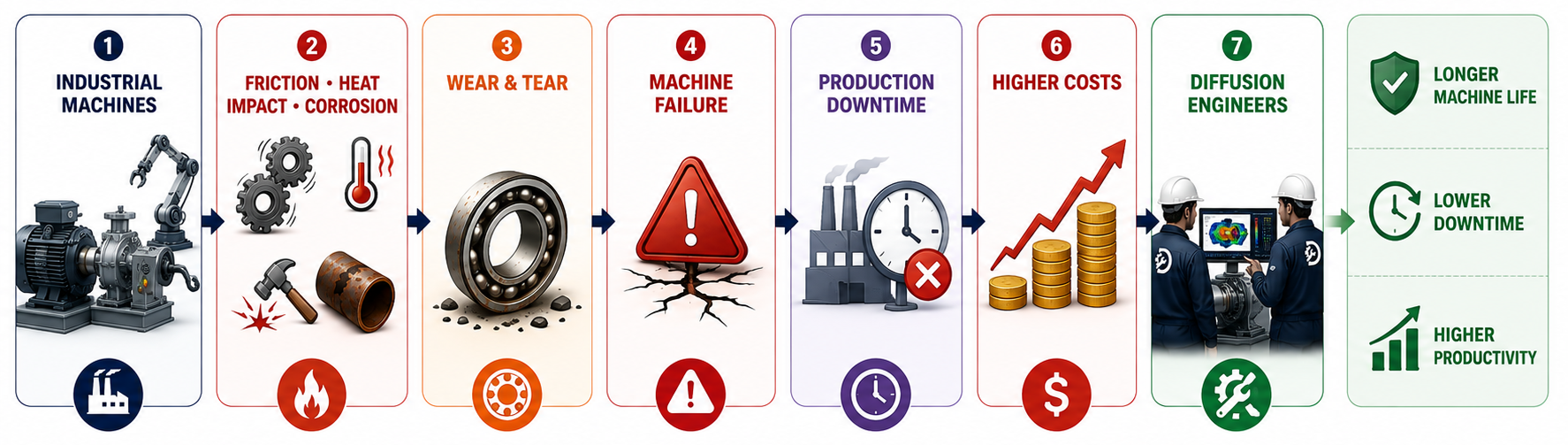
Today, its products and services are used across industries such as cement, steel, power, mining, engineering, sugar, defence, and oil & gas, making it an important supplier to India's industrial ecosystem.
From Welding Consumables to Complete Engineering Solutions
Diffusion Engineers wasn't built as a heavy engineering company from the beginning.
Established in 1982, the company initially focused on manufacturing special-purpose welding electrodes. Over the years, it expanded into adjacent businesses by leveraging its expertise in metallurgy and industrial maintenance.
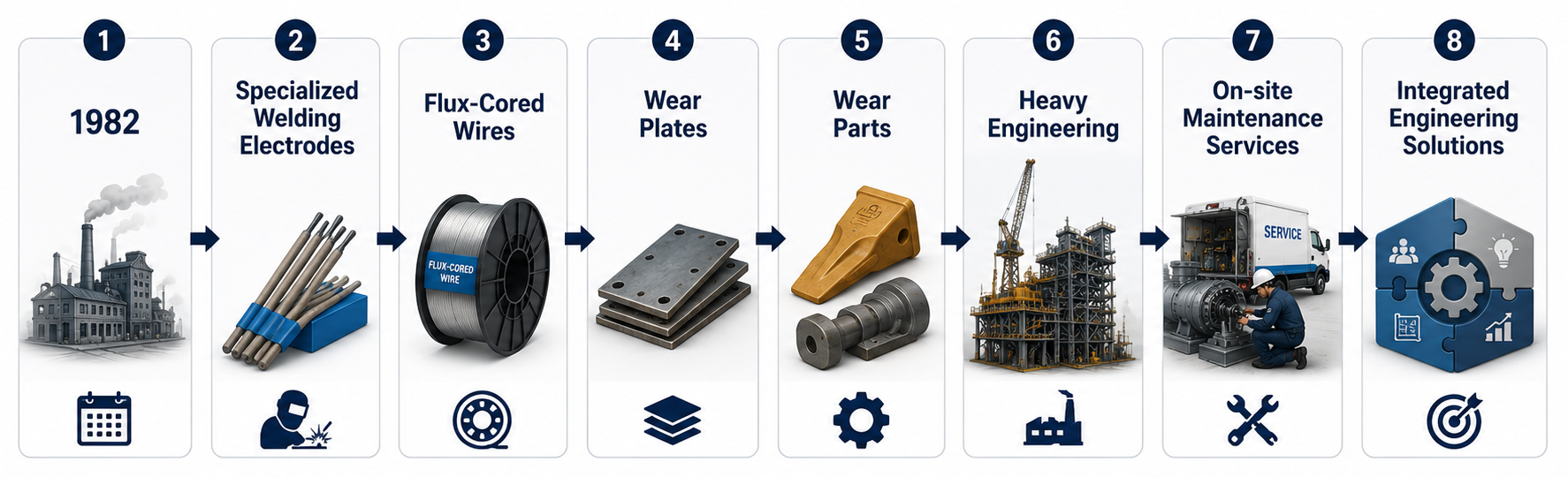
Today, Diffusion operates a diversified industrial portfolio that includes:
- Special-purpose welding electrodes
- Flux-cored welding wires
- Wear plates
- Ready-to-fit wear parts
- Heavy engineering equipment
- Coating and cold repairing compounds
- Industrial repair and maintenance services
Instead of supplying just one product, the company now offers multiple solutions that address different stages of an industrial customer's maintenance cycle.
This gradual expansion has transformed Diffusion from a consumables manufacturer into an integrated engineering solutions provider.
The Real Product Isn't Welding Consumables
At first glance, Diffusion appears to be a welding consumables manufacturer.
However, that description misses the bigger picture.
The company's actual business is helping industries increase equipment life and reduce maintenance costs.
Its welding consumables are simply one part of a much broader engineering ecosystem.
For example:
A cement manufacturer may initially purchase specialized welding electrodes to repair worn equipment.
Later, the same customer may switch to wear plates for longer-lasting protection.
Eventually, instead of buying consumables separately, the customer may order fully fabricated wear parts that can be directly installed during scheduled maintenance.
Large customers may even outsource fabrication work, heavy engineering projects, or on-site repair services to Diffusion.
In other words, the company doesn't just sell products—it sells complete wear management solutions.
This allows Diffusion to participate in a much larger share of a customer's maintenance spending rather than competing only in the welding consumables market.
A Business Built Around Industrial Maintenance
One interesting aspect of Diffusion's business is that demand is driven less by new factory construction and more by the ongoing maintenance requirements of existing industries.
Whether it's a cement kiln, steel rolling mill, mining crusher, or power plant boiler, industrial equipment experiences continuous wear throughout its operating life.
As long as factories continue to operate, they require periodic maintenance, repairs, and replacement of wear-prone components.
This creates recurring demand for many of Diffusion's products and services.
The company has also built long-term relationships with industrial customers over more than four decades, with management indicating that over 80% of revenue comes from repeat customers, highlighting the recurring nature of its business.
Company's Four Revenue Engines
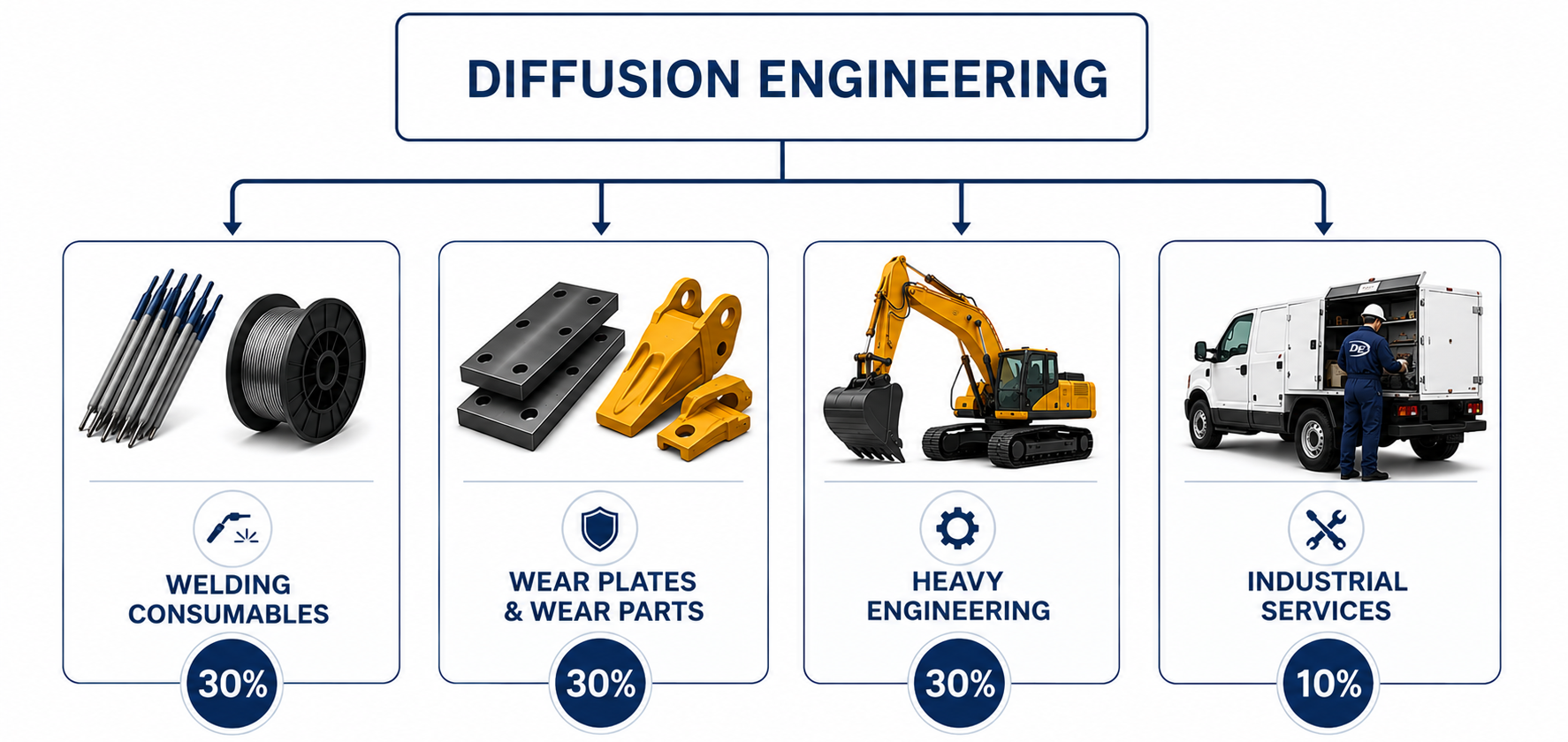
Over the past four decades, the company has steadily expanded its offerings from specialized welding products to complete wear management solutions. Today, Diffusion generates revenue through four complementary business segments, each serving a different stage of an industrial customer's maintenance cycle.
Management broadly classified its revenue mix as:
- ~30% Welding Consumables (Products)
- ~30% Wear Plates & Wear Parts
- ~30% Heavy Engineering
- ~10% Industrial Services
Rather than depending on a single product, the company participates across the entire maintenance value chain, allowing it to increase revenue from the same customer over time.
1. Welding Consumables – The Foundation of the Business
Diffusion Engineers began its journey by manufacturing specialized welding consumables, and this business continues to form an important part of its revenue.
The company manufactures products such as:
- Special Purpose Electrodes
- Flux Cored Wires
- Other specialized hard-facing consumables
These are not conventional welding products used in general fabrication.
Instead, they are designed for repair and maintenance applications, where industrial equipment operates under severe conditions such as abrasion, impact, corrosion, and high temperatures.
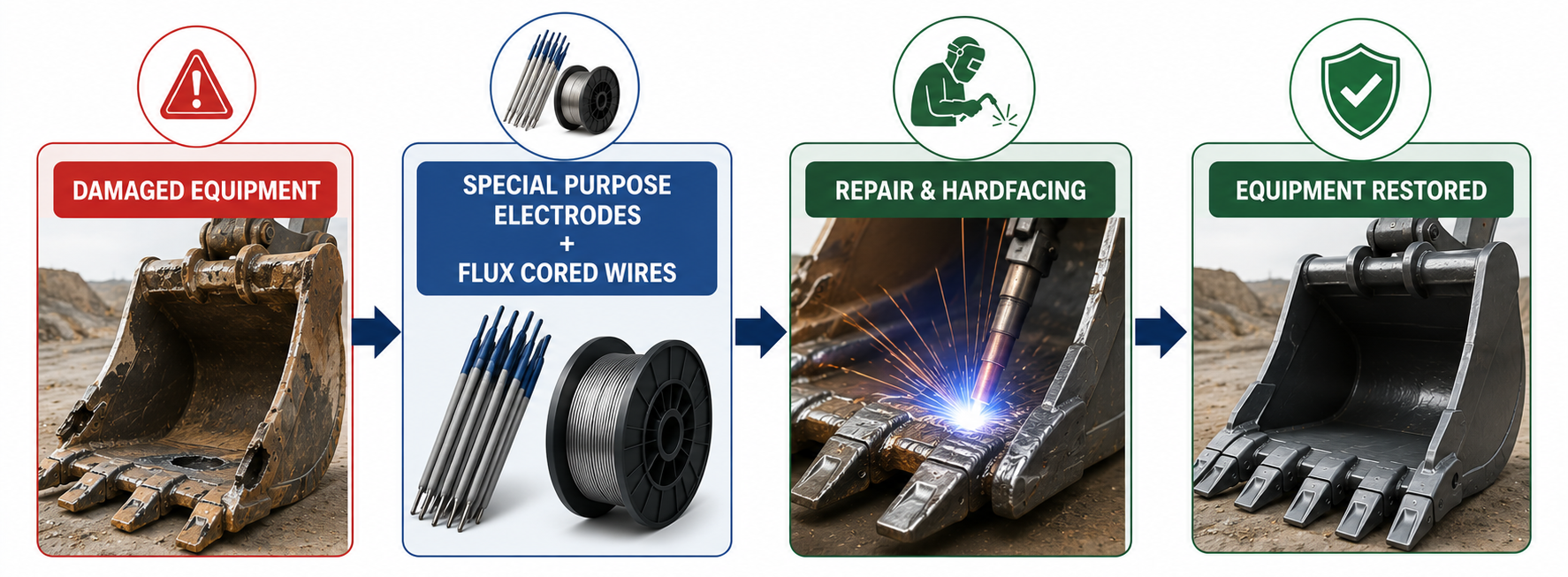
Management also highlighted that less than 2–3% of its consumables business comes from conventional welding products, with the overwhelming majority focused on specialized hard-facing and repair applications.
This specialization allows the company to differentiate itself from commodity welding manufacturers and compete on performance rather than price.
2. Wear Plates & Wear Parts – Moving Up the Value Chain
While welding consumables help repair damaged equipment, many industrial customers increasingly prefer a more comprehensive solution.
Instead of purchasing consumables and carrying out repairs themselves, they increasingly buy ready-to-install wear-resistant components.
This is where Diffusion's wear plates and wear parts business comes in.
Wear plates are specially engineered plates designed to withstand:
- Abrasion
- Impact
- Corrosion
- High temperatures
These wear plates are then fabricated into customized wear parts that can be directly installed into industrial equipment.
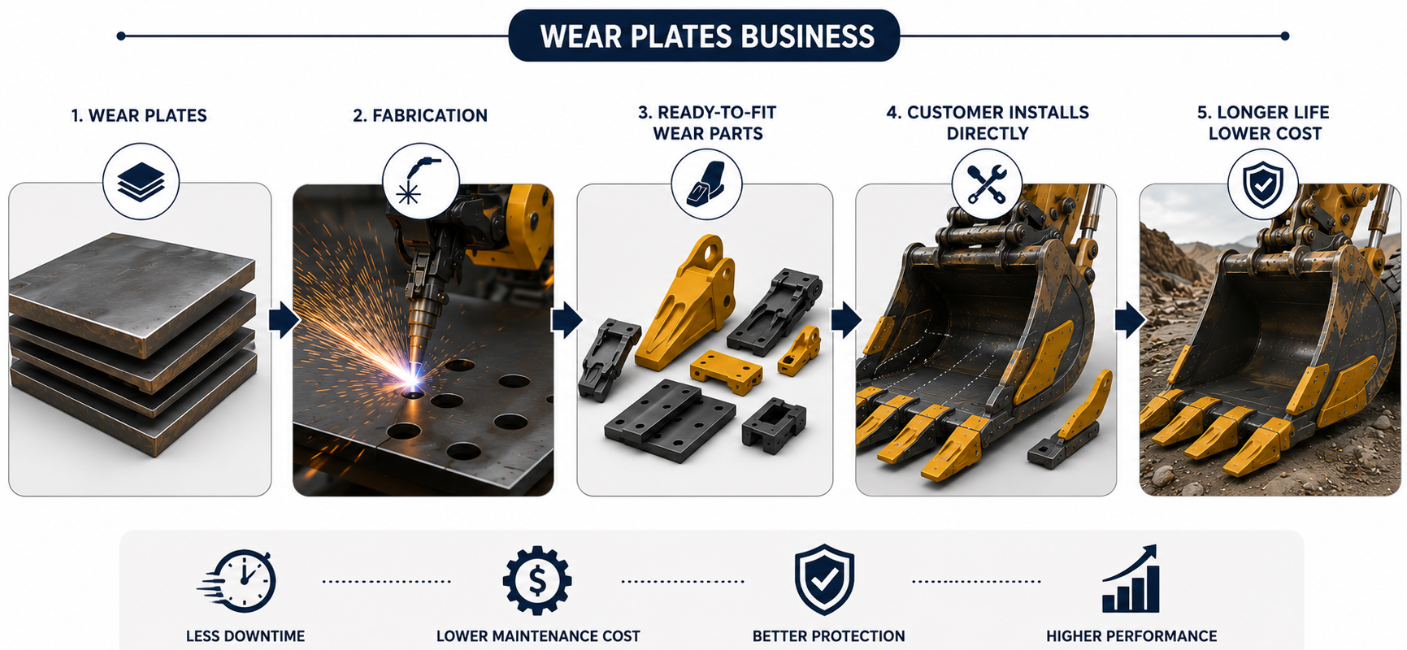
The company supplies these products to industries such as cement, steel, mining, and power, where equipment experiences continuous wear during operations.
According to management, this business is expected to grow faster than welding consumables because customers increasingly prefer ready-to-fit components instead of purchasing individual consumables and undertaking repairs themselves. Larger engineered solutions also result in higher order values.
3. Heavy Engineering – Manufacturing Large Industrial Equipment
The third business segment is heavy engineering.
Here, Diffusion manufactures fabricated industrial equipment used across sectors such as cement, steel, power, engineering, and sugar.
Its capabilities include:
- Fabrication
- Machining
- Assembly
- Heat Treatment
- Surface Cladding
Most of these activities are carried out in-house, while outsourcing is limited to specialized operations that the company has not yet developed internally.
Heavy engineering projects typically involve significantly larger order values than consumables, making this an important contributor to the company's overall revenue.
4. Industrial Services – Extending Customer Relationships
The final business segment is industrial services.
Not all industrial equipment can be transported to a manufacturing facility for repairs.
Large assets such as kilns, mills, and crushers often require maintenance at the customer's site.
To address this need, Diffusion provides a range of on-site services, including:
- Breakdown maintenance
- Equipment repair
- Hot kiln alignment
- On-site overlay and restoration work
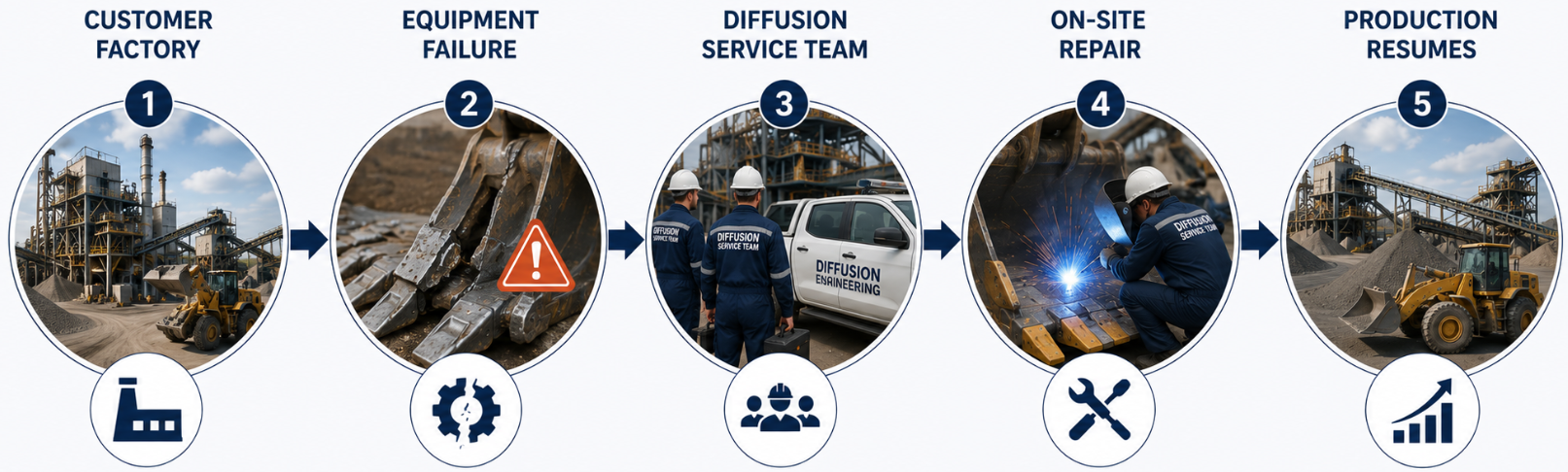
Management stated that around 50–60 welding technicians execute these projects simultaneously across customer locations.
Although services contribute the smallest share of revenue, they help strengthen customer relationships and often create opportunities to sell additional products and engineering solutions.
One Customer, Multiple Revenue Opportunities
One of the strengths of Diffusion's business model is that the same customer can generate revenue across multiple business segments.
For example, a cement manufacturer may initially purchase specialized welding consumables for equipment repairs. Over time, it may upgrade to wear plates for improved durability, order customized wear parts for faster maintenance, outsource fabrication work, and eventually engage Diffusion's service team for on-site repairs.
Rather than relying on a single product sale, the company participates across a customer's entire maintenance lifecycle.
This not only increases revenue per customer but also strengthens long-term customer relationships.
What Gives Diffusion Engineers Its Competitive Advantage?
Manufacturing welding consumables is not difficult.
Building a complete wear management ecosystem is.
This is where Diffusion Engineering stands apart.
Instead of selling a single product, the company offers an integrated solution that covers multiple stages of industrial maintenance.
It all starts with metallurgy.
Diffusion develops proprietary alloys that can withstand abrasion, corrosion, impact, and high temperatures. These alloys form the foundation of its specialized electrodes, flux-cored wires, wear plates, and other anti-wear products.
But the company doesn't stop there.
It converts these wear plates into ready-to-fit wear parts. It also manufactures heavy engineering equipment and provides on-site repair and maintenance services.
As a result, customers can source multiple solutions from a single engineering partner instead of dealing with several vendors.
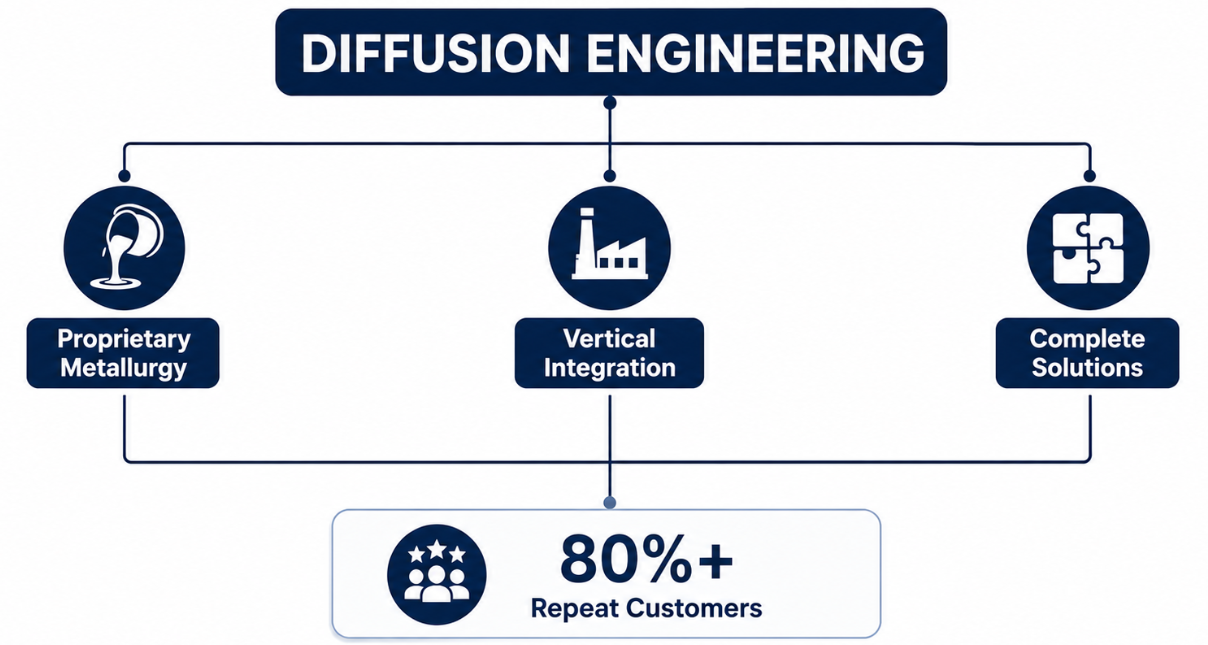
This integrated model creates several advantages.
It improves quality control by keeping key manufacturing processes in-house.
It reduces dependence on third-party suppliers.
It shortens delivery timelines during critical plant shutdowns.
And it helps optimize manufacturing costs.
These advantages have translated into strong customer relationships. Management stated that more than 80% of the company's revenue comes from repeat customers, reflecting the trust it has built over four decades.
What Could Drive Diffusion Engineers' Future Growth?
Diffusion Engineers has built a diversified business over the past four decades.
The next phase is about scaling that business.
Management highlighted several factors that could support growth in the coming years.
1. Capacity Expansion to Unlock Growth
The company's wear plates and heavy engineering facilities were already operating at 85–90% utilization. This limited its ability to execute additional orders.
To address this, Diffusion is expanding its manufacturing capacity through new facilities and shopfloor expansion.
Management believes the current capex is sufficient to support a much larger revenue base over the next few years.
2. Shift Towards Higher-Value Engineered Solutions
Customer preferences are evolving.
Instead of buying individual welding consumables, industries increasingly prefer ready-to-fit wear parts and complete engineered components.
These solutions reduce installation time and simplify maintenance during plant shutdowns.
They also carry larger order values, making them an attractive growth area for the company.
3. Expanding Global Presence
Diffusion already exports to 35+ countries across Southeast Asia, the Middle East, and Africa.
The company is strengthening its international footprint by expanding its sales network and operational presence, including a newly established service facility in the UAE.
Management aims to increase exports to around 15% of total revenue over the next two years.
4. New Growth Opportunities
Beyond its core industrial business, Diffusion is expanding into new sectors.
The company is progressing through vendor approvals and developmental orders in the railway sector, which could open up a meaningful long-term opportunity.
It has also made a strategic investment in the defence ecosystem. However, management expects this opportunity to contribute only over the longer term, following prototype approvals.
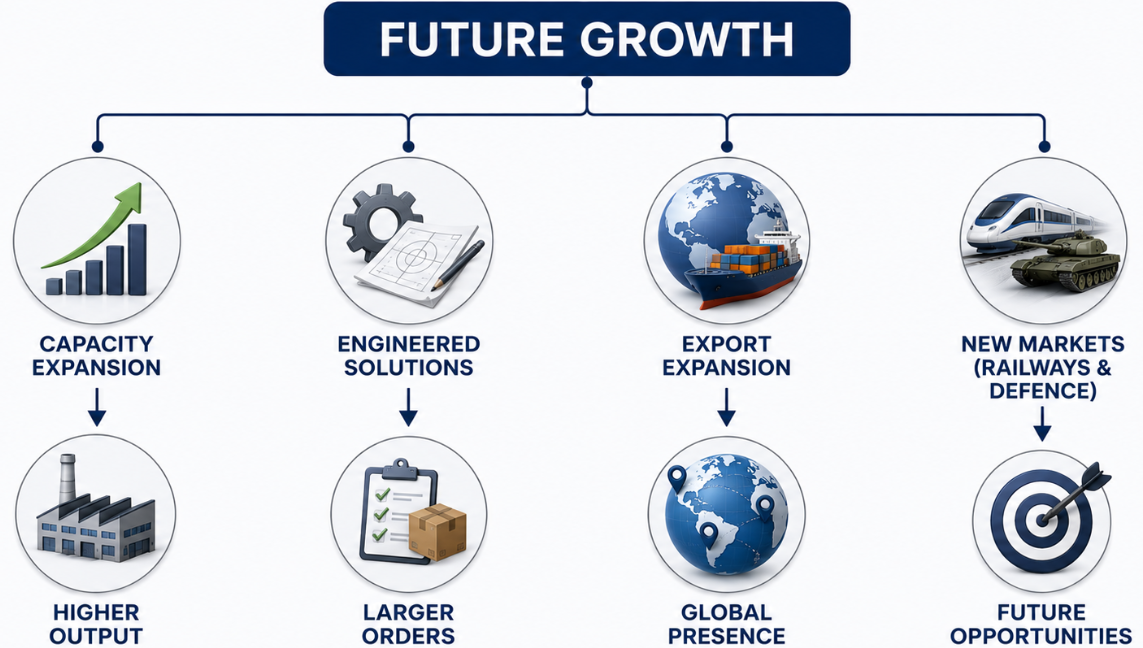
Diffusion's future growth is expected to come from a combination of higher manufacturing capacity, increasing demand for engineered solutions, expanding exports, and entry into new industrial segments. If management executes these initiatives successfully, the company could strengthen its position as an integrated engineering solutions provider while increasing both revenue and operating leverage.
Key Risks to Watch
While Diffusion Engineers has several growth opportunities, investors should also keep an eye on the key risks that could impact its performance.
1) Raw Material Price Volatility
The company relies on alloying metals such as nickel, cobalt, tungsten, molybdenum, and chromium. Sharp price movements can pressure margins, especially since most near-term customer orders are fixed-price contracts. Although the company eventually passes on higher costs, there is usually a time lag.
2) Execution of Capacity Expansion
Diffusion is investing to expand its manufacturing capabilities. Timely commissioning and efficient ramp-up of the new facilities will be important to achieve the next phase of growth.
3) Execution in New Growth Areas
Railways and defence offer long-term opportunities, but these businesses are still in the development phase. Delays in approvals or slower order conversion could postpone meaningful revenue contributions.
Conclusion
Diffusion Engineers has evolved from a manufacturer of specialized welding consumables into an integrated engineering solutions provider. Today, it operates across welding consumables, wear-resistant products, heavy engineering, and industrial services, allowing it to participate in multiple stages of an industrial customer's maintenance cycle.
Its expertise in metallurgy, vertically integrated manufacturing, and broad product portfolio have helped build long-term customer relationships, with more than 80% of revenue coming from repeat customers. As the company expands capacity, increases its focus on higher-value engineered solutions, and grows its international presence, it is positioning itself for the next phase of growth.
Going forward, investors should closely monitor the execution of its expansion plans, the contribution from engineered products, export growth, and the impact of raw material price volatility on margins. If management delivers on these priorities, Diffusion Engineers could continue strengthening its position as a leading provider of industrial wear management solutions.