Britannia Growth Drivers – What can we expect in 10 years?
Britannia has been part of Indian households for more than a century. With iconic brands like Good Day, Marie Gold, Bourbon and NutriChoice, it already enjoys one of the strongest positions in India's biscuit market.
That also creates an important question.
How does a company that is already a market leader continue growing over the next decade?
For Britannia, the answer is unlikely to come from simply selling more biscuits. Instead, its future growth will depend on expanding into adjacent food categories, increasing the share of premium products, strengthening rural penetration, and benefiting from India's gradual shift towards branded packaged foods.
If these growth drivers play out as expected, Britannia could become a much larger packaged-food company over the next decade - even without delivering extraordinary growth rates.
Let's examine the factors that could drive that journey.
India's Packaged Food Industry Is Still Underpenetrated
This is arguably Britannia's most important long-term growth driver because it doesn't depend on taking market share from competitors. Instead, it depends on the entire packaged food industry becoming larger.
Why does this matter?
India still has one of the world's largest populations consuming unpackaged or locally manufactured food products. Across villages and even many cities, consumers continue purchasing:
- Loose biscuits
- Local bakery products
- Unbranded namkeen
- Loose bread
- Unpackaged snacks
Every time a household replaces a loose bakery item or an unbranded snack with a packaged Britannia product, the company participates in the formalisation of India's food market. That structural shift could continue for many years.
Rising disposable income
As household incomes increase, consumers naturally spend more on convenience and trusted brands.
Instead of buying the cheapest available snack, families become willing to pay slightly more for:
- Better quality
- Better taste
- Trusted brands
- Better packaging
This benefits premium FMCG companies far more than unorganized manufacturers.
Urbanisation
India continues witnessing migration from rural areas to towns and cities.
Urban lifestyles usually involve:
- Less time for home preparation
- Greater reliance on packaged food
- More modern retail stores
- Easier product availability
Urban consumers generally consume significantly more branded food than rural consumers.
Higher food safety awareness
Consumers today increasingly care about: Hygiene, Food quality, Expiry dates, Ingredient transparency.
Large, branded companies have a significant advantage because consumers trust them more than unknown local manufacturers.
Investor Insight
A common assumption is that Britannia's future depends on Indians consuming more biscuits. The larger opportunity is different.
If millions of households gradually replace loose bakery products and unbranded snacks with packaged food, Britannia can continue growing even if overall biscuit consumption changes very little.
In other words, the company's growth depends as much on the formalisation of India's food market as it does on increasing consumption.
Premiumisation Could Become the Biggest Profit Driver
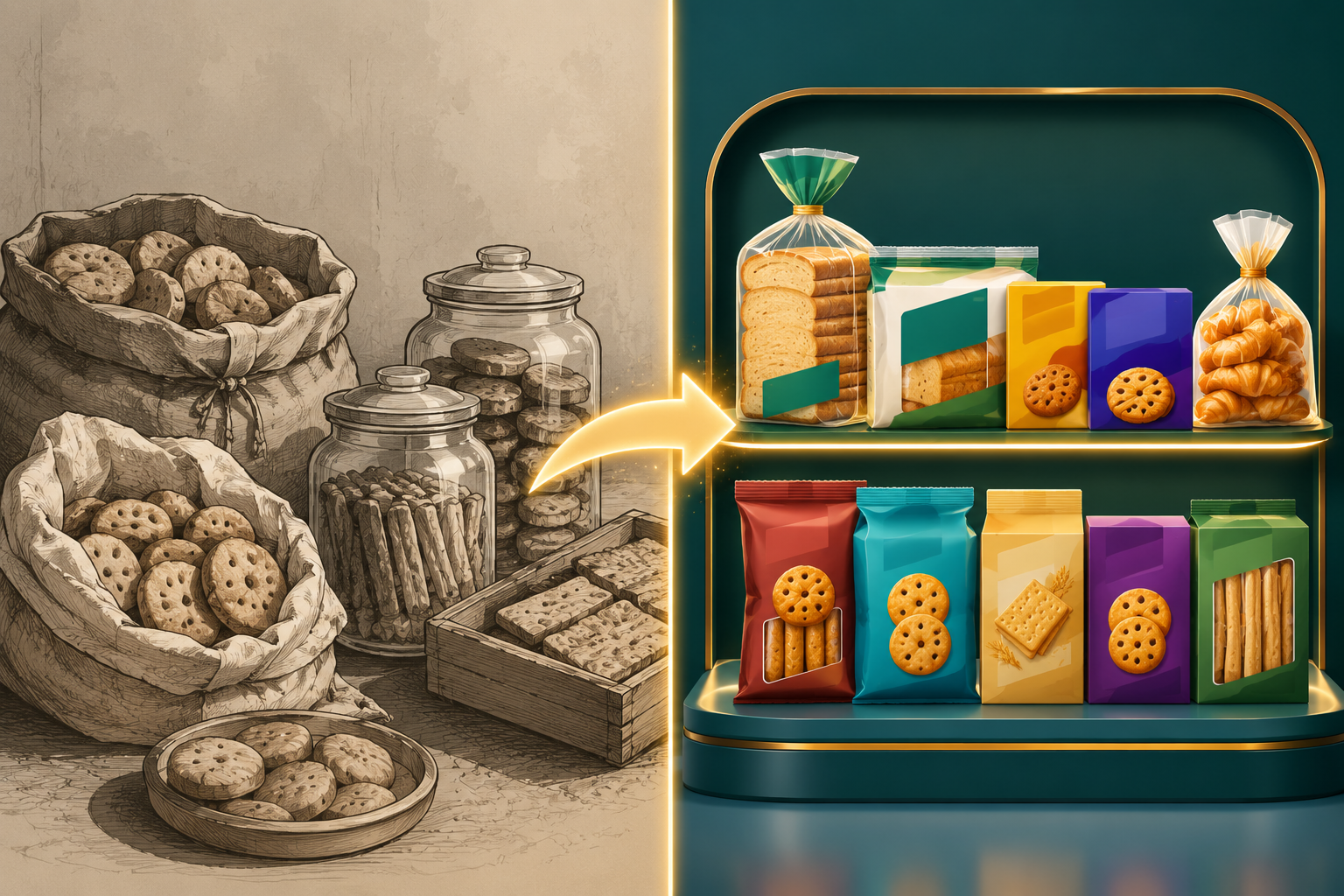
Selling more biscuits is only one way for Britannia to grow. Another - and often more profitable - approach is encouraging consumers to buy higher-value products.
This strategy is known as premiumisation.
For Britannia, premiumisation means encouraging customers to move beyond its basic ₹10 biscuits and buy higher-value products such as NutriChoice, Pure Magic, premium cookies, croissants, cakes, cheese, and gourmet offerings.
These products are important because they generally offer:
- Higher gross margins, meaning Britannia earns more profit on each product sold.
- Better pricing power, as customers are less sensitive to small price increases.
- Stronger brand loyalty, making customers more likely to purchase the products again.
As a result, the company doesn't have to rely only on selling more packets. By selling a greater share of premium products, it can improve profitability even if overall sales growth remains moderate.
Insight
Imagine Britannia grows revenue by 10%. If a larger share of that growth comes from premium products instead of low-priced biscuits, profit can grow faster than revenue because each additional sale carries a higher margin.
That is why premiumisation has become one of the most important profit drivers for consumer companies across the world.
Adjacent Categories Could Become Bigger Than Investors Expect
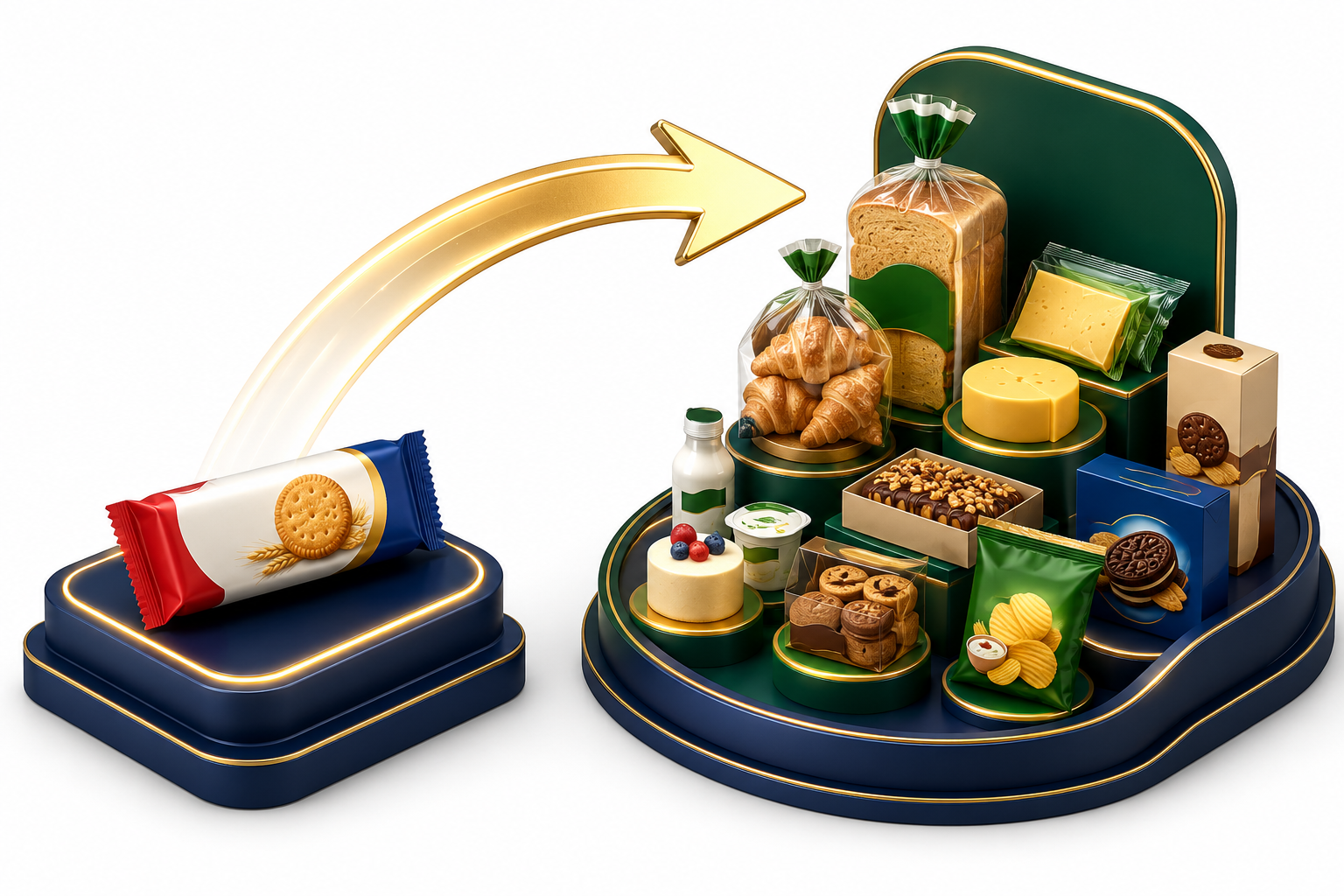
Britannia's leadership in biscuits is well established. The bigger question is whether the company can build meaningful businesses outside biscuits.
History suggests that many of the world's largest food companies eventually outgrow their original product categories. Rather than relying on a single category forever, they expand into adjacent products where they can leverage their brand, manufacturing capabilities and distribution network.
Britannia appears to be following the same strategy.
Why Adjacent Categories Matter More Than They Appear?
As a category matures, maintaining high growth becomes increasingly difficult. Even if Britannia continues gaining market share in biscuits, the size of the opportunity is naturally limited by the size of the biscuit market itself.
Adjacent categories solve this problem. Instead of competing for a larger slice of the same market, Britannia expands the size of the opportunity by participating in more food categories.
Entering a new food category is significantly easier when a company already possesses three important assets:
- A trusted consumer brand
- A nationwide distribution network
- Large-scale manufacturing capabilities
Britannia already possesses all three. This reduces both the cost and risk of launching adjacent products compared to a new entrant starting from scratch.
Britannia Is Already Building a Broader Food Portfolio?
Many investors are unaware that Britannia's portfolio extends far beyond biscuits. The company has already established a presence in categories such as:
- Bread
- Dairy products
- Cheese
- Croissants
- Cakes
It has also started expanding into newer, faster-growing segments like: Healthy snacks, High-protein snacks and Nutrition-focused products.
Looking further ahead, Britannia could also explore larger opportunities such as: Ready-to-eat meals, Frozen foods and Convenient meal solutions.
These are natural extensions of its packaged food business and align with changing consumer lifestyles.
Why These Categories Can Grow Faster?
Several structural trends support growth in these businesses:
- Consumers are seeking convenient meal options
- Busy lifestyles are increasing demand for ready-to-eat foods.
- Health-conscious consumers are willing to pay more for nutritious snacks.
- Premium bakery and dairy products continue gaining popularity.
- Urban households are replacing unorganized food purchases with branded alternatives.
These trends create opportunities that extend well beyond the traditional biscuit market.
Rural India Is Still a Massive Opportunity
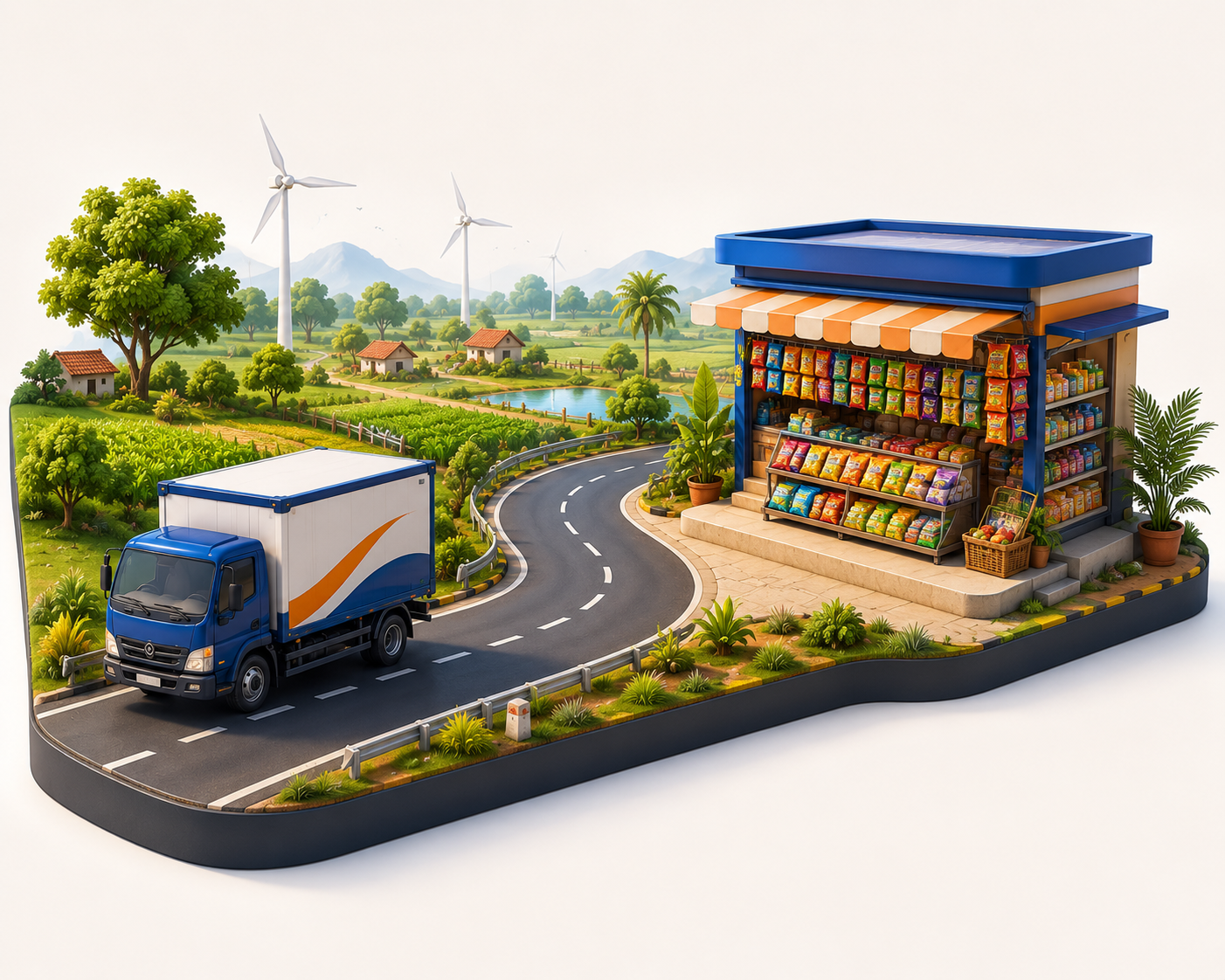
While urban India has been the primary growth engine for packaged foods over the past two decades, rural India still represents one of Britannia's largest untapped opportunities.
Rural India represents one of Britannia's largest long-term growth opportunities - not because consumers suddenly start buying premium foods, but because millions of households are still entering the branded packaged-food market for the first time.
In many villages, food purchases continue to be dominated by local bakeries, loose snacks and unbranded products. As incomes gradually rise and distribution improves, branded food companies gain access to an entirely new customer base.
Affordable Packs Drive First-Time Purchases
One of Britannia's biggest strengths is its ability to offer products at multiple price points.
Britannia's small packs are often viewed as low-priced products. In reality, they serve a much larger strategic purpose.
For many rural consumers, a ₹5 or ₹10 pack is their first experience with a branded food product. Once consumers become familiar with the brand, future income growth can gradually shift them towards larger packs and premium offerings.
Investor Perspective
Small packs are not just a pricing strategy - they are a customer acquisition strategy. A consumer who starts with a ₹5 pack today may eventually trade up to premium products as purchasing power increases.
Strong Rural Distribution Creates an Advantage
Selling products in rural India requires much more than having a good brand.
Companies need:
- Extensive distributor networks
- Reliable wholesalers
- Frequent product replenishment
- Availability in remote villages
Building such a network takes years of investment. Because Britannia already has one of India's largest distribution networks, it can expand rural sales more efficiently than many smaller competitors.
Better Infrastructure Is Expanding the Market
India's improving infrastructure is making rural markets easier to serve.
Key developments include - Better Road road connectivity, Faster transportation, Improved logistics, Expansion of organized retail and Greater digital connectivity
These improvements reduce delivery costs while increasing product availability.
Rising Rural Incomes Support Consumption
Government initiatives such as rural employment schemes, direct benefit transfers, higher agricultural incomes, and infrastructure spending have gradually increased purchasing power in many rural regions.
As disposable incomes improve, consumers often shift from unorganized food products toward trusted branded alternatives.
While income growth may fluctuate from year to year, the long-term direction has been positive.
Investor Insight
Even a small increase in per-capita packaged food consumption across rural India can translate into thousands of crores of incremental demand over the next decade.
For long-term investors, rural India represents a structural growth opportunity rather than a short-term sales catalyst. As consumption gradually formalizes, Britannia is well positioned to benefit because it already has the brand recognition, affordable products, and distribution network needed to serve these markets.
Distribution Is Still Expanding
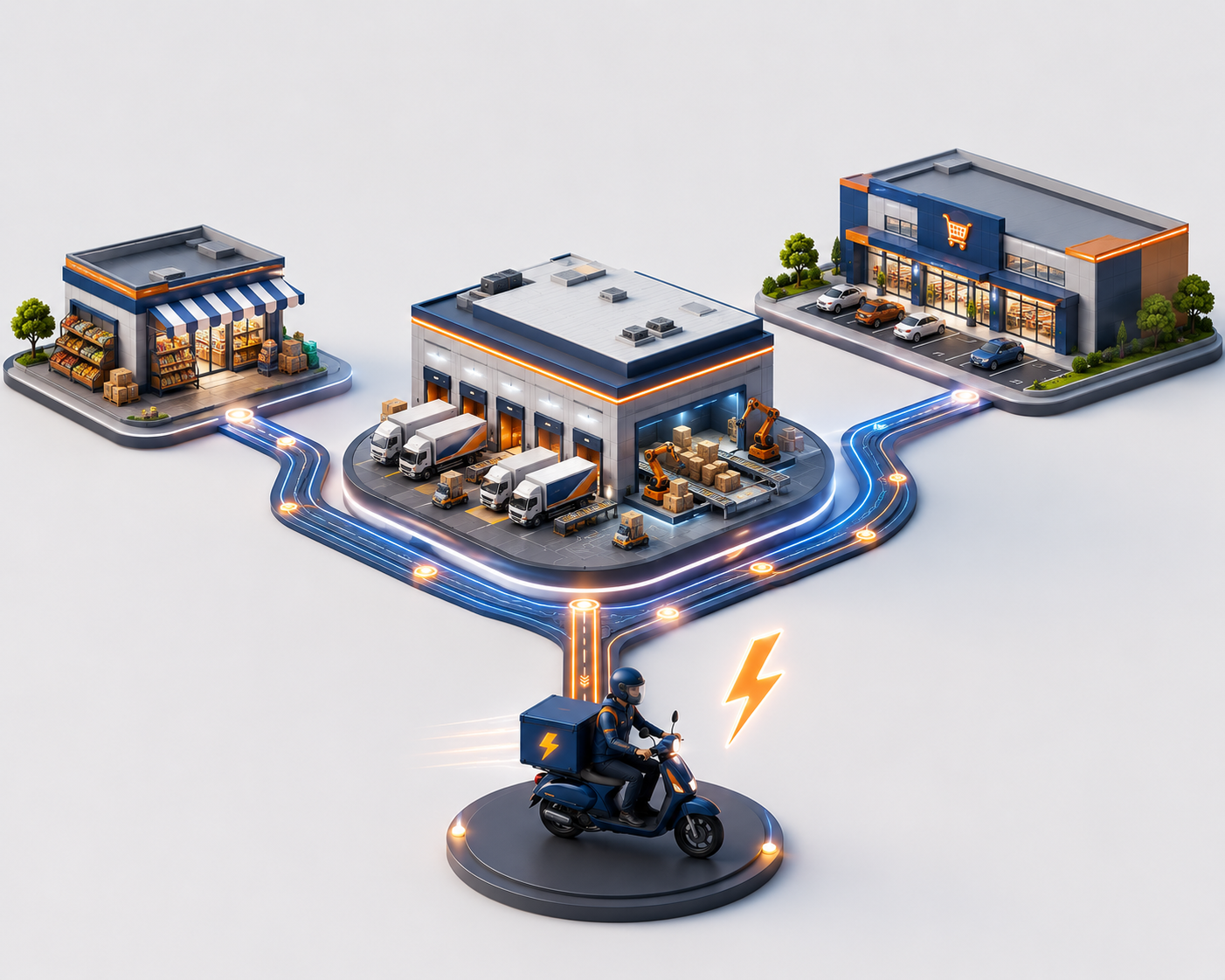
In the FMCG industry, consumers rarely postpone a purchase because their preferred brand is unavailable. More often, they buy whatever trusted product is already on the shelf.
That makes distribution one of Britannia's most valuable competitive advantages.
For Britannia, expanding distribution is not just about increasing sales today - it is about protecting market leadership over the long term.
A Presence Across Millions of Retail Outlets
Every additional retail outlet does more than increase sales potential.
It improves brand visibility, strengthens retailer relationships and reduces opportunities for competitors to occupy shelf space.
Over time, this creates a competitive advantage that becomes increasingly difficult to replicate.
Investor Perspective
Every additional outlet increases the probability of a purchase. In FMCG, distribution often becomes a powerful competitive moat because building such a network requires years of investment and strong retailer relationships.
Direct Distribution Improves Efficiency
Instead of relying entirely on wholesalers, Britannia directly supplies many retail outlets.
Direct distribution offers several advantages:
- Better product availability
- Faster replenishment
- Lower stock-outs
- Stronger retailer relationships
- Better visibility into consumer demand
This improves both sales execution and supply-chain efficiency.
Modern Retail Continues to Expand
Organized retail is steadily increasing its share of India's grocery market.
This includes:
- Supermarkets
- Hypermarkets
- Large retail chains
These stores typically offer greater shelf visibility, larger product assortments, and more opportunities for premium products such as cakes, croissants, cheese, and healthy snacks.
As modern retail expands, Britannia can showcase a broader portfolio beyond its core biscuit business.
E-commerce Is Creating New Sales Channels
Consumers are increasingly purchasing packaged food online through grocery apps and e-commerce platforms.
Online shopping allows Britannia to:
- Reach consumers beyond physical stores
- Introduce new products more quickly
- Sell larger family packs and premium products
- Improve product discoverability
Although online grocery is still smaller than traditional retail, its importance continues to grow.
Quick Commerce Is Changing Consumer Behavior
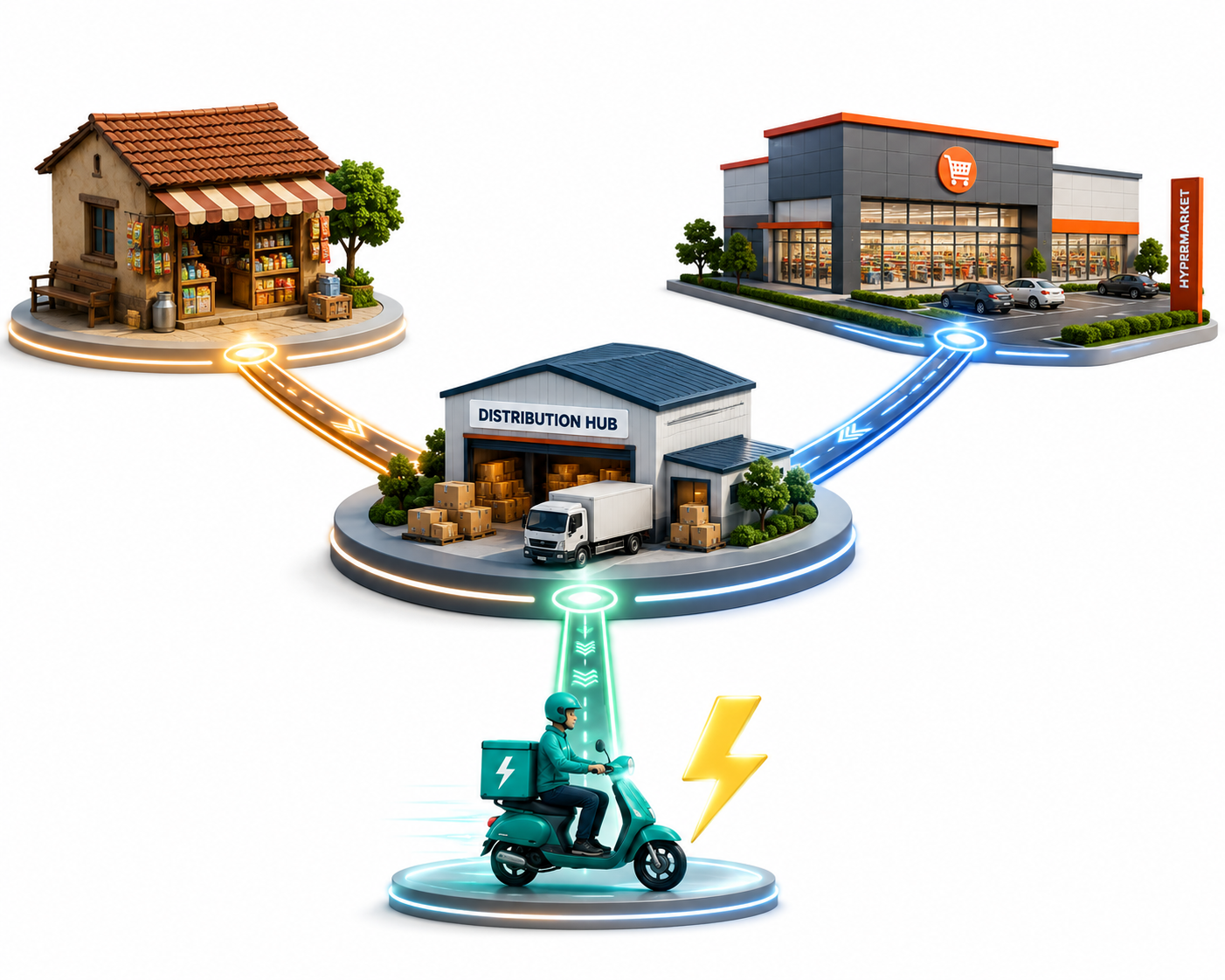
One of the biggest shifts in recent years has been the rapid growth of quick-commerce platforms such as Blinkit, Zepto, and Instamart.
Consumers increasingly order snacks not during their weekly grocery shopping but when they experience an immediate need.
Quick commerce changes not only where consumers buy snacks, but also how they buy them.
Earlier, biscuits were typically purchased during planned grocery trips. Today, platforms such as Blinkit, Zepto and Instamart have created additional consumption occasions where convenience drives purchasing decisions.
This increases product visibility and creates incremental demand that may not have existed through traditional retail channels.
Investment Perspective
Distribution is often underestimated because it doesn't attract the same attention as new product launches. However, for an FMCG company, it can be one of the most durable competitive advantages.
Every new retail outlet, every additional supermarket shelf, and every quick-commerce platform increases the likelihood that consumers choose Britannia over competitors. Over time, this wider availability supports higher sales, strengthens brand visibility, and makes it harder for smaller players to compete.
For long-term investors, a continuously expanding distribution network is not just an operational metric - it is a key driver of sustainable revenue growth and market share.
Every new distribution channel initially looks small - Modern retail looked insignificant twenty years ago - E-commerce looked insignificant ten years ago. Today, quick commerce appears small compared to general trade.
Britannia doesn't need to predict which channel will dominate. It simply needs to be present wherever consumers choose to shop.
The Most Important Question: Can Britannia Double Its Revenue Again?
After understanding Britannia's long-term growth drivers, the next question is whether these opportunities are large enough to significantly increase the company's size over the next decade.
The answer lies in the power of consistent compounding, not explosive growth.
Let's assume Britannia grows its revenue at different annual rates:
- 10% annual growth - Revenue doubles in about 7 years.
- 8% annual growth - Revenue doubles in around 9 years.
This demonstrates an important business principle. A company doesn't need to grow at 25-30% every year to become much larger over time. Even steady, single-digit or low double-digit growth can create a significantly bigger business when sustained over many years. 
For an established FMCG company like Britannia, consistency is often more valuable than short periods of exceptionally high growth.
Final Verdict
Britannia's investment case is not built on the assumption that Indians will suddenly consume dramatically more biscuits.
Instead, it rests on a combination of structural trends that are likely to play out over many years.
As India's packaged-food market expands, consumers gradually shift towards branded products, premiumisation improves profitability, adjacent categories become larger, rural consumption deepens and newer distribution channels broaden the company's reach.
None of these drivers is likely to transform Britannia overnight.
However, together they create multiple avenues for steady, long-term growth.
That is why Britannia should perhaps be viewed less as a mature biscuit company and more as a diversified packaged-food business that is still expanding its presence across India's food basket.
The next decade for Britannia will not be determined by how many more biscuits Indians eat. Instead, it will be determined by whether the company can capture a larger share of Indian households' spending on packaged food.
If it succeeds, the company's long-term growth story could be stronger than many investors currently expect.