Could AI Help BLS International Scale Without Adding Thousands of Employees?
When investors think about growth at BLS International, they often assume a simple equation:
More visa applications → More employees → Higher revenue
At first glance, this assumption appears reasonable.
After all, every visa application involves document collection, appointment scheduling, customer support, biometric enrollment, verification checks, and passport logistics. More applications would naturally seem to require more people.
Historically, that has been true for many outsourcing businesses. Growth often meant hiring more employees.
But what if that relationship is beginning to change?
What if BLS International could process significantly more applications without increasing its workforce at the same pace?
This raises an interesting question:
Could Artificial Intelligence become a key enabler of scale for BLS International?
If so, AI may not only reduce costs. It could fundamentally change how the business grows.
Understanding BLS's Business Model
Before discussing AI, it is important to understand what BLS actually does.
Many investors mistakenly believe BLS earns money from visa approvals.
It does not.
Governments and embassies make immigration decisions. BLS primarily manages administrative workflows that sit around the visa process.
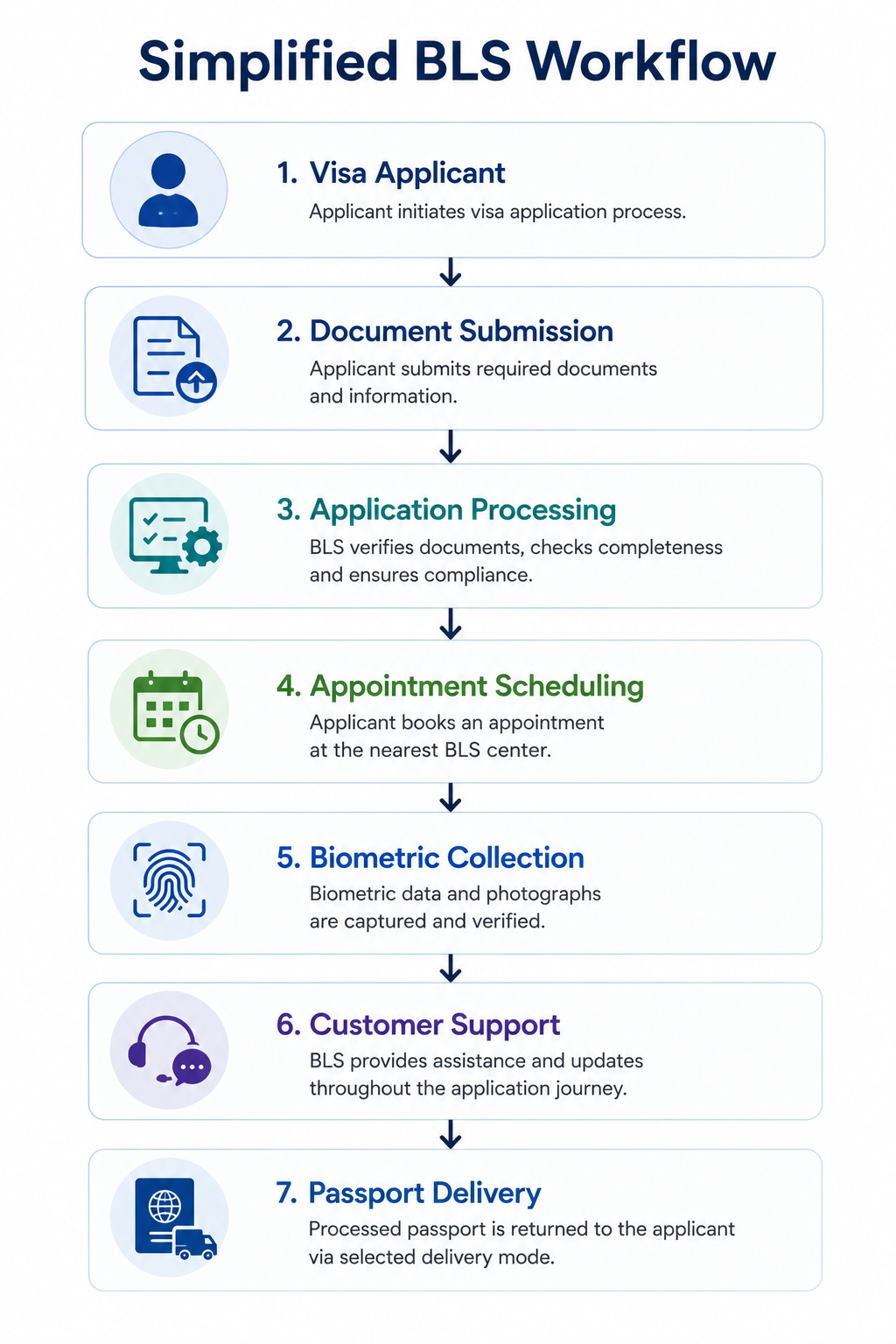
What BLS Does:
Application collection
BLS serves as the first point of contact for applicants, collecting visa, passport, consular, or related service applications on behalf of the relevant government authority. It ensures that application forms are submitted through the correct channel and that all required information is captured before forwarding them for official processing.
Document handling
The organization manages the intake, organization, and secure transfer of supporting documents such as passports, photographs, identity proofs, and financial records. It helps maintain document integrity and ensures that paperwork reaches the appropriate government department in a structured manner.
Appointment scheduling
BLS operates appointment booking systems that allow applicants to reserve slots for submissions, biometric collection, or consular services. This helps manage applicant flow, reduce waiting times, and improve the overall efficiency of service centers.
Biometric enrollment
For services requiring identity verification, BLS collects biometric data such as fingerprints and photographs using approved equipment. The captured information is then securely transmitted to the relevant government authority for verification and processing purposes.
Customer support
BLS provides assistance through call centers, email support, online portals, and in-person service desks. Customer support teams help applicants understand requirements, track application status, resolve common issues, and navigate the application process more effectively.
Passport logistics
The company manages the secure movement of passports and other sensitive documents between applicants, service centers, and government offices. This includes document tracking, secure storage, and courier services where permitted, ensuring safe and timely delivery.
Preliminary verification processes
Before applications are forwarded to government authorities, BLS performs basic checks to confirm that forms are complete, mandatory documents are included, and application requirements have been met. These checks help reduce processing delays caused by missing information, though final eligibility and approval decisions always remain with the relevant government agency.
Notice something important.
Most of these activities involve processing information.
And information processing is precisely where AI is becoming increasingly capable.
The Market May Be Looking at the Wrong Variable
Most investors focus on the number of applications processed, assuming that more applications automatically mean more revenue. However, the more important metric may be applications processed per employee, which measures productivity and efficiency.
Traditional Thinking vs. AI-Enabled Thinking
In a traditional service business, growth is closely tied to hiring. If application volumes increase by 20%, the company typically needs roughly 20% more employees to handle the additional workload. More staff means higher salaries, training expenses, office costs, and administrative overhead. As a result, costs rise almost as fast as revenue, limiting the improvement in profit margins.
However, AI can change this equation. Instead of needing a proportional increase in headcount, the company may be able to absorb much of the additional workload through automation. Tasks such as document verification, data entry, appointment scheduling, and customer support can be handled more efficiently, allowing existing employees to process a greater number of applications. As a result, a 20% increase in application volumes might require only a 5% increase in staff. Because labor costs grow much more slowly than revenue, the company benefits from operating leverage, where each additional application contributes more to profit than before.
The difference between these two outcomes is significant. In the traditional model, growth mainly makes the business larger. In the AI-enabled model, growth can make the business substantially more profitable, as revenue expands faster than the costs required to support it. Over time, this improvement in efficiency can become a major driver of earnings growth and shareholder value.
Where Could AI Actually Help?
Rather than asking:
"Can AI help BLS?"
A better question is:
"Which specific activities inside BLS could become more efficient through AI?"
Area 1: Document Processing
Every visa application comes with supporting documents.
These may include:
- Passports
- Bank statements
- Employment letters
- Educational certificates
- Travel itineraries
In the current workflow, employees manually review each application to check whether all required documents have been submitted. If documents are missing, applicants must be contacted and asked to resubmit them, increasing processing time and workload.
With an AI-assisted process, documents can be checked automatically as soon as they are uploaded. AI can instantly flag missing or incorrect items, allowing applicants to fix issues before human review. Employees can then focus mainly on complex cases, improving efficiency, reducing processing times, and increasing productivity.
Area 2: Customer Support
Visa applicants frequently ask similar questions:
- Where is my passport?
- Which documents are required?
- How long is processing taking?
- How do I reschedule my appointment?
Today, most customer queries require a human agent to provide a response, making customer support highly labor - intensive. As inquiry volumes grow, companies often need to hire additional staff to maintain service levels.
With AI-powered chatbots and virtual assistants, a large portion of routine questions such as application status, document requirements, or appointment information can be handled automatically. Human agents remain essential, but their focus shifts toward complex cases that require judgment, problem-solving, or personalized assistance.
The result is a more scalable support operation, where growing query volumes do not necessarily require a proportional increase in headcount.
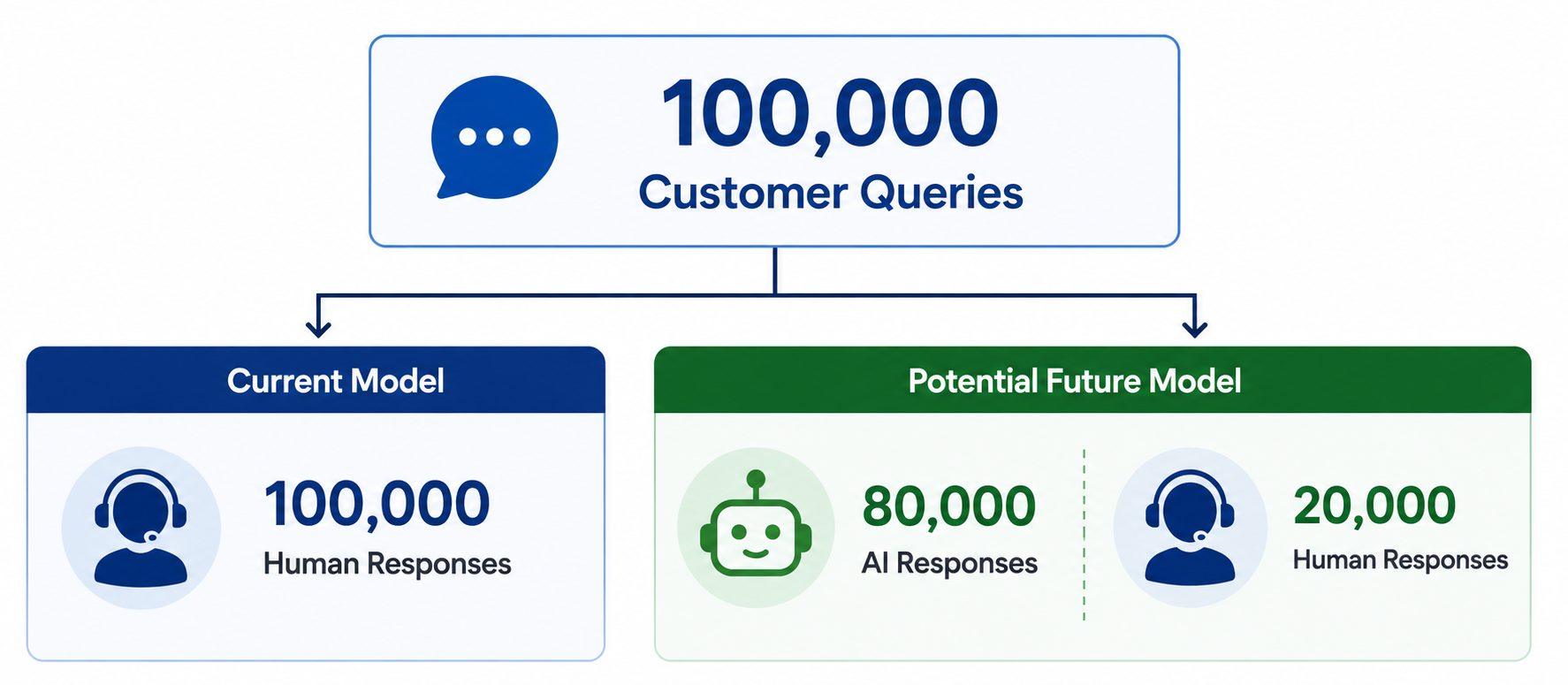
This does not eliminate human involvement. It simply allows employees to focus on more complex inquiries.
Area 3: Appointment Scheduling
Appointment scheduling may appear simple, but managing thousands of daily bookings across multiple service centers is a complex operational task. Inefficient scheduling can lead to long wait times, underutilized capacity, and customer frustration.
AI could help by forecasting demand patterns, optimizing appointment allocation, and identifying periods likely to experience high traffic. It may also reduce no-shows through smarter reminders and scheduling adjustments, helping service centers operate more efficiently and serve more applicants with existing resources.
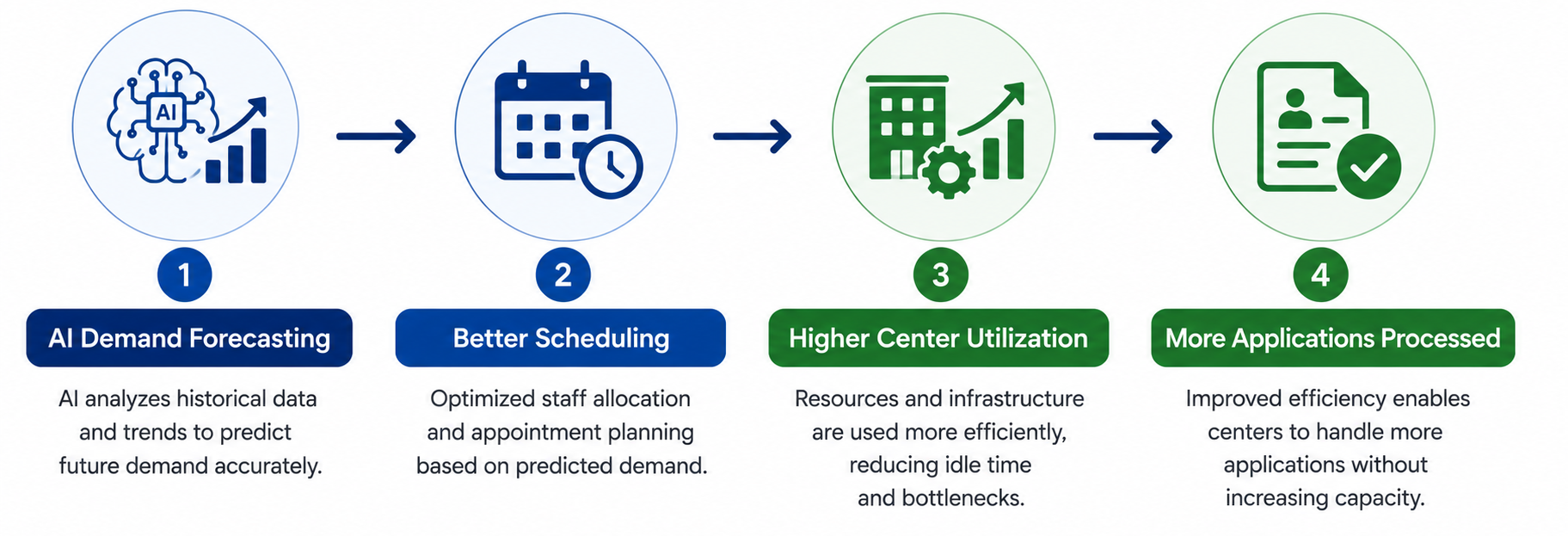
Small improvements across thousands of daily appointments can create meaningful efficiency gains.
Area 4: Fraud Detection and Verification
As immigration systems become more complex, governments increasingly emphasize:
- Identity verification
- Fraud prevention
- Document authentication
This creates a potential opportunity for AI.
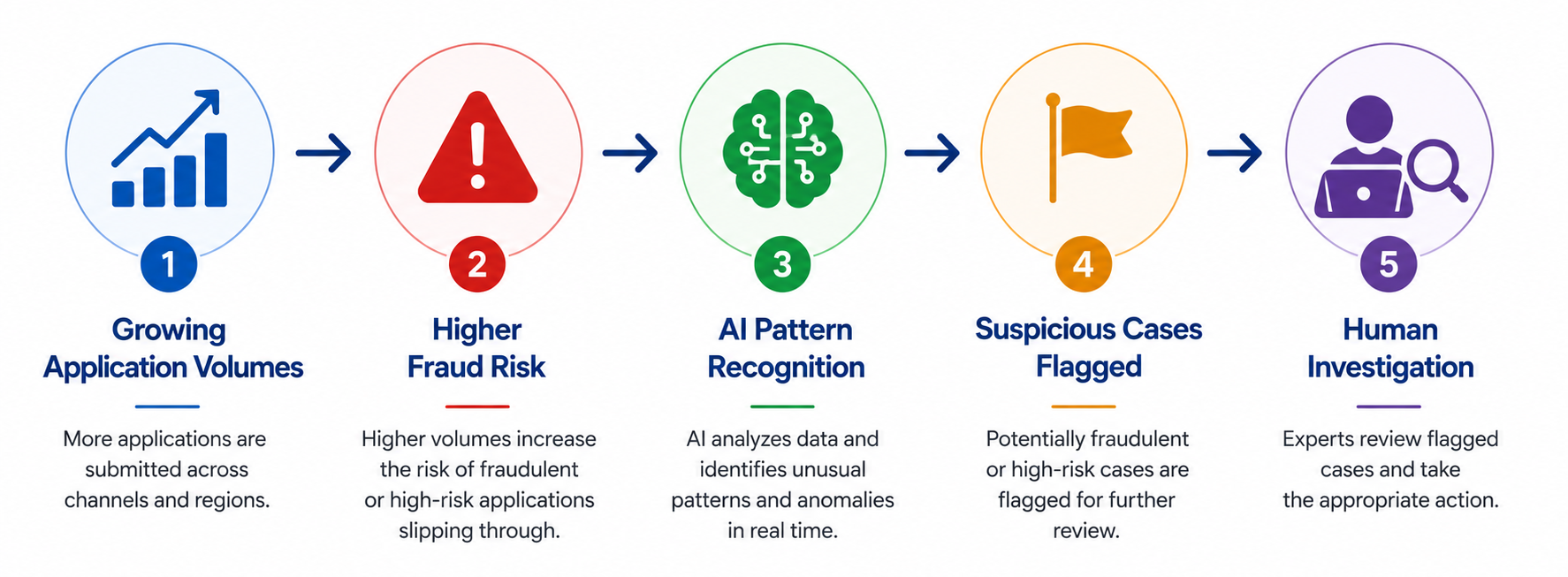
As application volumes grow, the risk of fraudulent or suspicious submissions increases. Manually reviewing every application becomes more difficult and resource-intensive at scale.
AI can help by analyzing large volumes of data and identifying unusual patterns, inconsistencies, or potentially fraudulent behaviour. Instead of replacing human judgment, AI acts as an initial screening layer, allowing employees to focus their attention on higher-risk cases that require deeper investigation and decision-making.
The Real Opportunity: Operating Leverage
This is where the investment case becomes particularly interesting. Most outsourcing businesses grow by hiring more employees, meaning revenue growth is often accompanied by a similar increase in operating costs.
However, AI has the potential to change this dynamic. By automating routine tasks and improving employee productivity, the company may be able to serve more clients without increasing headcount at the same pace. In this model, technology becomes an additional growth driver alongside employees.
If this transition is successful, revenue could grow faster than workforce size, creating operating leverage. The company would become more productive and profitable without needing to expand proportionately, potentially leading to stronger margins and earnings growth over time.
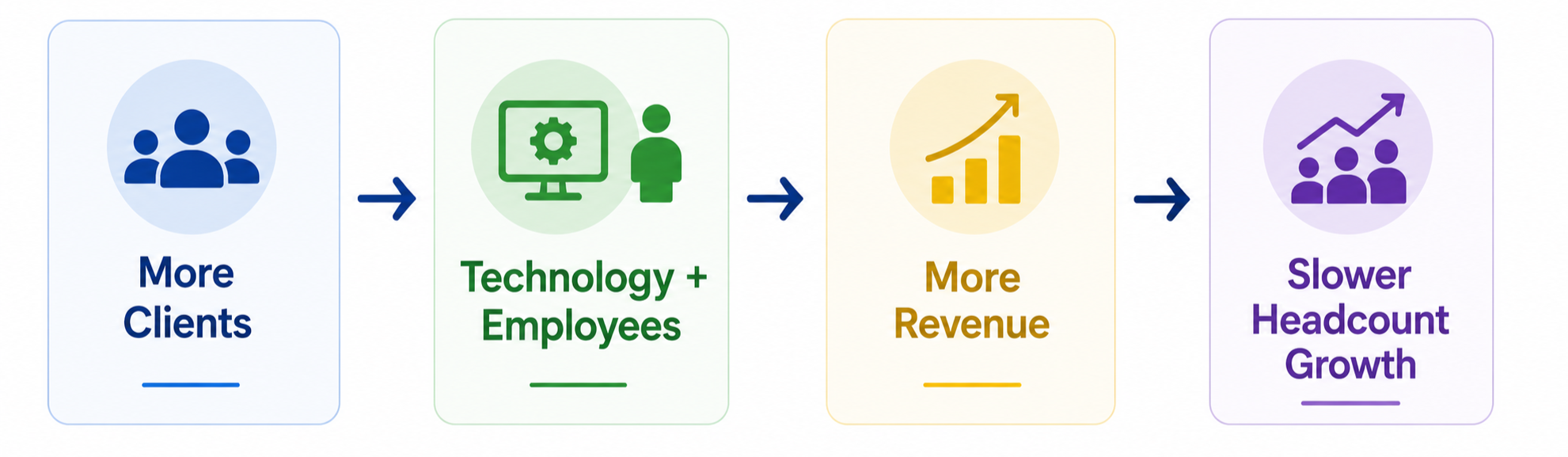
If successful, BLS could become more productive without becoming proportionately larger.
AI Could Reduce Fixed Cost Per Application
One of AI's most important benefits may not be reducing headcount, but improving scalability. Traditionally, handling more applications requires more employees, causing costs to rise alongside volume.
With AI, many processes can be automated through a technology platform that is built once and used repeatedly. As application volumes increase, the same system can process a larger workload without a proportional increase in costs.
This means the cost per application gradually declines as volume grows. Similar to software businesses, the initial investment in technology may be significant, but each additional application can be processed at a relatively low incremental cost.
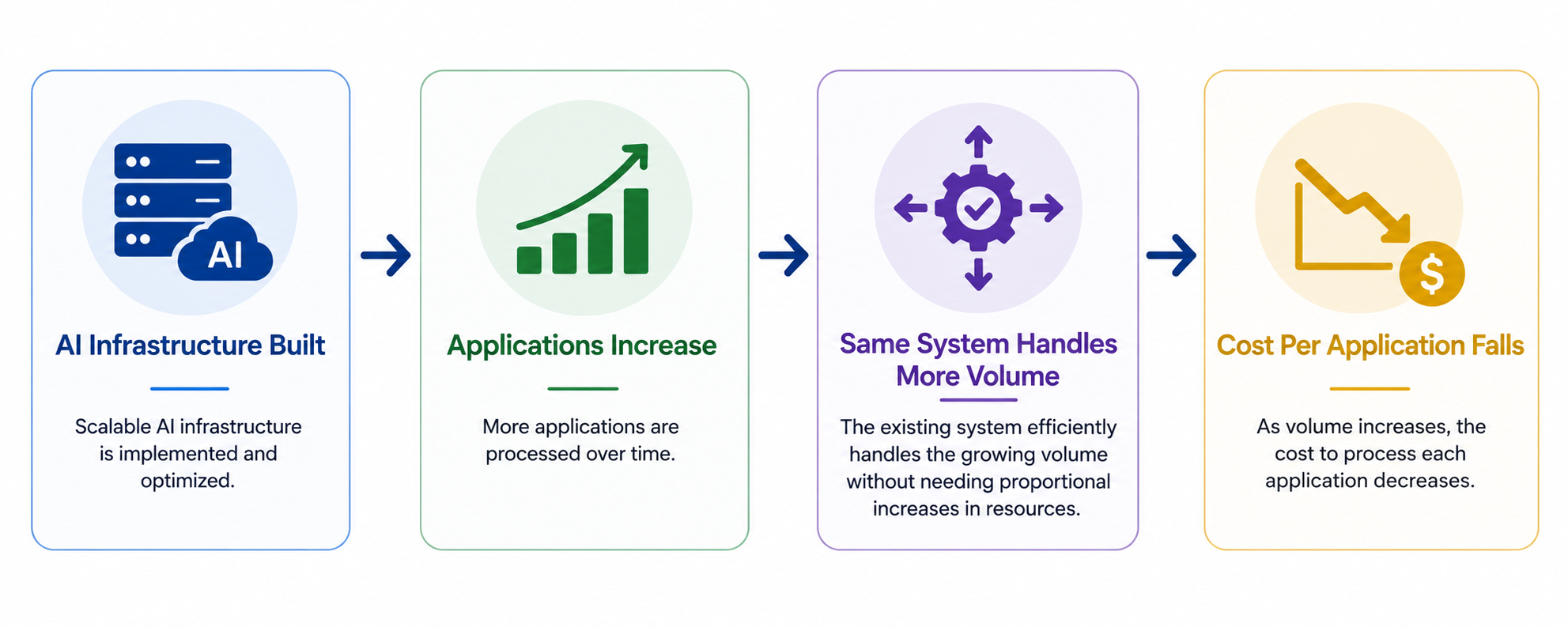
If achieved, this could improve margins and make future growth more profitable than in a traditional outsourcing model.
The Hidden Variable Investors May Be Missing
Most investors focus on a simple question when evaluating AI's impact: "Will AI reduce employee count?" While workforce efficiency is certainly important, it may not be the metric that ultimately determines shareholder returns.
A more important question could be: "Will AI reduce the cost of processing each application?" Even if the company maintains a similar workforce size, AI can still create value by enabling employees to handle more applications with greater efficiency. In that scenario, costs grow much more slowly than application volumes.
This distinction matters because shareholders benefit from margin expansion, not necessarily from headcount reductions. If application volumes continue to rise while the company's cost base remains relatively stable, each additional application contributes more profit than before. Over time, this can create meaningful operating leverage.
In other words, the real opportunity may not be that AI allows BLS to employ fewer people. The opportunity is that AI allows the company to process more applications using largely the same infrastructure, technology platform, and workforce. If achieved, the cost per application declines, margins improve, and earnings can grow faster than revenue.
For long-term investors, this may be the key variable to monitor. The biggest winners from AI are often not the companies that cut the most jobs, but the companies that become significantly more productive and profitable as they scale.
If you are an investor in BLS International, do watch our video on YouTube.
Why Governments Might Prefer AI-Enabled Service Providers?
Governments care about much more than just cost when awarding visa, passport, and consular service contracts. Accuracy, speed, compliance, security, and the ability to handle large volumes of applications are often equally important. Their goal is not simply to process applications cheaply, but to ensure that the process is reliable, efficient, and secure.
This is where AI could become a competitive advantage. By automating routine tasks and improving workflow management, AI-enabled providers may be able to process applications faster, reduce errors, and deliver a more consistent applicant experience. Tasks such as document verification, application routing, and customer support can be handled more efficiently, allowing employees to focus on higher-value work.
Consider two providers with the same workforce of 100 employees. A traditional provider may be able to process 1 million applications, while an AI-enabled provider could potentially process 1.5 million applications using the same number of employees. The advantage is not that fewer people are employed, but that each employee becomes more productive through technology.
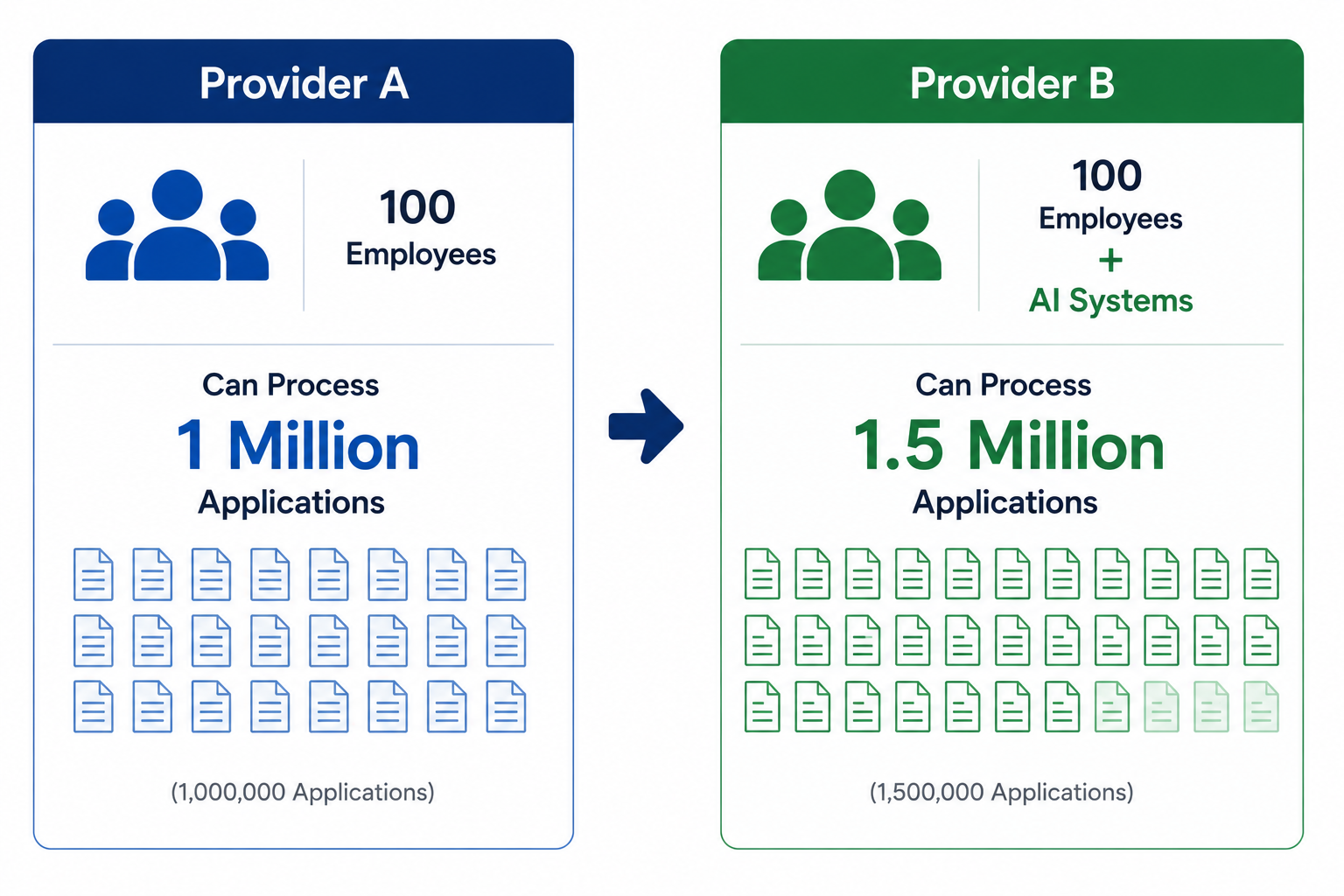
For governments, this increased productivity can be valuable during periods of rising demand or application backlogs. A provider that can handle larger workloads while maintaining service quality may become a more attractive long-term partner. As a result, AI may not only improve profitability for the service provider but also strengthen its competitive position when bidding for or renewing government contracts.
The Counterargument
A balanced analysis must also consider the risks. While AI has the potential to improve efficiency, its impact on visa and consular services is not guaranteed.
One challenge is that governments may require human oversight in key parts of the process, limiting the extent of automation. Data privacy is another concern, as visa applications contain sensitive personal information and must meet strict security standards.
Implementation costs could also be significant. Companies may need to invest heavily in technology and training before any meaningful efficiency gains appear, potentially increasing costs in the short term.
Finally, immigration services operate in a highly regulated environment. Even if the technology is available, government requirements and approval processes may slow the pace of adoption. As a result, AI's benefits could take longer to materialize than investors expect.
What Investors Should Watch?
Revenue Per Employee
This may be the most important indicator of whether AI is improving productivity. If revenue continues to rise while employee count remains relatively stable, it suggests that each employee is generating more value and handling a larger workload.
Employee Growth vs. Revenue Growth
Investors should compare workforce growth with revenue growth. If revenue consistently grows faster than headcount, it may indicate that automation and technology are making the business more efficient over time.
Cost Per Application
This could become one of the most important metrics to monitor. If AI allows BLS to process more applications using largely the same infrastructure and workforce, the cost of processing each application should gradually decline.
Operating Margins
Any meaningful productivity gains should eventually appear in operating margins. Lower costs combined with growing application volumes can lead to margin expansion and stronger earnings growth.
Technology Investments
Investors should pay close attention to management's technology strategy. Key areas include AI initiatives, automation projects, digital transformation efforts, technology partnerships, and spending on new platforms and infrastructure.
Processing Capacity
Perhaps the ultimate test is whether BLS can handle significantly higher application volumes without a proportional increase in employees. If processing capacity grows faster than headcount, it would be strong evidence that AI and automation are creating real operating leverage.
Conclusion
Most investors view BLS International as a people-intensive outsourcing business whose growth depends on continuously adding employees. However, AI could challenge that assumption.
If artificial intelligence helps automate document processing, customer support, scheduling, verification workflows, and fraud detection, BLS may be able to process significantly more applications without expanding its workforce at the same pace.
The real opportunity may not be cost reduction alone, It may be operating leverage.
More specifically, it may be the ability to spread fixed costs across a growing number of applications, causing cost per application to decline over time.
The key question for investors may not simply be:
"How many applications can BLS process?"
But rather:
"How many applications can BLS process per employee, and at what cost per application?"
If AI allows those metrics to improve meaningfully over time, BLS International's future growth story may become less about headcount expansion and more about productivity expansion. And that could be a far more powerful driver of long-term value creation.