Azad Engineering Moat Explained: Why Only 4 Companies in the World Can Do What They Do?
Azad Engineering manufactures precision-forged and machined components used in some of the world’s most sophisticated machines. Azad Engineering operates as a specialized Tier-1 supplier of mission-critical precision components across aerospace, defense, energy, and oil & gas.
Rather than competing in low-margin commodity machining, Azad integrates directly into high-barrier OEM supply chains, deriving roughly 92% of its revenue from exports.
Its key clientele includes global industry giants such as GE Vernova, Siemens Energy, Mitsubishi Heavy Industries, Rolls-Royce, Schlumberger, and Baker Hughes. In the energy segment alone, Azad’s primary OEM client's control over 70% of the global gas turbine market.
The “only four companies” claim
Azad often highlights that it is one of only four global suppliers capable of manufacturing specific complex rotating 3D airfoils and turbine engine components.
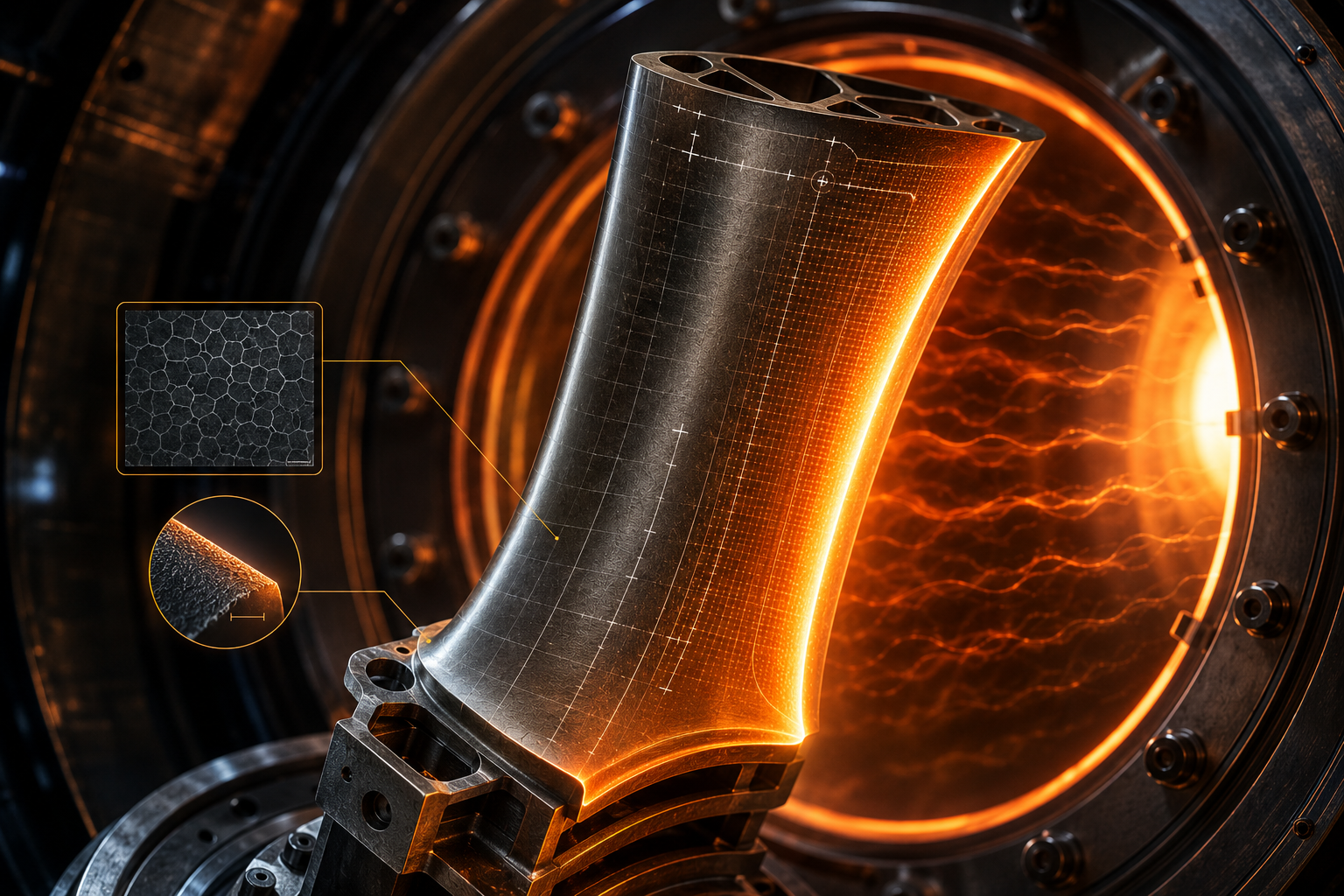
What makes these parts unique is not just the multi-axis CNC machinery required to cut them, but the extreme tolerance requirements operating under thermal environments exceeding 1,500°C.
Azad holds a portfolio of over 1,700 qualified parts supported by 45+ proprietary manufacturing processes. This creates an oligopolistic dynamic where OEMs cannot easily replace a supplier without risking multi-million-dollar platform shutdowns.
In economic terms, Azad is not competing in a broad market with hundreds of players. It is competing in a small, highly specialized global niche where the number of qualified suppliers is extremely limited.
What “only four companies” really means?
The phrase “only four companies” should not be interpreted as a marketing slogan alone. The important question is: why are there so few qualified suppliers despite the global size of the aerospace and turbine industry?
The answer is that the bottleneck is not simply owning advanced CNC machines. It is surviving a qualification cycle that can take 30 - 48 months, during which the supplier may spend heavily on tooling, testing, inspections, and trial production without meaningful revenue.
For an OEM, approving a new supplier is not just a purchasing decision. It is a platform - level risk decision. A defective turbine blade can lead to costly engine downtime, regulatory scrutiny, and reputational damage. That is why OEMs often prefer a proven supplier with a long qualification history over a cheaper alternative.
The real moat: Why competitors cannot easily replicate Azad?
A company’s moat is not measured by how difficult it is to start a business. It is measured by how difficult it is to become a trusted supplier at the same level.
Let us understand Azad Engineering’s moat by 2 core drivers.
High Switching Costs & Qualification Cycles
Entering an aerospace or energy OEM supply chain requires a stringent audit lifecycle that typically spans 30 to 48 months per platform. Every stage - from metallurgical sourcing to multi-stage non-destructive testing - must be validated.
Consider a turbine airfoil used in a gas turbine engine. The part must withstand extreme rotational stress and temperatures that can exceed 1,500°C. Manufacturing it is only the first step; the supplier must also prove that every batch meets metallurgical standards, dimensional tolerances, and non-destructive testing requirements.
If an OEM changes this supplier, the replacement vendor cannot simply start shipping parts the next month. The entire qualification process - including testing, documentation, and regulatory approvals - may need to be repeated. This creates switching costs measured not just in money, but in time and platform risk.
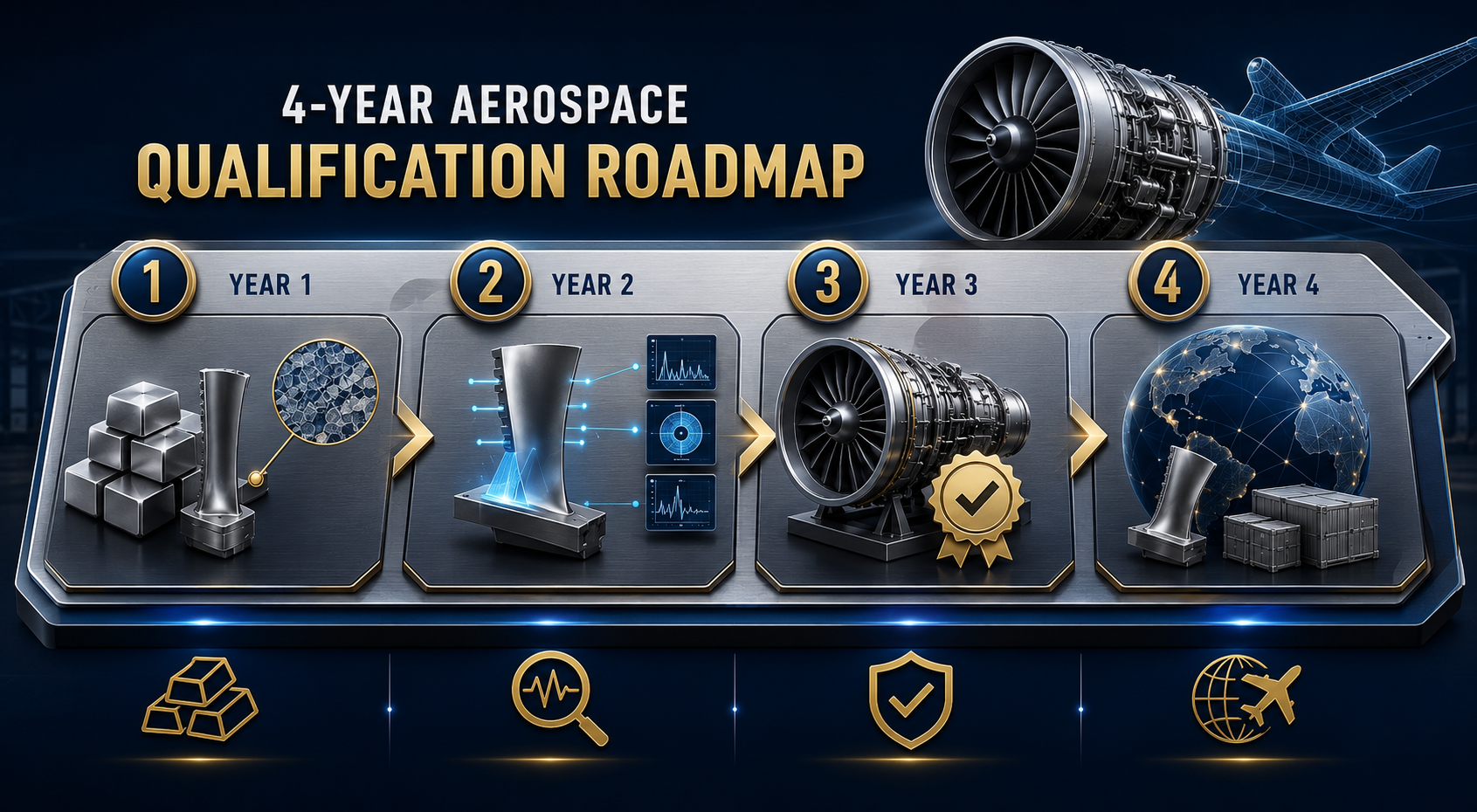
Once a part is certified on platforms like the Boeing 737, Airbus A320, or GE gas turbines, OEMs face immense switching friction. Re-qualifying a new vendor requires years of testing, regulatory re-approvals, and significant capital expenditure, binding clients to Azad for multi-year product lifecycles.
Knowledge Accumulation & Capital Intensity
Replicating Azad's infrastructure requires massive upfront capex in multi-axis CNC turning, specialized heat-treatment plants, and forging infrastructure. However, capital alone isn't a moat.
The true moat lies in the tacit manufacturing knowledge - tooling designs, sequence optimization, and near-zero defect execution across nickel superalloys and titanium.
Competitors must bear years of cash burn and low asset turns during long qualification windows before generating meaningful revenue.
Why this matters more than low-cost manufacturing?
India is often associated with cost advantages in manufacturing. But Azad Engineering’s moat is not primarily about being the cheapest producer.
If cost were the only factor, many countries with lower labor costs could compete. Azad’s advantage is that it operates in a segment where precision, reliability, certification, and trust matter far more than price.
Growth Drivers & Order Visibility
A jet-engine manufacturer will not choose a supplier simply because it is 5% cheaper. It will choose a supplier that can guarantee consistent performance over millions of flight hours.
This is why Azad’s business should be viewed as a high-value engineering company, not just a low-cost manufacturing exporter.
Azad Engineering’s growth visibility is backed by a multi-year order book of over ₹6,500 crore, providing a strong revenue pipeline for the coming years. More importantly, the company is shifting toward higher-margin aerospace, defense, and nuclear applications.
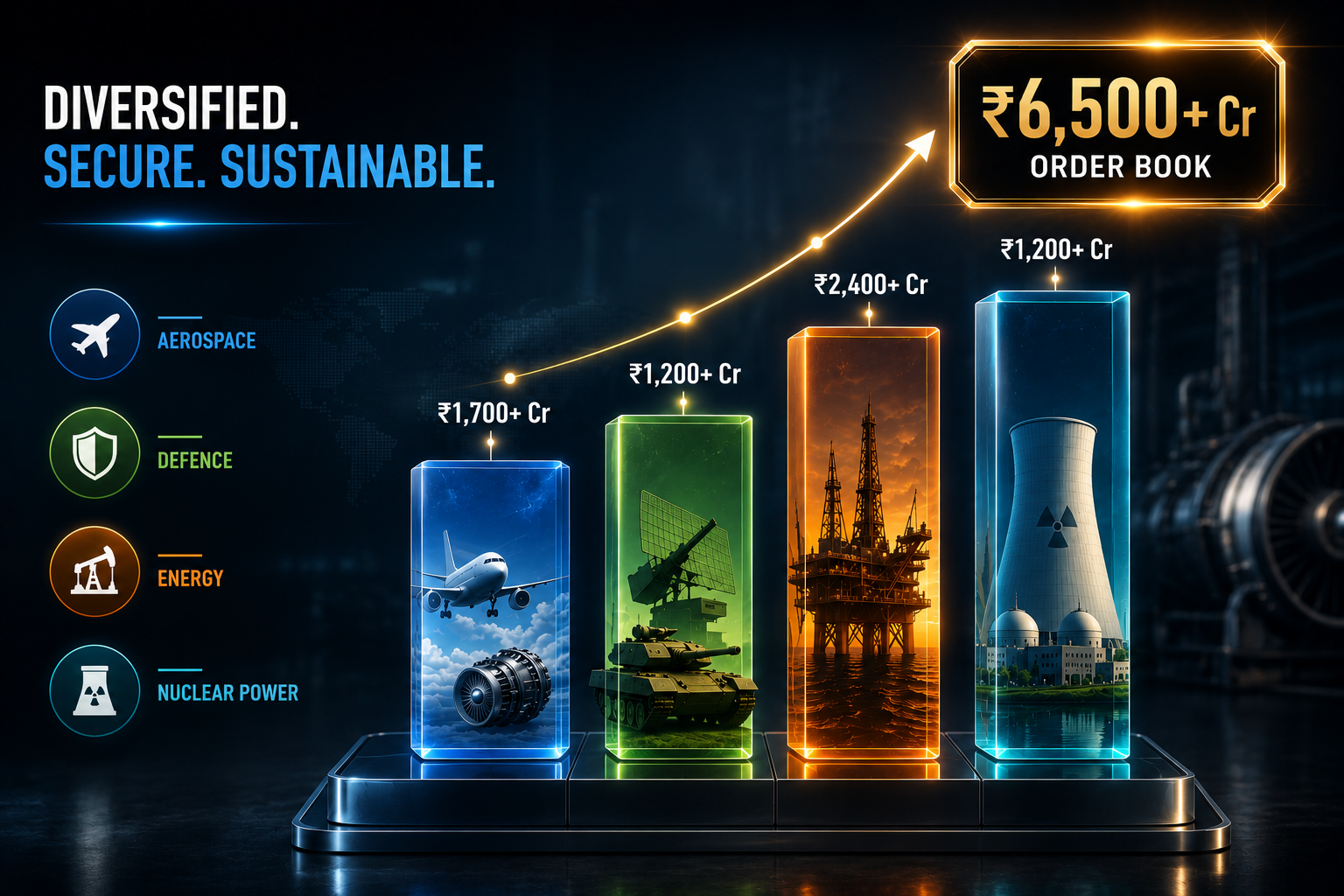
- ₹6,500+ crore order book: Provides long-term revenue visibility and reduces dependence on short-term orders.
- Rolls-Royce contract: A 7-year agreement to supply military aircraft engine components, strengthening Azad’s position in the global aerospace and defense supply chain.
- EDF nuclear deals: Nuclear turbine airfoil orders from Électricité de France (EDF) open opportunities in a niche, high-entry-barrier segment.
- Higher-margin mix: Aerospace, defense, and nuclear components generally offer better pricing power and longer contract tenures than conventional industrial engineering.
Operational risks to monitor
Even with a strong order book, investors should monitor the following operational risks:
- Execution risk: A large order book is valuable only if Azad can expand capacity without compromising quality or delivery schedules.
- Qualification dependency: Delays in OEM approvals for new plants or components could postpone revenue recognition.
- Customer concentration: Dependence on a few global OEMs means production cuts or sourcing changes by one customer can materially affect growth.
- Working-capital pressure: Long cash-conversion cycles can reduce free cash flow even when reported revenue grows.
These risks do not negate Azad’s growth potential, but they are important indicators of whether the company can convert its large order book into profitable and sustainable growth.
Source -Conference Call
Conclusion
Azad Engineering’s real competitive advantage is not that it manufactures complex metal components. It is that it has already crossed a qualification barrier that most competitors may never cross.
For investors, the crucial question is whether this qualification advantage can translate into sustained high returns on capital as the company scales.
If Azad can convert its certified supplier status into repeat orders, higher-margin aerospace and nuclear revenue, and disciplined capacity expansion, its moat may prove far more durable than the market currently assumes.
That is why Azad should not be analyzed only as a precision-engineering exporter. It should be analyzed as a company selling certified reliability into industries where failure is extraordinarily expensive.