Zaggle Share Price Crashed – Results Analysed & Reasons Explained
Shares of Zaggle came under sharp selling pressure after the company announced its Q4 results, with the stock falling nearly 20% in a single trading session on May 14. The share price declined from around ₹280 on May 13 to nearly ₹218, wiping out a significant portion of investor wealth and dragging the company’s market capitalization from approximately ₹3,053 crore to ₹2,907 crore.
The sharp correction came despite the company reporting strong long-term financial growth. Over the last three years, Zaggle has delivered more than 50% year-on-year revenue growth along with over 40% growth in net profit, reflecting continued expansion in its core business operations.
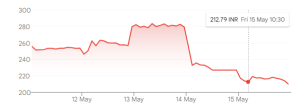
However, investors appeared concerned about weakening operating margins, rising expenses, aggressive expansion strategies, and the stock’s premium valuation, leading to a negative market reaction after the earnings announcement.
Let us study the reasons behind a sharp decline in the Zaggle share price.
EBITDA Margin Decline
One of the major reasons in the decline of stock Zaggle. THE EBITDA margin contracted by 46 basis points on a QOQ basis. Investors expect SaaS and fintech companies to show high revenue growth and strong operating margin.
But in the case of Zaggle’s - revenue grew fast but at the same time expenditure also increased heavily.
This made investors worried and interpreted that the company is spending too much money to grow which means profitability may remain weak.
Market Expected Better Margins
This is extremely important because before the results - Zaggle was treated like a high growth fintech/SaaS stock and due to this investors are having a high expectation.
But when margins did not improve enough, investors got disappointed.
Acquisition Concerns Increased Fear
The company has been aggressively acquiring businesses and technologies. Markets usually become cautious when - a small-cap company expands too quickly, acquisitions increase, integration risks rise. And due to this investors fear on:
- higher future expenses
- execution problems
- lower margins
While these strategies may support long-term growth, they also increase execution risk and short-term pressure on profitability because Zaggle was already trading at elevated valuations, even a small operational disappointment triggered heavy profit booking and panic selling in the stock.
Investors Did Not Like the Cash Flow Situation
Another hidden concern was operating cash flow. The annual cash flow from operating activities reported was -₹6 cr.
The company was showing good earnings on paper, but investors were not fully convinced about real cash the business was actually generating. Thus, investors did not like the cash flow from the operating situation.
Final Words
Zaggle continues to operate in a fast-growing digital payments and corporate expense management sector, which still offers significant long-term opportunities.
However, going forward, the market will closely monitor the company’s ability to improve margins, generate stronger cash flows, and maintain high growth without increasing financial pressure.
References: