The Semiconductor & Component Crunch: BEL’s Race to Indigenize Critical Electronics
Semiconductors have become the backbone of modern defence systems. From radars and missiles to electronic warfare and secure communications, nearly every platform depends on advanced chips and sensors that are often sourced from a limited number of global suppliers. As geopolitical tensions and export restrictions reshape global supply chains, securing these critical components has become a strategic necessity.
For Bharat Electronics Limited (BEL), this is more than a procurement challenge. The company is investing in indigenous technologies and research partnerships to reduce import dependence and strengthen India’s defence electronics ecosystem, making semiconductor self-reliance a key part of its long-term strategy.
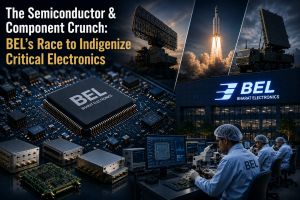
Why Semiconductors Are BEL’s Biggest Supply Chain Challenge?
BEL’s competitive advantage lies in designing and integrating complex defence electronics, but many of the advanced chips powering these systems are still sourced globally.
Components such as FPGAs, RF devices, power semiconductors, and specialised sensors are essential for radars, electronic warfare systems, missile guidance, and secure communication equipment.
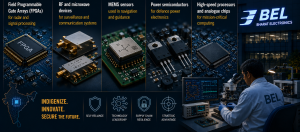
For BEL, the challenge extends beyond procurement. Defence platforms remain in service for decades, requiring a reliable supply of the same qualified components throughout their lifecycle. Any disruption can delay project execution, increase costs, and complicate long-term maintenance.
Rather than relying solely on imports, BEL is increasing indigenous content through domestic partnerships, in-house design capabilities, and closer collaboration with India’s emerging semiconductor ecosystem. The objective is not to manufacture every chip locally, but to reduce supply chain risks while ensuring timely execution of critical defence programmes.
How Geopolitics Is Reshaping BEL’s Supply Chain?
Rising geopolitical tensions have made semiconductor supply chains less predictable. Export controls, technology restrictions, and the concentration of advanced chip manufacturing in a few countries have increased sourcing risks for defence companies worldwide.
For BEL, this means that securing critical components has become just as important as winning new defence orders. Delays in obtaining specialised semiconductors can slow production schedules, increase procurement costs, and affect the execution of large defence programmes.
As a result, BEL is shifting its focus from managing supply disruptions to actively reducing them through localisation, strategic partnerships, and greater control over critical technologies.
Why Now?
BEL’s localisation strategy has gained momentum as government policy, private investment, and geopolitical developments align. The company has signed strategic partnerships with Tata Electronics to strengthen domestic semiconductor capabilities and with RRP Electronics to support defence-focused semiconductor packaging and electronic components. At the same time, India’s Semiconductor Mission and increasing defence procurement under the Atmanirbhar Bharat initiative are accelerating the development of a domestic electronics ecosystem.
Global supply chain disruptions and tighter export controls have further reinforced the need to reduce dependence on imported defence-grade components. For BEL, these developments have transformed semiconductor localisation from a long-term ambition into an immediate strategic priority.
BEL’s Strategy: Building an Indigenous Electronics Ecosystem
Rather than relying solely on imports, BEL is expanding its focus from manufacturing defence systems to developing indigenous technologies. The company has strengthened collaborations with institutions such as the Indian Institute of Science (IISc) and multiple IITs, alongside long-standing partnerships with DRDO, to accelerate research in advanced electronics, embedded systems, artificial intelligence, quantum technologies, and next-generation defence applications.
BEL is also working with domestic semiconductor and electronics companies to increase the localisation of critical components. While India is still years away from manufacturing the most advanced defence-grade chips at scale, BEL is prioritising indigenous design, system integration, and component qualification to reduce dependence on overseas suppliers.
Some of BEL’s key initiatives include:
- Collaborating with IISc, IITs, and DRDO on advanced defence technologies.
- Increasing localisation of electronic components through Indian suppliers.
- Expanding in-house capabilities for electronics design and system integration.
- Supporting India’s broader semiconductor and defence manufacturing ecosystem.
This strategy is not about replacing imports overnight. Instead, BEL is building a resilient supply chain where a larger share of design, development, testing, and manufacturing happens within India. Over time, this could improve supply security, reduce procurement risks, and strengthen BEL’s position as India’s leading defence electronics company.
Why BEL Is Better Positioned Than Its Peers?
BEL’s strength lies in decades of experience designing and integrating complex defence electronics rather than manufacturing semiconductors themselves. Its long-standing collaborations with DRDO, the armed forces, IISc, and IITs provide access to advanced technologies and early involvement in next-generation defence programmes.
The company also has one of the largest manufacturing networks, a strong balance sheet, and consistent R&D investment, allowing it to absorb the higher costs of developing and qualifying indigenous components. Combined with its established customer relationships and expertise in system integration, these capabilities position BEL to benefit more than most peers as India’s semiconductor ecosystem matures.
BEL vs Peers
| Company | Position |
| BEL | Strongest localisation ecosystem, deep DRDO relationships, large-scale defence electronics manufacturing. |
| Data Patterns | Strong in defence electronics design but smaller manufacturing footprint. |
| Astra Microwave | Leader in RF and microwave systems but narrower product portfolio. |
| Paras Defence | Growing electronics capabilities but still building scale. |
While several Indian defence companies are investing in localisation, BEL’s combination of scale, long-standing defence relationships, and system integration expertise makes it one of the best-positioned players to benefit from India’s semiconductor push. Its ability to convert indigenous technologies into production-ready defence systems remains a key competitive advantage.
Beyond Assembly: Building a Domestic Semiconductor Ecosystem
BEL’s localisation strategy extends beyond sourcing more components from Indian suppliers. The company is building strategic partnerships across the semiconductor value chain from chip design and fabrication to assembly, packaging, and testing to reduce long-term dependence on overseas suppliers.
Key strategic alliances such as BEL’s landmark MoU with Tata Electronics to source custom Microcontrollers (MCUs), Systems-on-Chip (SoCs), and MMICs, alongside its tie-up with RRP Electronics for domestic semiconductor packaging and Electro-Optics show how BEL is tapping into India's emerging private OSAT and foundry pipeline.
At the research level, BEL continues to work with IISc incubators (such as Agnit Semiconductors) to advance Gallium Nitride (GaN) power transistors, the core technology enabling next-generation AESA radars.
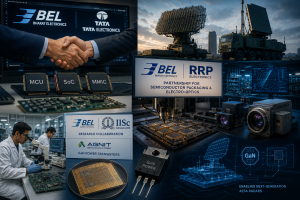
Rather than attempting to build every capability in-house, BEL is positioning itself as a system integrator that can leverage India’s emerging semiconductor ecosystem while retaining expertise in defence-grade electronics and system integration.
Why Defence Electronics Are Different?
Replacing an imported semiconductor in a defence platform is far more complex than changing a component in a commercial product. Every new chip must undergo rigorous environmental, electromagnetic, and reliability testing before it can be deployed in operational systems. Depending on the application, qualification can take several years and often requires certification from defence authorities before full-scale production begins.
Even when chips are designed in India, manufacturing may still depend on overseas foundries until domestic fabrication capabilities mature. As a result, India’s semiconductor journey is currently focused on building indigenous design, packaging, testing, and system integration capabilities, with complete end-to-end self-reliance expected to evolve gradually over the coming decade.
The Financial Impact of Supply Chain Resilience
BEL’s semiconductor strategy is not just about technological self-reliance, it is increasingly becoming a business advantage. In FY26, the company reported revenue of ₹27,480 crore, up 16% year-on-year, while PAT rose 14% to ₹6,048 crore. BEL also closed the year with an order book of nearly ₹74,000 crore, providing strong revenue visibility for the coming years.
Localisation is unlikely to improve profitability immediately. Defence-grade electronic components require extensive redesign, military qualification, and reliability testing before they can replace imported alternatives. During this transition, BEL must invest heavily in R&D while maintaining inventory buffers of critical imported chips to avoid disruptions in ongoing defence programmes. These factors can temporarily pressure operating margins and increase working capital requirements, even though they strengthen supply chain resilience over the long term.
Management estimates that semiconductors account for 17-19% of BEL’s material costs, making component availability a critical factor in project execution. At the same time, BEL has increased the indigenous content of many of its products to 80-85%, with some platforms reaching nearly 90% localisation. This has helped improve supply security while supporting healthier margins and allowing the company to reinvest in research and development.
Why localisation matters financially:
- Faster execution of large defence contracts.
- Lower exposure to global supply disruptions and export controls.
- Better control over procurement costs and margins.
- Greater flexibility to invest in R&D and next-generation technologies.
As BEL’s order book continues to expand, execution will become just as important as winning new contracts. The company’s ability to secure critical electronic components and increase domestic sourcing could play a key role in sustaining growth, protecting profitability, and delivering projects on schedule.
Can India Build a Complete Defence Electronics Supply Chain?
India has made significant progress in defence manufacturing, but achieving complete semiconductor self-reliance remains a long-term challenge. While government initiatives such as the India Semiconductor Mission, production-linked incentives (PLI), and increased private sector investments are strengthening the domestic ecosystem, many high-end defence-grade chips are still imported due to their technological complexity.
For BEL, this means balancing immediate operational needs with long-term localisation goals. Instead of waiting for a fully developed semiconductor industry, the company is focusing on areas where India can build competitive capabilities today- electronics design, system integration, testing, and qualification while gradually increasing the domestic sourcing of critical components.
Key developments supporting BEL’s strategy include:
- Government incentives to expand India’s semiconductor ecosystem.
- Growing participation of private companies in chip manufacturing and packaging.
- Stronger collaboration between industry, academia, and defence research organisations.
- Rising policy focus on reducing dependence on imported defence technologies.
Complete import substitution is unlikely in the near future, particularly for cutting-edge defence semiconductors. However, every increase in domestic design and manufacturing reduces strategic dependence on overseas suppliers. For BEL, the objective is not to eliminate imports overnight but to build a resilient supply chain capable of supporting India’s long-term defence modernisation goals.
Key Risks Investors Should Watch
While BEL’s localisation strategy is strengthening its supply chain, several challenges remain that could influence execution and long-term growth.
- Dependence on imported high-end chips: Advanced defence-grade semiconductors, FPGAs, RF devices, and specialised sensors are still sourced from global suppliers, limiting complete self-reliance.
- Geopolitical uncertainty: Export controls, trade restrictions, or disruptions in key semiconductor-producing regions could delay component availability.
- Slow domestic ecosystem development: India’s semiconductor industry is still evolving, and delays in fabrication, packaging, or testing infrastructure could slow localisation efforts.
- Rapid technological change: Defence electronics are becoming increasingly sophisticated, requiring continuous investment in R&D to remain competitive.
- Execution risk: BEL’s large and growing order book means timely component availability will be critical to delivering projects on schedule and maintaining customer confidence.
While these risks are not unique to BEL, the company’s ability to secure critical components and expand indigenous capabilities will increasingly determine its competitive position in India’s defence electronics market. To know more, check our latest video.
The Investor Scorecard: What to Track
Instead of relying on general management optimism, track these specific metrics in BEL’s quarterly updates:
| Metric | What to Watch For | What It Tells You |
| Semiconductor Cost Ratio | Shifts below the current 17-19% of material costs | Proves whether local chips are actually lowering raw material outlays. |
| Inventory Days | Raw material inventory levels on the balance sheet | Shows if supply chain risks are forcing BEL to lock up extra working capital. |
| Self-Funded R&D Spending | R&D spend as a percentage of total revenue | Confirms whether BEL is building proprietary technology or just assembling parts. |
| Execution Rate | Conversion rate of the ₹74,000 Cr order book into quarterly revenue | Measures if component shortages are delaying actual factory deliveries. |
Conclusion
BEL’s investment case extends beyond its growing order book. As defence systems become increasingly electronics-driven, the company’s ability to localise critical components, strengthen its supply chain, and integrate indigenous technologies could emerge as a key long-term competitive advantage.
Investment thesis: If BEL successfully executes its semiconductor localisation strategy while maintaining its strong order inflows and execution track record, it is likely to be one of the biggest beneficiaries of India’s defence indigenisation push. For long-term investors, progress in localisation may become just as important to monitor as revenue growth and new order wins.