The Red Metal’s Green Future: Why Copper is the New Oil?
For over a century, oil has been the foundation of economic growth, powering industries, transportation, and global trade. However, as the world shifts towards cleaner energy sources and greater electrification, a new strategic resource is taking center stage - copper. Its unique properties make it indispensable for the technologies driving the green transition.
From electric vehicles and renewable energy projects to advanced electronics and digital infrastructure, copper is embedded in nearly every aspect of the modern economy. As nations race to achieve sustainability goals while expanding industrial capabilities, copper is increasingly being viewed as the defining commodity of the 21st century.
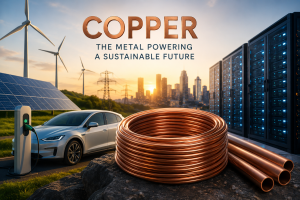
The Backbone of Electrification
Copper’s exceptional electrical conductivity makes it a critical part of power generation, transmission, and distribution systems. Manufacturers use it in electrical wiring, motors, transformers, and industrial equipment. These applications make copper a cornerstone of modern infrastructure. As electricity becomes the preferred energy source, demand for copper continues to rise.
Few materials match copper’s combination of efficiency, durability, and recyclability. These qualities support large-scale electrification across both developed and emerging economies. Countries worldwide are modernizing their energy networks and expanding power infrastructure. As a result, copper demand is likely to remain strong for decades.
Powering the Green Energy Revolution
The global effort to reduce carbon emissions has greatly increased the demand for copper. Electric vehicles use roughly 2.5 - 4 times more copper than traditional vehicles because of their batteries, motors, and charging systems. Renewable energy projects also require more copper than conventional power generation.
Wind turbines use copper in generators, transformers, and cables. Solar power systems depend on copper wiring to connect panels, inverters, and storage units. Expanding renewable energy also requires major investments in power transmission and distribution networks, which rely heavily on copper.
As a result, demand for copper is changing. It is no longer driven only by construction and manufacturing. It is now closely linked to long-term sustainability goals. As governments and businesses work toward net-zero emissions, demand for copper is expected to stay strong for many years.
The AI Boom Adds Another Layer of Demand
Clean energy is a major driver of copper consumption, but another powerful trend is accelerating demand: artificial intelligence.
Companies are investing billions of dollars in data centers, semiconductor plants, and advanced computing facilities. These facilities require extensive electrical systems, cooling equipment, and power distribution networks. Each of these systems depends heavily on copper. As AI adoption grows, so does the demand for the metal.
Technology firms continue to expand their AI infrastructure at a rapid pace. This trend makes copper essential not only for the green economy but also for the digital economy. Together, AI and clean energy are creating a powerful demand cycle that few commodities can match.
Future Copper Projects
There are currently over 30 copper projects worldwide where projected start dates and average annual copper production are known. Many others are in various stages of development as demand drives leading producers to invest in new projects
The largest projects include:
- Iran - Nicico (Total Projects) – 750,000 tonnes (2028)
- Russia – Udokan S2 – 450,000 tonnes (2028)
- Afghanistan – Aynak – 260,000 tonnes (2027)
- Peru – Michiquillay – 225,000 tonnes (2029)
A Looming Supply Challenge
Copper demand is set to rise sharply over the coming decades, but supply growth is struggling to keep pace. Industry forecasts suggest the world could face significant copper deficits by the early 2030s. Demand from electric vehicles, renewable energy, power grids, and AI infrastructure continues to accelerate. Meanwhile, mining companies have discovered very few major copper deposits in recent years.
The industry faces another challenge: time. Companies often need 10–15 years to move a copper mine from discovery to commercial production. Environmental regulations, permitting delays, declining ore grades, and rising costs add further obstacles. As demand rises faster than supply, copper’s strategic importance continues to grow.
The New Geopolitics of Copper
Just as oil shaped global politics throughout the 20th century, copper is emerging as a strategic resource in the 21st century.
These are the country wise concentration of the copper reserves.
- Chile - 19%
- Peru - 12%
- Australia - 10%
- Democratic Republic of the Congo - 8%
- Russia - 8%
- Mexico - 5%
- USA - 5%
- China - 4%
- Indonesia - 3%
- Poland - 3%
- Others - 23%
This concentration creates vulnerabilities for countries that depend heavily on imports to meet their industrial and energy needs.
At the same time, China has established a dominant position in copper refining and processing, giving it significant influence over global supply chains. As demand for copper rises due to electrification, renewable energy, and AI infrastructure, governments are increasingly seeking to secure long-term access through mining investments, trade partnerships, and strategic agreements. In the coming decades, access to copper may become as important to economic competitiveness and national security as access to oil was in the past.
India’s Opportunity in the Copper Age
For India, the rise of copper offers a major economic opportunity. The country’s plans for renewable energy, electric vehicles, smart infrastructure, and manufacturing growth will require large amounts of copper in the years ahead.
India’s goal of becoming a global manufacturing hub fits closely with growing copper demand. Investments in power infrastructure, electronics, batteries, and green energy projects could increase domestic demand and support the growth of local copper industries.
At the same time, improving recycling systems and securing access to global mineral resources will be important for long-term supply security. As the world moves toward a resource-intensive green economy, India’s ability to manage critical mineral supply chains could play a key role in its industrial success. More about this has been explained in our video.
Building a Circular Copper Economy
One of copper's biggest strengths is that it can be recycled. Unlike many materials, copper can be reused many times without losing its important qualities. This supports a circular economy by reducing dependence on new mining while helping sustainability efforts.
Recycling electronic waste, recovering copper from industrial processes, and urban mining are expected to become more important in meeting future demand. As environmental concerns increase and efficient resource use becomes a priority, recycled copper could become an important addition to newly mined supplies.
Copper as an Investment
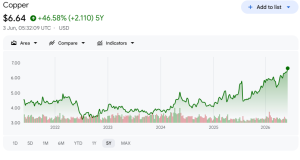
Copper has become a popular investment theme because several long-term trends support demand growth. Electric vehicles, renewable energy projects, power grids, and digital infrastructure all require large amounts of copper. Investors have taken notice. Over the past five years, copper prices have risen by more than 45%, reflecting confidence in the metal’s long-term prospects.
The supply outlook strengthens the investment case further. New mines take years to develop, while demand continues to expand. Many analysts expect structural supply deficits in the coming decades. Governments and corporations are also investing trillions of dollars in clean energy, grid modernization, and AI infrastructure. These trends position copper as one of the most important commodities of the energy transition.
Conclusion
The world’s energy and economic systems are changing rapidly. While oil powered the age of industrial growth and transportation, copper is becoming the metal that supports electrification, digital technology, and cleaner energy.
Its importance goes beyond traditional manufacturing. Copper helps power renewable energy, electric vehicles, advanced computing, and reliable power networks. In many ways, it sits at the center of two major trends of our time: the green transition and the digital revolution.
As governments, businesses, and investors prepare for a low-carbon future, copper’s importance is likely to keep growing. Countries and companies that secure reliable access to this critical resource today may gain a strong advantage in the future. The future may not rely only on black gold- it may increasingly be built on the foundations of red metal.