Nestle vs Britannia -Which has better Dividend Policies?
Most investors evaluate dividend stocks by looking at dividend yield or the latest dividend declared. While these metrics are important, they reveal only a small part of the picture.
A company's dividend policy reflects its capital allocation philosophy, cash generation ability, reinvestment opportunities and management's commitment towards shareholder returns.
Two of India's most well-known FMCG companies - Nestle India and Britannia Industries - have rewarded shareholders consistently for decades. However, their approach towards dividends differs in several important ways.
In this article, we compare both companies using official financial data to determine which company has the stronger dividend policy for long-term investors.
What Makes a Good Dividend Policy?
Before comparing Nestle India and Britannia, it's important to understand what makes a strong dividend policy. A good dividend policy isn't simply about paying the highest dividend - it should reward shareholders consistently while ensuring the company has enough resources to grow its business.
A strong dividend policy should ideally have the following characteristics:
- Consistent Dividend Payments: Regular dividends reflect stable earnings and disciplined capital allocation.
- Sustainable Payout Ratio: The company should distribute a reasonable portion of its profits without compromising future growth.
- Strong Free Cash Flow Support: Dividends should be backed by healthy cash generation, not just accounting profits.
- Healthy Earnings Growth: Growing profits increase the company's ability to raise dividends over time.
- Balance Between Shareholder Returns and Future Investments: Companies should reward shareholders while retaining enough capital for expansion and innovation.
- Ability to Maintain Dividends During Difficult Years: A resilient business should be able to continue paying dividends even during economic slowdowns.

Comparing Dividend History
| Metric | Nestle India | Britannia Industries |
| Years Paying Dividends | 20+ years of uninterrupted dividends (2005 - 2026 data available) | 20+ years of uninterrupted dividends |
| Dividend Frequency | Usually 2 to 4 dividends per year | Usually 2 dividends per year |
| Dividend Growth | Total annual dividend increased from ₹1.25/share (2005) to ₹12/share (FY25) (adjusted for the 1:10 stock split and 1:1 bonus issue) | Total annual dividend increased from around ₹6/share (early 2000s) to ₹75/share (FY25) |
| Special Dividends | Yes - Major special dividends in 2019 (₹180 pre-split) and 2026 (₹2 post-split) | Yes - Special dividend paid in FY21 (₹12.5/share) |
| Dividend Consistency | Very High - Dividend paid every year with no major interruption | Very High - Dividend paid every year with a steadily rising trend |
Both companies have demonstrated exceptional dividend consistency over more than two decades, making dividend reliability a non-issue for investors.
The real differentiator is no longer whether they pay dividends, but how sustainably those dividends can grow. The remaining sections therefore focus on the quality of each company's dividend policy rather than its payment history.
Source - Dividend History of Nestle
Dividend Payout Ratio
The dividend payout ratio measures the percentage of a company's net profit that is distributed to shareholders as dividends.
The remaining earnings are retained within the business to fund expansion, build new manufacturing facilities, develop new products, repay debt, or strengthen the balance sheet.
A higher payout ratio means shareholders receive a larger share of current profits, while a lower payout ratio indicates the company is retaining more earnings for future growth. Neither is inherently better - the ideal payout ratio depends on the company's growth stage and capital requirements.
Dividend Payout Ratio Comparison
| Metric | Nestle India | Britannia Industries |
| Dividend Payout Ratio | 65.3% | 86% |
| Capital Requirement | Low | Moderate |
| Earnings Retained | Higher | Lower |
Nestle India's Approach
Although Nestle India's payout ratio is lower than Britannia's, it still returns a significant portion of its profits to shareholders.
The company follows a balanced capital allocation strategy, rewarding shareholders through regular dividends while retaining part of its earnings to support manufacturing expansion, product innovation, and future business opportunities.
This approach provides greater financial flexibility if the company decides to increase investments or faces a temporary slowdown in earnings.
Key Observation
Britannia clearly favours returning a larger share of current profits to shareholders, whereas Nestle retains more earnings within the business. Neither approach is inherently superior.
The important question is whether the retained earnings generate higher future earnings and shareholder returns. If retained capital compounds at attractive rates, a lower payout ratio can ultimately create greater long-term wealth than distributing most of today's profits.
Capital Allocation Philosophy
Dividend policy reflects how management chooses to allocate the company's profits between rewarding shareholders today and investing for future growth. While both Nestle India and Britannia generate strong cash flows, their capital allocation philosophies differ slightly.

Nestle India
Nestle India's capital allocation strategy focuses on maintaining a strong capital base to support long-term business growth while optimizing shareholder returns. The company primarily funds its operations and expansion through internal accruals, allowing it to return a significant portion of excess cash to shareholders through dividends.
The Board evaluates dividend decisions after considering factors such as current profitability, operating cash flows, capital expenditure requirements and future business opportunities.
Source - Nestle.in
Britannia Industries
Britannia follows a balanced capital allocation approach. Along with rewarding shareholders through regular dividends, management continues to invest in manufacturing capacity, product innovation, premiumisation and distribution expansion to strengthen its long-term competitive position.
The company's Dividend Distribution Policy also states that dividend decisions are made after considering profitability, future growth opportunities, capital expenditure plans, working capital requirements and overall financial position.
Source - Britannia
Capital Allocation Outcomes
Both companies state that dividends are determined after considering profitability, future investments and capital expenditure requirements. However, investors should focus less on what management says and more on what management has achieved.
Nestle has consistently retained a larger share of earnings while continuing to strengthen its market position and profitability, suggesting that retained capital has been deployed productively. Britannia, in contrast, has chosen to distribute a larger proportion of profits, providing higher immediate cash returns but leaving comparatively less capital available for reinvestment.
The key trade-off is therefore between higher income today versus greater financial flexibility for tomorrow.
Investor Insight
Although both companies have shareholder-friendly dividend policies, their capital allocation priorities are slightly different.
- Nestle India places greater emphasis on distributing surplus cash while ensuring sufficient capital is available for long-term growth.
- Britannia Industries follows a more balanced approach, combining shareholder distributions with continued reinvestment in capacity, innovation and business expansion.
If you'd like to learn how dividends can generate long-term passive income you can watch my video on 10 Dividend Stocks for Passive Income
Dividend Yield Comparison
| Metric | Nestle India | Britannia |
| Current Dividend Yield | 0.8% | 1.66% |
| Historical Average Yield (5yr) | 0.73% | 1.72% |
Britannia currently offers a higher dividend yield than Nestle, and its historical average dividend yield has also remained higher over the years. This means that, at prevailing market prices, investors have generally received a higher cash return from Britannia's dividends.
However, dividend yield should never be the sole factor when evaluating a dividend policy. A lower yield does not necessarily indicate lower shareholder returns. In Nestle's case, the lower yield is largely a result of its premium valuation, as investors have consistently been willing to pay a higher price for its stable earnings, strong brands and predictable cash flows. When the share price rises faster than dividends, the dividend yield naturally declines.
From an investor's perspective, a higher dividend yield is beneficial only if it is backed by sustainable earnings and healthy cash flows. Otherwise, an elevated yield could simply reflect a stock whose price has fallen rather than a company with a superior dividend policy.
Britannia is the clear winner for investors seeking immediate dividend income. However, Nestle's lower dividend yield largely reflects the premium valuation investors assign to the business rather than an unwillingness to reward shareholders.
A lower yield supported by stronger business quality can often create higher total shareholder returns over long investment horizons.
Dividend Sustainability
A sustainable dividend depends on more than a company's dividend history. It requires strong cash generation and a healthy balance sheet. The following factors indicate how well Nestle India and Britannia are positioned to maintain and grow dividends over the long term.
| Parameter | Nestle | Britannia |
| Free Cash Flow | 4,218 Crore | 2,406 Crore |
| Free Cash Flow Payout | 55% To 66% | Approx - 91% |
| Debt To Equity | 0.08 | 0.27 |
| Interest Coverage | 33x | 30.2x |
| Dividend Coverage | 1.51x | 1.3x |
Analysis
The sustainability metrics reveal a meaningful difference between the two companies' dividend policies.
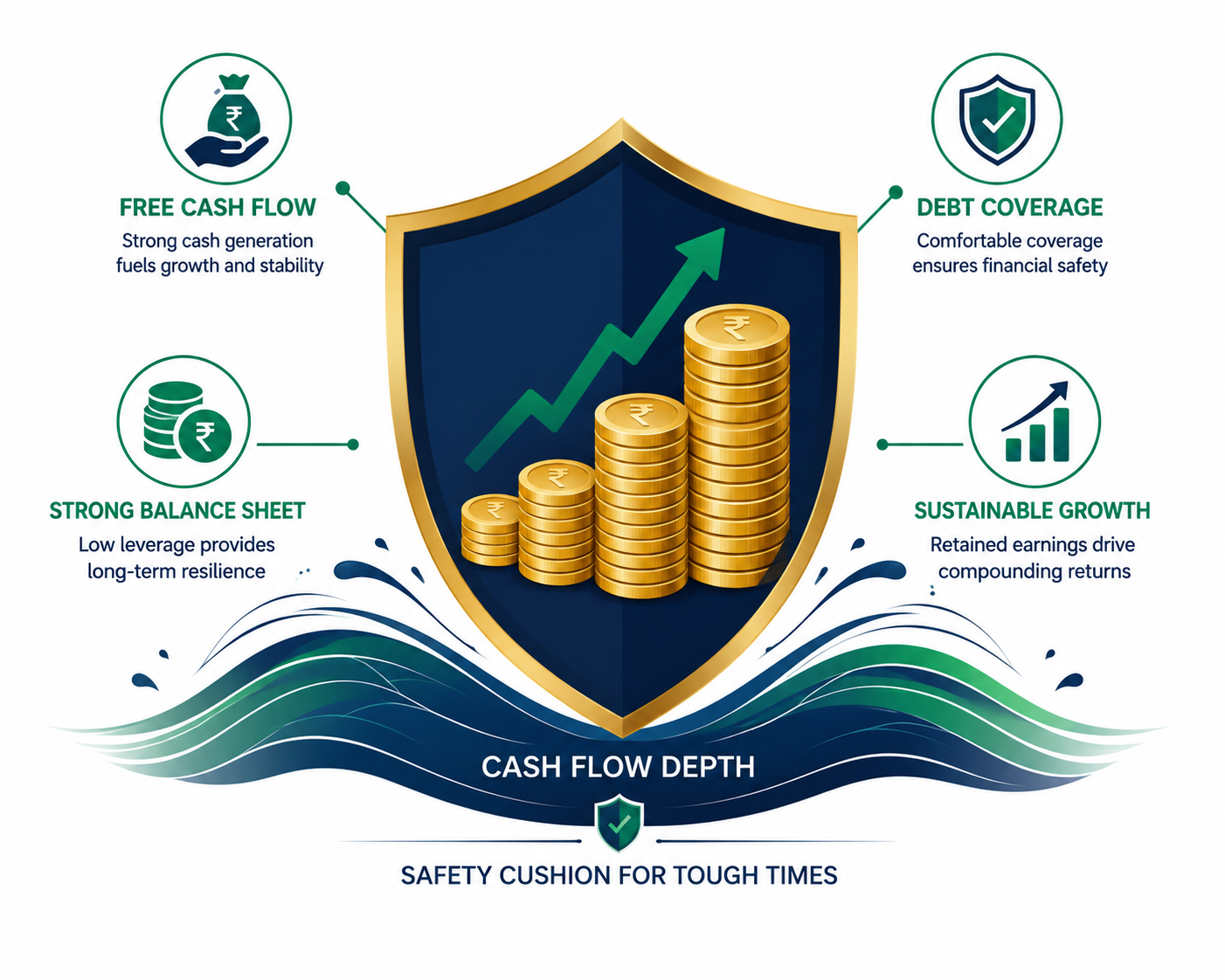
Nestle India has an advantage across most of the key indicators used to assess dividend sustainability. The company generates significantly higher free cash flow, giving it greater capacity to fund dividend payments while continuing to invest in future growth.
Its balance sheet is also more conservative, with a lower debt-to-equity ratio than Britannia. Lower leverage reduces financial risk and provides greater flexibility to maintain dividends during periods of slower earnings growth.
Both companies have strong interest coverage ratios, indicating that interest obligations are comfortably met from operating profits. However, Nestle again holds a slight edge.
Dividend coverage also favours Nestle. A coverage ratio of 1.51x compared with 1.30x suggests that its dividend payments have a larger earnings cushion, making future payouts relatively more resilient.
Investor Takeaway
While both companies have financially sustainable dividend policies, Nestle India appears better positioned to maintain and gradually increase its dividends over the long term. Its stronger cash generation, lower financial leverage and higher dividend coverage provide a wider margin of safety for long-term dividend investors.
Final Verdict
Both Nestle India and Britannia Industries have built an exceptional track record of rewarding shareholders through consistent dividends. Over the years, both companies have demonstrated strong profitability, disciplined management and a clear commitment to returning excess cash to investors.
However, their dividend philosophies differ.
Britannia follows a relatively shareholder distribution-focused approach, reflected in its higher dividend payout ratio and superior dividend yield. Investors seeking higher cash income today are likely to find Britannia more attractive.
Nestle India, on the other hand, follows a more balanced and sustainable dividend policy. While its dividend yield is lower, the company retains a larger portion of earnings, generates stronger free cash flow, maintains a more conservative balance sheet and has greater financial flexibility to continue rewarding shareholders while investing for future growth.
Ultimately, a good dividend policy is not about paying the highest dividend today - it is about paying sustainable and growing dividends for many years to come. On that measure, Nestle India has a clear advantage.
The Bottom Line
- Choose Britannia if your primary objective is to maximise current dividend income through a higher dividend yield and payout ratio.
- Choose Nestle India if you are looking for a dividend policy that balances shareholder returns with long-term business growth, financial strength and dividend sustainability.
Overall, Nestle India has the stronger dividend policy for long-term investors. Its combination of consistent dividend payments, disciplined capital allocation, stronger cash generation and superior dividend sustainability makes its dividend policy more resilient and better positioned to create long-term shareholder value.