Netflix’s Future Revenue Engine: The four Growth Drivers That Could Power Its Next Decade
Netflix Is No Longer Just a Subscription Business. For most of its history, Netflix made money in a simple way - people paid a monthly subscription fee. That model turned Netflix into the world's largest streaming platform. However, with more than 300 million subscribers globally, the company is reaching a stage where subscriber growth alone cannot drive the next decade of expansion.
Think of Netflix like a mature airline. Once most seats are filled, growth doesn't come from adding more passengers - it comes from selling premium seats, advertising, cargo services, and additional experiences.
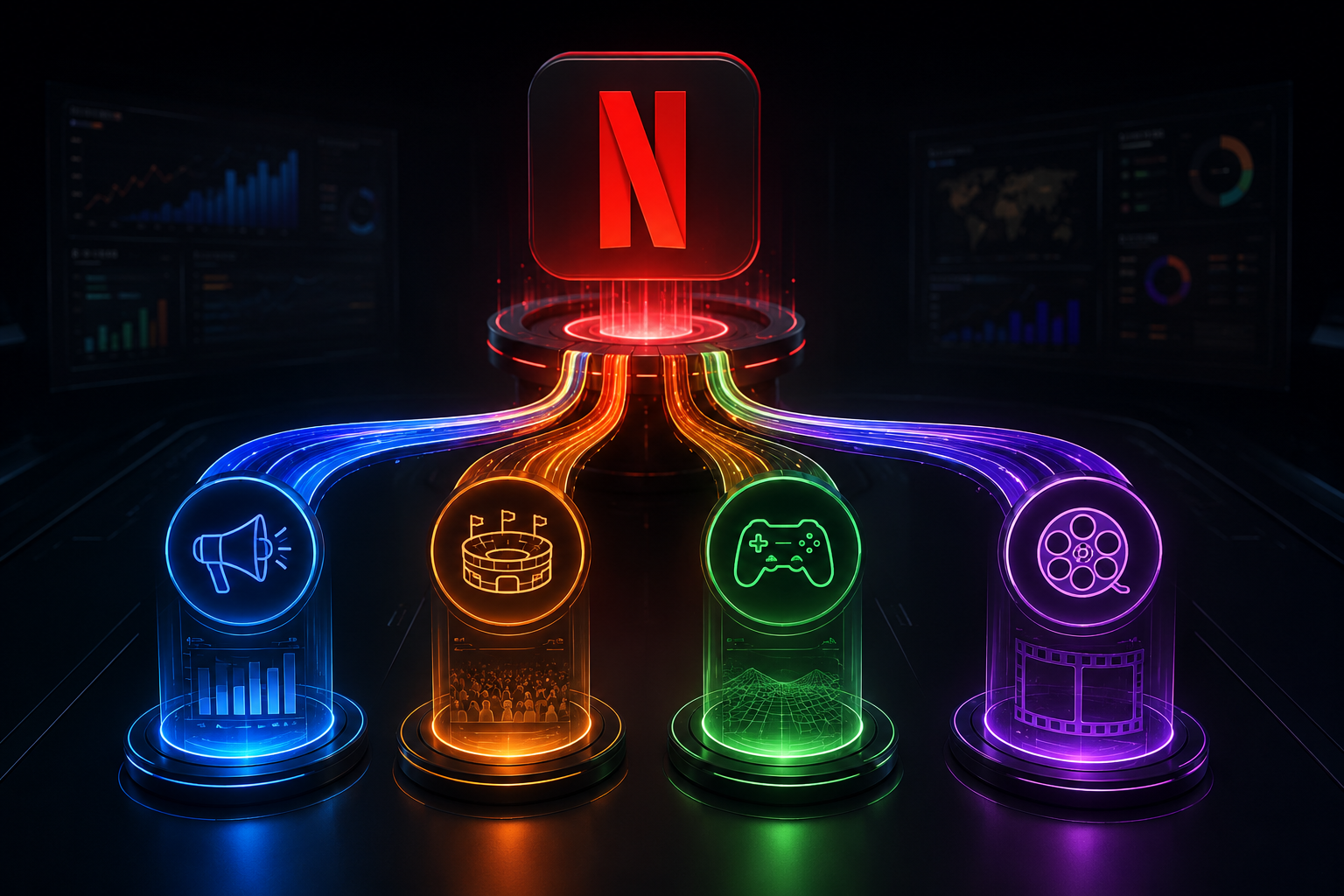
Today, Netflix is building four powerful revenue engines beyond traditional subscriptions
- Advertising
- Live Sports & Events
- Gaming
- Unique content
Advertising: Netflix's Biggest Long-Term Opportunity
Historically, Netflix maintained a strict no-advertising philosophy. For years, management positioned the platform as a premium viewing experience where subscribers could enjoy content without commercial interruptions.
But this strategy shifted in late 2022 when Netflix introduced its ad-supported subscription tier. The move marked one of the most significant changes in the company's history, opening the door to a new revenue stream beyond traditional subscription fees.
The perception was that Netflix was sacrificing part of its premium identity to maintain growth. The ad business has the potential to become one of Netflix's most valuable long-term growth engines. Rather than simply adding lower-priced subscribers, the company is building an entirely new revenue layer on top of its existing subscription model.
A subscriber paying around $8 per month for an ad-supported plan can ultimately generate more total revenue than a subscriber paying $15 per month on an ad-free plan. In addition to subscription fees, Netflix earns advertising revenue from brands seeking access to its highly engaged audience. As advertising technology improves and monetization increases, the revenue generated per ad-supported user could significantly exceed that of a traditional subscriber.
What Netflix Revealed at Its Upfront Presentation
During Netflix's 2026 Upfront presentation, Advertising President Amy Reinhard announced:
“If the last couple of years were about proving we're a durable player, this year is about establishing ourselves as a formidable one."
Key numbers
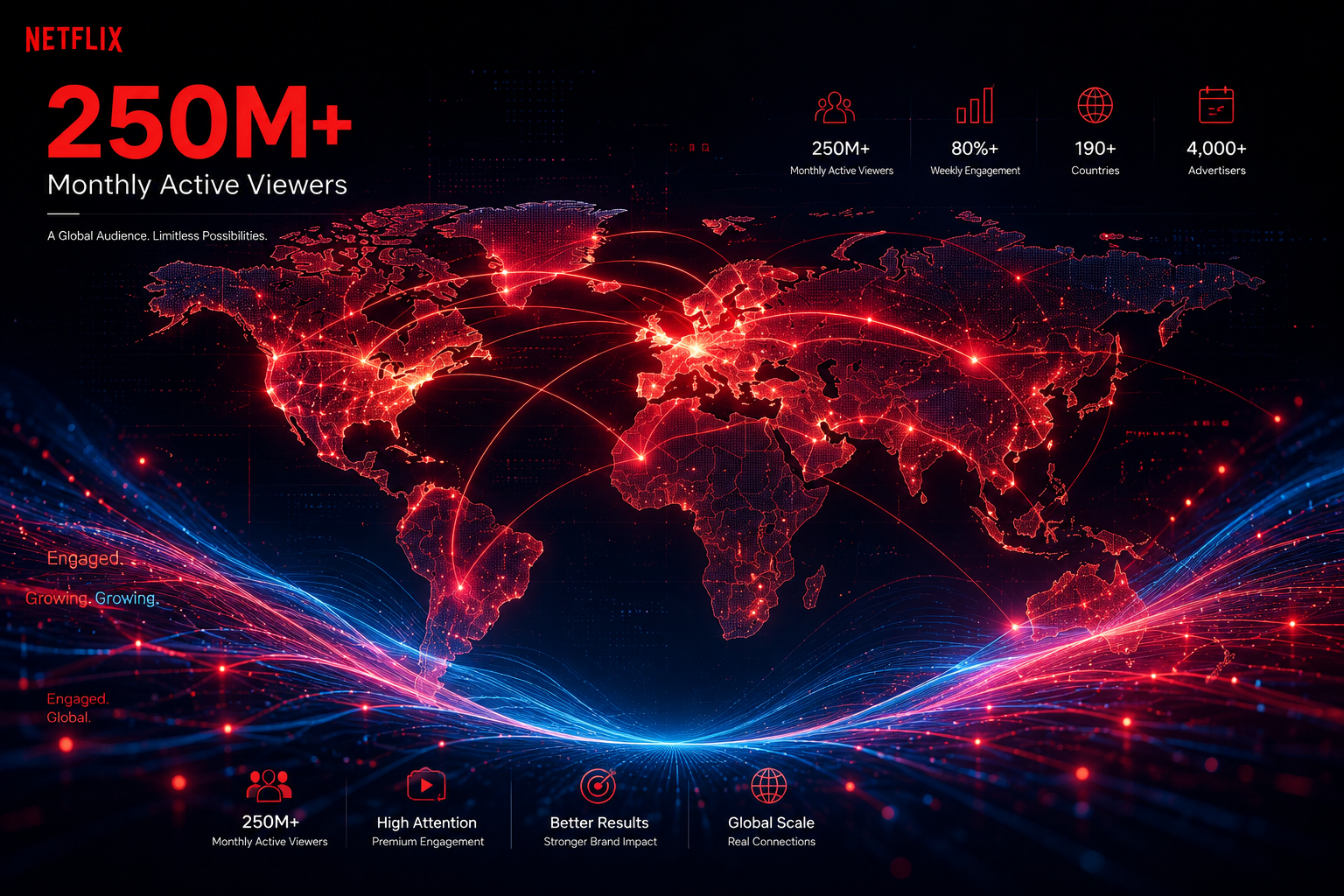
- Netflix's ad-supported plan now reaches over 250 million monthly active viewers globally.
- More than 80% of ad-tier members watch every week.
- Around 60% of new subscribers choose the ad-supported plan.
- Netflix works with over 4,000 advertisers worldwide.
Future Potential
Netflix generated roughly $1.5 billion in advertising revenue during 2025 and expects that figure to reach around $3 billion in 2026. Analysts believe advertising revenue could exceed $7 billion annually by 2029.
Netflix’s ads plan will expand to 15 new countries, including Austria, Belgium, Colombia, Denmark, Indonesia, Ireland, the Netherlands, New Zealand, Norway, Peru, Philippines, Poland, Sweden, Switzerland and Thailand, giving members more affordable plan options and advertisers more opportunities to reach audiences.
The Hidden Engine: Moving In-House
While hitting $7 billion in ad revenue sounds impressive on paper, the real story isn't just about how many people watch ads - it’s about who controls the technology. Initially, Netflix relied entirely on Microsoft’s ad tech to power its system.
However, Netflix is actively transitioning to its own proprietary, in-house ad platform. By owning the data and the tech stack, Netflix stops splitting ad-revenue margins with third parties. This allows them to offer hyper-targeted programmatic ad buying, meaning they can charge brands a massive premium for commercial slots.
Source - Netflix Upfront 2026: Get Closer (Netflix)
Live Sports & Events: The Secret Weapon
Most of Netflix's content is available on demand. Subscribers can watch a movie or series whenever they want, whether that's today, next week, or even months later. There is very little urgency to watch immediately.
Live sports are completely different. Their value comes from being watched in real time. Fans want to experience the action as it happens, not after the final score is already known.
Think about the difference between watching a movie and watching the Super Bowl. A movie can wait but a major sporting event cannot. Viewers want to be part of the live experience and excitement.
This urgency makes live sports incredibly valuable for Netflix. Subscribers are less likely to cancel their memberships when they know an important event is coming up.
Netflix's Sports Strategy
Unlike traditional broadcasters, Netflix is not trying to buy every sports league. Instead, it is targeting premium events like - Multi-year NFL Christmas Day games agreement, WWE Raw rights deal worth roughly $5 billion and live boxing events.
Defeating the 'Churn and Burn' Phenomenon.
Live sports come with a major business risk: 'churn and burn' subscribers. These are fans who sign up for a single month to watch the NFL Christmas games or a major boxing match, and then immediately cancel their subscription.
Netflix’s genius counter-strategy is its 52-week calendar anchor. By securing WWE Raw for a massive $5 billion across a 10-year deal, Netflix ensures a highly loyal, built-in audience that tunes in every single Monday, all year long. The WWE isn't just content; it is a retention anchor designed to bridge the gap between seasonal sports like the NFL.

Advertising Multiplier
Live sports do more than attract subscribers - they also boost advertising revenue. Advertisers are willing to pay premium rates for live events because millions of viewers watch simultaneously and are less likely to skip commercials.
As Netflix adds more live sports and events, it creates a powerful growth cycle: more sports attract more viewers, more viewers attract more advertisers, and more advertisers generate higher revenue. This flywheel could become a major driver of Netflix's future growth.
Gaming - The Long-Term Option Value
Management believes the entertainment industry extends far beyond traditional television shows and movies. Today, consumers spend their leisure time across multiple forms of entertainment, including streaming content, video games, and social media platforms.
As a result, Netflix is no longer competing only with other streaming services. It is competing for a share of consumers' total screen time and attention.
The company's goal is simple: capture a larger portion of the hours people spend on entertainment. By expanding into areas such as gaming and live events, Netflix hopes to become a broader entertainment platform rather than just a video streaming service.
The Real Strategy
Netflix is not trying to become the next PlayStation overnight. Instead, the company is using gaming as a way to extend the value of its most popular franchises and keep audiences engaged beyond the screen.
For example, Netflix can create games based on hit series such as Stranger Things, Squid Game, and Wednesday. These experiences allow fans to interact with their favourite characters and story worlds in new ways.
The broader goal is to build an entertainment ecosystem around Netflix's intellectual property. Rather than ending the relationship when a viewer finishes a show, Netflix can keep users engaged through games and other interactive experiences.
The Engagement Paradox
The road to gaming dominance isn't without its speed bumps. While crossing 300 million lifetime downloads sounds massive, industry data reveals that fewer than 2% of Netflix's total daily active subscribers actually play its games.
Netflix isn't trying to sell $70 blockbuster console games. Instead, they view mobile gaming purely as a subscriber defence mechanism. If a game based on Squid Game or Stranger Things keeps a user engaged for an extra 30 minutes a week, that user is statistically far less likely to cancel their membership.
Future Potential
Gaming is currently Netflix's smallest growth initiative and contributes only a limited portion of the company's overall business. However, it may also represent one of the largest long-term opportunities.
The potential lies in Netflix's vast library of popular franchises and intellectual property. If even a few of its hit shows successfully expand into gaming, the financial impact could be meaningful.
Successful games can generate years of engagement, strengthen fan loyalty, and create additional revenue streams beyond traditional subscriptions.
For investors, gaming can be viewed as a call option on the future of entertainment. The downside is relatively limited today, but if Netflix succeeds in building major gaming franchises, the upside could be substantial over the next decade.
Unique Content: Netflix's Ultimate Competitive Advantage
Content Remains Netflix's Core Revenue Engine. At the end of the day, people do not subscribe to Netflix because of its app or technology. They subscribe because of the content. Great shows and movies are what attract viewers in the first place and keep them coming back.
A useful comparison is Disney. Consumers do not visit Disney because they love the ticketing system—they visit because Disney owns some of the world's most valuable franchises, including Marvel, Star Wars, and Pixar.
The same principle applies to Netflix. Its most valuable asset is not the streaming platform itself, but the intellectual property it has built through original content. Successful franchises create long-term engagement and give subscribers a reason to stay on the service.
Shows such as Stranger Things, Wednesday, Squid Game, Bridgerton, The Night Agent, One Piece, and Money Heist have evolved into global franchises that help attract and retain millions of subscribers.
Without hit content, Netflix's other growth drivers become far less effective. Advertising works because people watch popular shows, gaming succeeds when it is built around strong franchises, and live events benefit from the audience that Netflix's content ecosystem creates. Content remains the foundation that powers every other part of Netflix's growth strategy.
The Global Content Advantage
Unlike traditional Hollywood studios, Netflix is no longer dependent solely on U.S.-produced content. The company has built a global content strategy that allows it to create and distribute successful shows from virtually any region of the world.
Some of Netflix's biggest hits have originated outside the United States. Series such as Squid Game from South Korea, Money Heist and Berlin from Spain, Lupin from France, and All of Us Are Dead from South Korea have become global successes.
This gives Netflix a significant competitive advantage. A hit show produced in one country is no longer limited to its local audience. Instead, it can be distributed instantly to viewers around the world through Netflix's global platform.
For example, a successful Korean series can attract audiences in India, the United States, Europe, and Latin America at the same time. The company can spread production costs across hundreds of millions of potential viewers, improving the return on its content investments.
As a result, Netflix's global content engine allows it to discover valuable intellectual property from any market and turn local productions into worldwide franchises, strengthening both subscriber growth and long-term profitability.
If you're interested in investing in companies like Netflix but aren't sure how to get started, I've created a step-by-step guide explaining how to invest in U.S. stocks from India. You can watch it here: How to Invest in US Stocks
Conclusion
For most of its history, Netflix's growth story was relatively straightforward: acquire more subscribers and generate more subscription revenue. That strategy helped the company become the world's largest streaming platform, but the next decade will likely look very different.
As subscriber growth naturally matures, Netflix is building multiple new revenue engines that can drive growth far beyond its traditional business model. Advertising is rapidly emerging as a multi-billion-dollar opportunity, live sports and events are helping attract highly engaged audiences, gaming offers long-term optionality through deeper user engagement, and Netflix's growing portfolio of unique content continues to strengthen its competitive moat.
What makes these growth drivers particularly powerful is that they reinforce one another. Hit content attracts viewers, viewers attract advertisers, advertisers generate higher revenue, and that revenue can be reinvested into creating even more compelling content and experiences. This creates a self-reinforcing flywheel that few competitors can match.
If management executes well in the future Netflix could evolve from a subscription-based streaming service into a global entertainment ecosystem with several powerful revenue streams.
In this scenario, the company's biggest growth opportunities may still lie ahead. Netflix's future will not be defined solely by how many people subscribe, but by how effectively it transforms engagement into long-term revenue and shareholder value.