From Water to Fire and Sun: The Aggressive Rebranding of SJVN
Most people still think of SJVN as a traditional hydro PSU. But the company is rapidly changing its identity.
From thermal power to solar and transmission, SJVN is aggressively expanding beyond dams and river projects to become a broader multi-energy player.
The real question now is whether this transformation can turn SJVN from a stable utility into a long-term growth story.
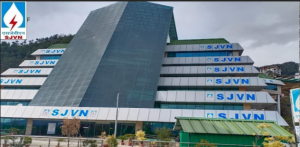
How SJVN Started as a Hydro-Focused PSU?
SJVN was formed in 1988 as a joint venture between the Government of India and the Government of Himachal Pradesh. In its early years, the company focused mainly on hydroelectric power projects, which is why it was long seen as a traditional hydro PSU.
Its biggest project was the Nathpa Jhakri Hydroelectric Power Station, one of India’s largest hydro power plants. This project became the backbone of SJVN’s business and revenue for many years.
Hydro power gave the company stable long-term cash flows because once a dam is built, operating costs are relatively low and the plant can generate electricity for decades. This made SJVN financially stable and dependable.
Over time, the company built the image of a typical PSU:
- slow-growing,
- defensive,
- regulated,
- and known for steady dividends rather than aggressive expansion.
Investors mostly saw SJVN as a safe and stable utility company, not as a high-growth power stock.
Why Hydro Alone Became a Problem?
For years, hydro power gave SJVN stability. But eventually, that same model started becoming a limitation.
Hydro projects are heavily dependent on monsoons and river flows. A weak rainfall season can directly affect power generation. Climate change has also made water availability less predictable than before.
Then came the execution problem. Large hydro plants in mountain regions take years to build and often run into geological surprises like difficult terrain, tunneling issues, and delays which push the costs higher.
Financially, this meant slower growth and seasonal fluctuations in earnings.
At the same time, India’s power sector was moving much faster toward solar, thermal balancing power, hybrid energy projects, and grid expansion.
Suddenly, being only a hydro company no longer looked enough for long-term growth.
From Hydro PSU to Multi-Energy Player
SJVN is no longer trying to stay just a hydro power company. It is now expanding into thermal power, solar energy, and transmission projects to become a larger multi-energy player.
Fire- Thermal Expansion
Projects like the Buxar Thermal Plant show SJVN’s push into thermal power. Even with renewable growth, India still needs thermal plants for stable baseload electricity and grid stability.
Thermal projects can also provide steady revenue if plant utilisation (PLF) remains strong, giving SJVN another long-term earnings source.
Sun- Solar & Renewable Push
SJVN is also expanding aggressively into solar and renewable energy projects, including hybrid wind-solar plans.
The company is no longer focused only on stable PSU-style returns. It now wants to become part of India’s fast-growing energy transition story.
Transmission & Energy Expansion
SJVN is also entering transmission and grid infrastructure because generating power alone is no longer enough.
Modern power companies increasingly need control across the entire energy ecosystem from generation to connectivity.
This has been explained nicely on our video which you can watch to understand this company better.
This Is Not Just Expansion- It’s Survival
For SJVN, diversification is more than growth, it is survival in a changing power market.
If it stayed only a hydro company, growth would remain limited, investor interest would weaken, and it would continue trading like a slow-moving PSU.
By moving into thermal, solar, and transmission, SJVN is trying to stay relevant, attract better market attention, and align itself with India’s evolving energy mix.
The Financial Bet: Bigger Scale, Bigger Risks
For SJVN, the shift to a multi-energy player comes with a clear trade-off: bigger scale, but also bigger risk.
The company is now committing to higher capex across thermal, solar, and transmission projects, which naturally increases funding needs and debt levels. At the same time, execution becomes more complex because each segment- hydro, thermal, and renewables, has very different timelines, risks, and operating challenges.
Thermal projects bring fuel risk, renewables face issues like curtailment and grid constraints, and overall performance remains highly dependent on policy decisions and government direction.
Compared to this, hydro projects were slow but relatively predictable once built. The new SJVN is faster-growing, but also far more exposed to operational and financial uncertainty.
This contrast sits at the core of its transformation story.
SJVN Reflects a Larger PSU Transformation
SJVN is not alone in this shift. It reflects a broader change happening across Indian PSUs in the power sector.
Companies like NTPC and NHPC are also moving beyond their legacy identities and expanding into renewables, solar, and integrated energy projects.
The core idea is simple- India’s energy transition is forcing even traditional and conservative PSUs to behave more aggressively. They are no longer just utility operators; they are becoming full-scale energy companies adapting to a faster, more competitive market.
Capex Cycle vs Cash Flow Reality
One of the biggest questions for SJVN is whether its cash flows can keep up with its aggressive expansion plans.
The company is entering a heavy capex phase across thermal, renewable, and transmission projects. While this can support future growth, it also means large upfront spending long before many projects start generating meaningful revenue.
This creates a delicate balance. If execution remains smooth, the new assets can strengthen long-term earnings. But if projects face delays or lower utilisation, debt levels and financial pressure could rise faster than cash generation.
The Investor Question
For SJVN, the real question is not about expansion anymore, it is about execution.
Can it successfully shift from a slow, hydro-focused PSU into a scalable multi-energy player without losing financial discipline?
The answer will depend on how well it manages execution quality across projects, improves asset utilisation, and keeps debt under control while funding aggressive capex. Renewable profitability, thermal economics, and project efficiency will decide whether this transformation actually creates value or just adds complexity.
In the long run, the market will not reward ambition alone. It will determine whether SJVN can turn this multi-energy strategy into consistent earnings and a stronger valuation story.
Conclusion
SJVN is no longer just a hydro PSU built around rivers and dams. It is now trying to transform itself into a broader energy company spanning thermal power, renewables, and transmission.
This shift reflects a much bigger change happening across India’s power sector, where even traditionally conservative PSUs are being pushed to grow aggressively and adapt to the country’s energy transition.
The opportunity is large, but so are the risks. SJVN’s future will now depend less on stability and more on execution, capital discipline, and how successfully it can convert this ambitious expansion into long-term growth.