How does Kaynes Tech Make Money?
Kaynes Technology is often seen as just another EMS company benefiting from India’s manufacturing growth. But that view only tells part of the story.
If you look deeper, Kaynes is not just assembling electronics, it is gradually moving into a higher-value role involving design, engineering, and system integration.
So the real question is: where does its money actually come from, and what is driving its next phase of growth beyond manufacturing?
Annual Performance (FY26)
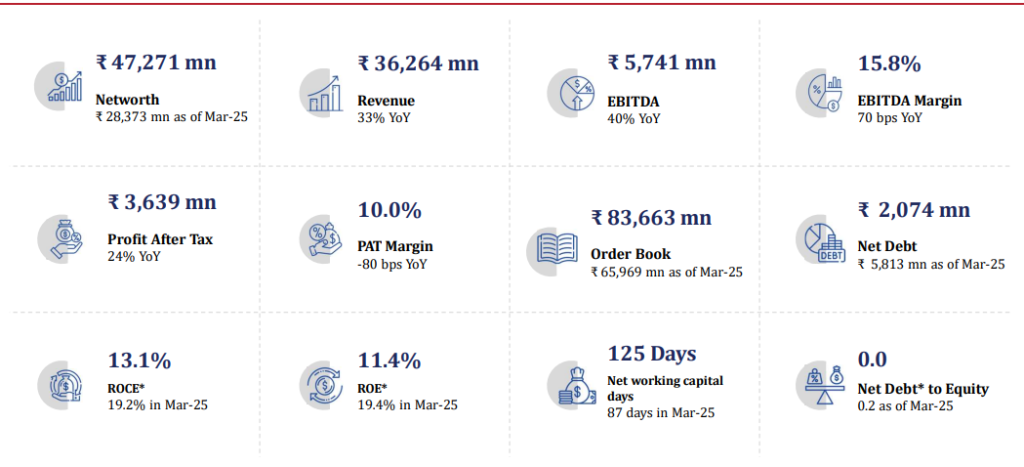
Core Business Model: How Kaynes Actually Makes Money
At its heart, Kaynes operates as an end-to-end electronics system design and manufacturing (ESDM) company. It helps customers design, build, test, and maintain them, not just build the products
Its revenue comes from four major streams:
1. Contract Manufacturing (Core Revenue Driver)
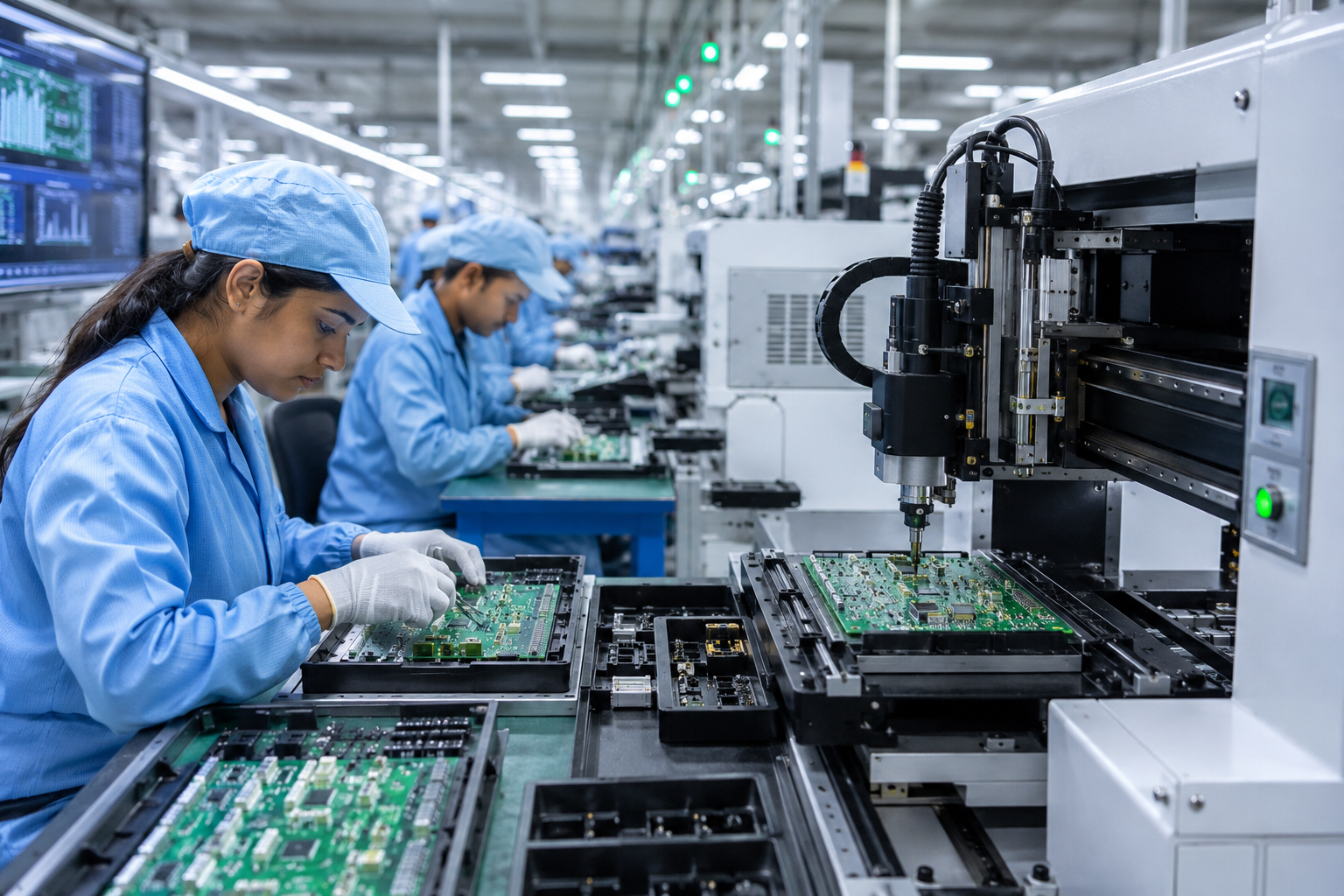
This is Kaynes’ main revenue source. The company manufactures electronic products for clients based on their designs.
It serves industries like automotive, industrial, railways, and defence. This steady demand makes it the backbone of the business.
2. Turnkey & Build-to-Spec Projects
In this segment, Kaynes delivers complete finished products instead of just parts. It handles everything from sourcing components to final assembly and testing.
Because the company takes more responsibility here, it earns better margins compared to basic contract manufacturing.
3. Engineering, Design & IoT Services
Here, Kaynes provides product design, embedded engineering, and IoT-based solutions. It helps clients build smarter and more connected electronic systems.
This is a smaller but high-value segment, as it shifts the company from just manufacturing to offering technology-led solutions.
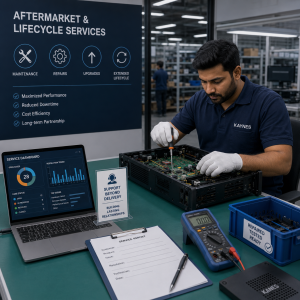
4. Aftermarket & Lifecycle Services
This includes maintenance, repairs, and product upgrades after delivery.
It is still a small part of revenue, but important because it creates recurring income and long-term customer relationships.
Revenue Breakdown of Kaynes
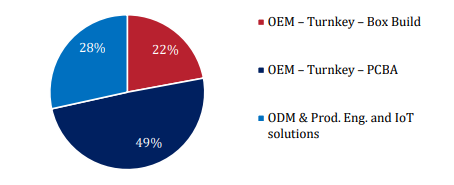
Kaynes’ revenue structure has been steadily evolving, with a clear shift toward higher value-added segments.
The business is now broadly divided into three key verticals:
1. OEM – Turnkey PCB Assembly
(49% in 9M FY26 vs 63% in FY22)
This remains the largest revenue contributor. In this segment, Kaynes provides end-to-end PCB assembly solutions, including magnetics, cable harnessing, plastics, and other value-added assemblies. It acts as a full manufacturing partner for OEMs across industries, handling large-scale production with integrated capabilities.
2. OEM – Box Build
(22% in 9M FY26 vs 28% in FY22)
This segment focuses on building complete systems rather than just assemblies. Kaynes delivers both Build-to-Print and Build-to-Spec solutions, ranging from sub-assemblies to fully integrated electronic and electromechanical systems. It caters to complex products like mechatronic equipment, intelligent control panels, and industrial systems, typically commanding better value per unit.
3. ODM & Product Engineering and IoT Solutions
(28% in 9M FY26 vs 9% in FY22)
This is the fastest-growing and most value-accretive segment. Here, Kaynes is involved in product design, software development, PCB engineering, mechanical design, and IoT-based solutions. The strong growth in this segment highlights Kaynes’ transition from a pure manufacturing company to a design-led technology solutions provider.
Revenue across Segments for FY26
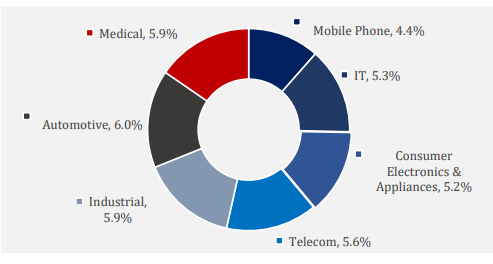
Industry Exposure across ESDM & PCBA
Kaynes Technology serves multiple industries through its ESDM and PCBA capabilities, including automotive, industrial automation, railways, aerospace & defence, medical devices, EVs, and smart energy solutions.
These sectors require high-reliability electronic systems, where Kaynes provides both manufacturing and engineering support. Its diversified industry presence reduces dependence on a single sector while benefiting from long-term trends like electrification and automation.
Global ESDM Segment CAGR from CY 2023 to CY 2027
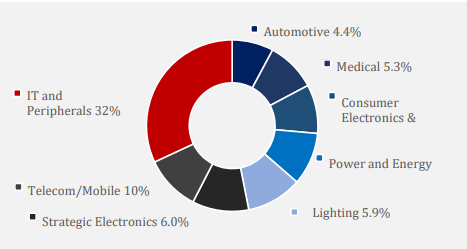
Global PCBA Market Share by Industry
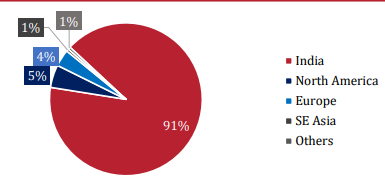
Geographic Split
India remains the company’s biggest market due to rising demand across automotive electronics, industrial automation, railways, defence, and smart energy solutions. Government initiatives like Make in India and the push for electronics manufacturing localization have also supported growth.
On the international side, Kaynes is gradually expanding through exports and global OEM partnerships.
While the overseas contribution is still relatively small, it represents a long-term opportunity as the company moves deeper into high-value and globally integrated electronics supply chains.
Revenue Across Geographies (FY25)
Future Growth Drivers
Kaynes is not just growing, it is evolving structurally.
1. Semiconductor & OSAT Expansion
Kaynes is also entering the semiconductor and OSAT (Outsourced Semiconductor Assembly and Testing) space, moving beyond traditional electronics manufacturing.
This could improve margins, add higher-value capabilities, and strengthen the company’s position in global electronics supply chains.
2. PCB & Advanced Manufacturing Expansion
Kaynes is strengthening its PCB manufacturing and backward integration capabilities to become more self-reliant in its production process.
This reduces dependence on imports, improves supply chain control, and enhances overall cost efficiency. Over time, it also supports better margins by moving more components in-house and increasing value addition.
3. Shift from EMS to ODM
Kaynes is gradually moving from a pure EMS (Electronics Manufacturing Services) model toward ODM (Original Design Manufacturing), where it is not just manufacturing products but also involved in designing them.
This shift includes greater focus on product ownership, system-level engineering, and end-to-end solutions. Over time, this transition can improve margins and make the business more differentiated compared to traditional EMS players.
4. Defence, Railways & EV Electronics Boom
A major growth driver for Kaynes is the rising government-led capital expenditure in key strategic sectors like defence electronics, railway modernization, and the EV ecosystem.
These sectors require high-reliability, long-life electronic systems, which aligns well with Kaynes’ manufacturing and engineering capabilities. As investments in these areas continue to expand, they are expected to generate a steady pipeline of long-term, high-value contracts for the company.
Conclusion
Kaynes Technology is not an example of a “classic EMS company story”.
It is best viewed as a company located at the intersection of:
Manufacturing Scale + Engineering Capability + Supply Chain Localisation.
The real story is not just revenue growth alone, but value migration from low margin assembly to high margin design-led manufacturing.
This transition will determine whether Kaynes continues to be a strong growth company, or will turn into a long-term compounding organisation.