IREDA Explained: The Backbone of India’s Green Energy
India's renewable energy sector is expanding rapidly, and several institutions are helping support this transition. One such organization is the Indian Renewable Energy Development Agency (IREDA).
Understanding the IREDA business model helps explain why the institution plays such an important role in financing India's green energy expansion.
IREDA is widely recognized for its focus on green energy financing in India and operates in a niche segment expected to see strong activity in the coming decade. This article provides an informational overview of its financial trends, loan growth, and operational structure to understand how the organization functions within the renewable energy ecosystem.
IREDA Business Model: Focused on Renewable Energy Financing
IREDA is a Public Sector Undertaking (PSU) and one of India's largest renewable energy financing NBFCs. Unlike traditional banks that lend to multiple industries, IREDA focuses specifically on financing projects related to renewable energy infrastructure.
Because it is backed by the Government of India, the organization holds a AAA credit rating, the highest possible rating. This strong credit profile allows IREDA to borrow funds at comparatively lower interest rates than many other NBFCs.
The company then lends these funds to developers building renewable energy projects across sectors such as:
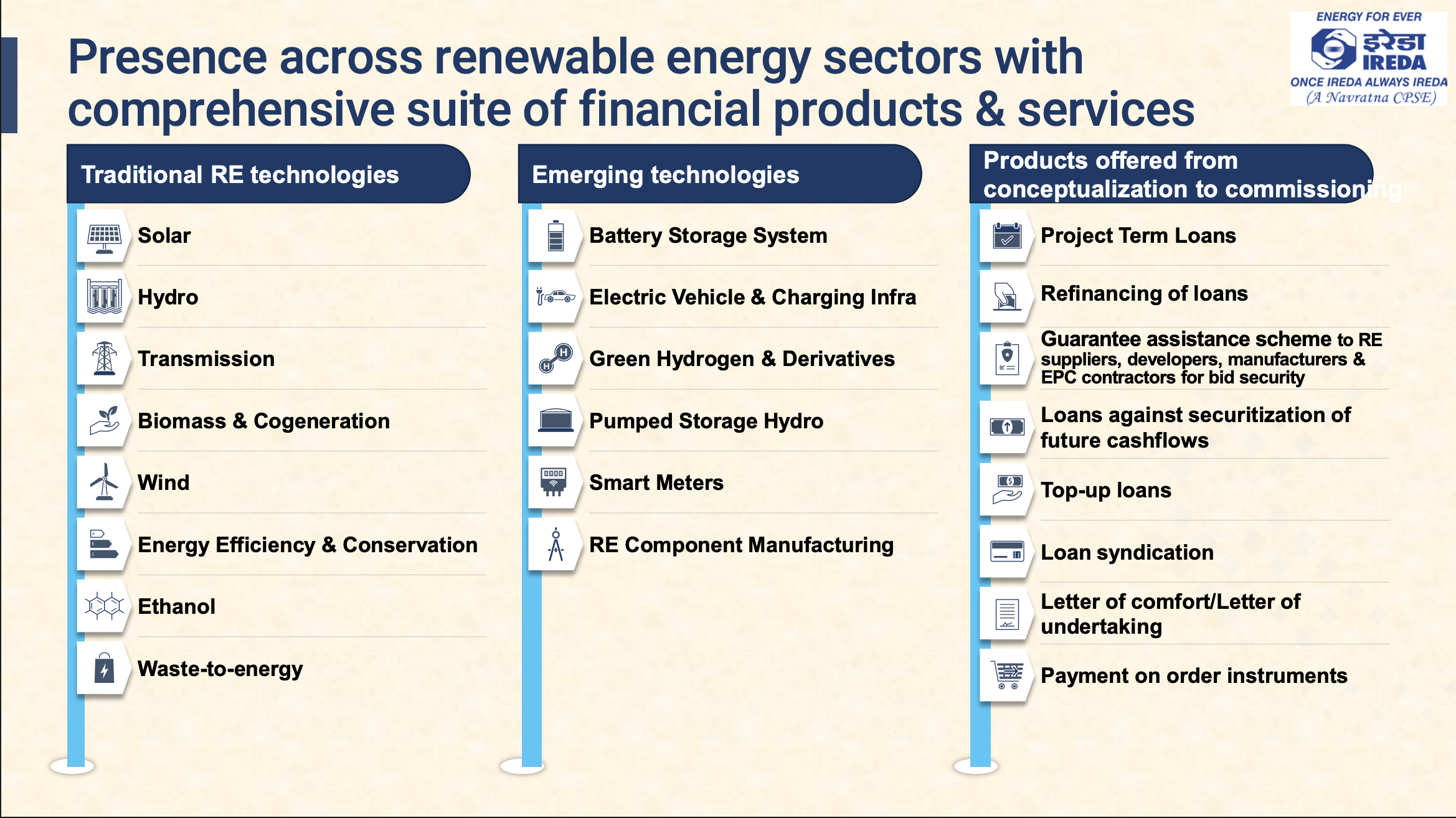
- Solar energy
- Wind power
- Hydropower
- Green hydrogen
- Battery Energy Storage Systems (BESS)
- EV charging infrastructure
Renewable energy projects are typically capital-intensive, meaning companies require significant funding to develop them. As India continues expanding renewable energy capacity over the next 5-10 years, financing institutions like IREDA may continue playing a key role in supporting these projects.
Watch Our Video on IREDA
GIFT City Subsidiary and Global Funding Access
IREDA has also established a subsidiary called IREDA Global Green Energy Finance IFSC Limited in GIFT City, Gujarat.
This initiative allows the organization to raise funds directly in foreign currencies such as US dollars or euros. Borrowing in global markets can sometimes offer lower interest rates, which can influence the overall cost of borrowing.
Another benefit of the GIFT City presence is the ability to provide loans in foreign currencies.Many renewable energy projects require imported equipment and machinery, usually purchased using US dollars. When companies borrow in Indian rupees and convert those funds into dollars, they may face currency conversion costs and foreign exchange risks.By offering foreign currency financing, IREDA can support projects that require international procurement while expanding its lending capabilities.
In simple terms, the GIFT City initiative improves funding flexibility and loan book diversification.
Market Sentiment and Stock Volatility
Like many companies connected with emerging sectors, IREDA has experienced periods of high market attention and volatility.
Following its IPO, the company's stock price rose significantly within a short period. Market enthusiasm around themes such as renewable energy and green transition can sometimes lead to rapid price movements. However, market sentiment can shift over time. In recent periods, trading volumes in the stock have declined considerably, suggesting that investor interest has moderated compared with earlier phases.
These changes highlight how stock prices and business performance do not always move in perfect alignment, particularly during phases influenced by strong market narratives.
Financial Performance Trends
One noticeable trend in the company's financial performance is the steady increase in revenue, reflecting growth in lending activity.
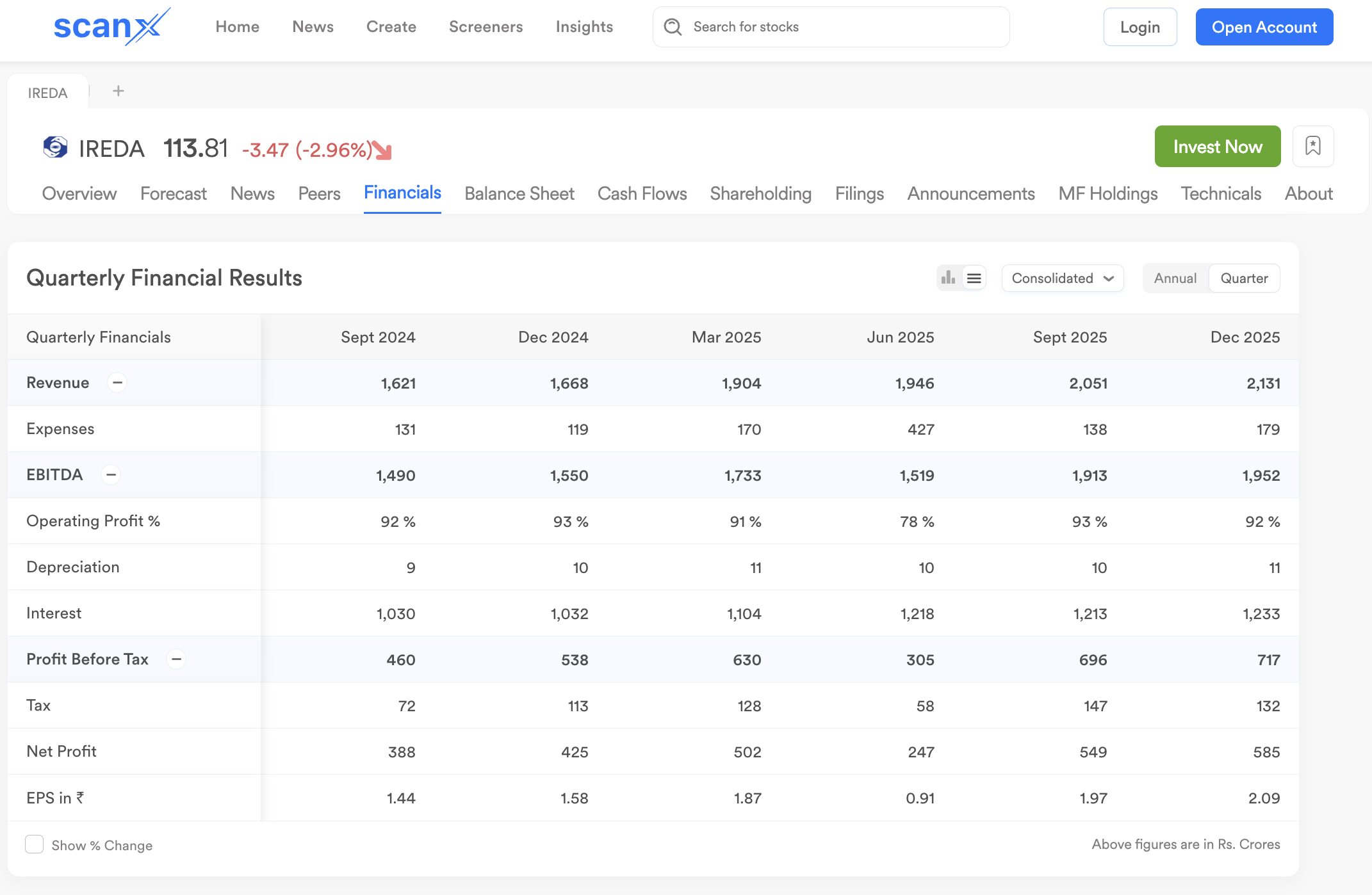
During the June 2025 quarter, the company reported a decline in profit. This was mainly due to higher provisions, created following a court directive related to a borrower from the 2019-20 period. In financial institutions, provisions refer to funds set aside to cover potential loan defaults. These amounts are deducted from profits as a precautionary financial practice.
Despite this temporary impact, the company's TTM (Trailing Twelve Months) revenue and profit remain at their highest levels, indicating continued business expansion. Two commonly observed indicators used to evaluate NBFC performance are:
Interest Spread - the difference between interest earned on loans and the cost of borrowing funds.
Net Interest Margin (NIM) - a profitability metric showing income generated from lending relative to total assets.
As of December 2025:
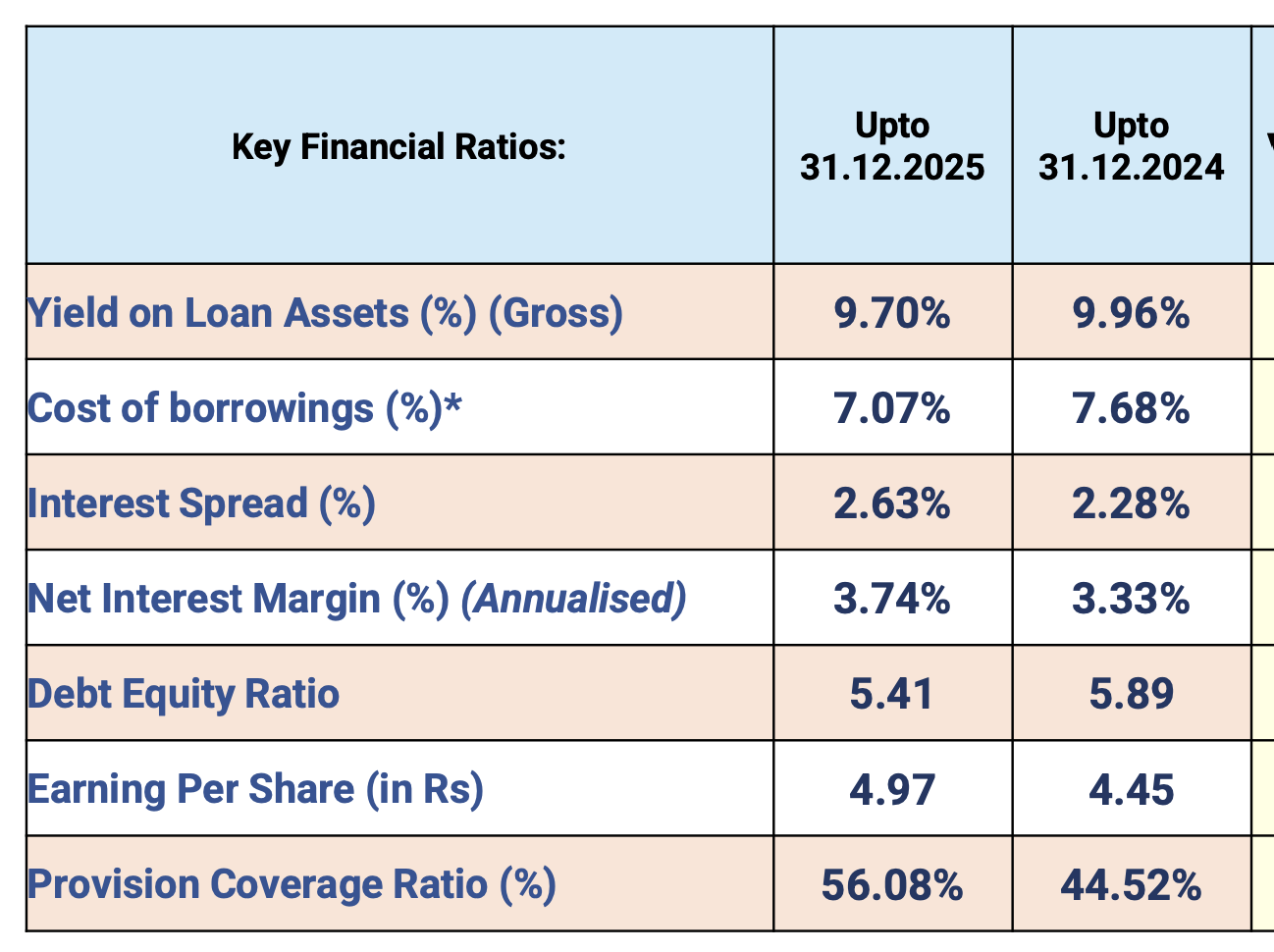
- Yield on loans: 9.70%
- Cost of borrowing: 7.07%
- Interest spread: 2.63%
Meanwhile, Net Interest Margin (NIM) improved from 3.33% to 3.74%, indicating better margin efficiency during this period.
Asset Quality and NPAs
For lending institutions, asset quality is an important indicator. As of December 2025, IREDA reported a Gross NPA of 3.75%, compared with 2.68% in the previous year. The increase was mainly linked to the borrower classification following the Andhra Pradesh High Court order.
A more relevant measure of credit risk is the Net NPA, which reflects the remaining exposure after provisions are accounted for. IREDA's Net NPA stands at 1.68%, slightly higher than the previous year's 1.50%, but lower than the 1.97% recorded in the earlier quarter.
In the renewable energy sector, payment delays can occur due to project timelines. However, government support and long-term power purchase agreements often help reduce the probability of complete defaults.
Loan Book Growth
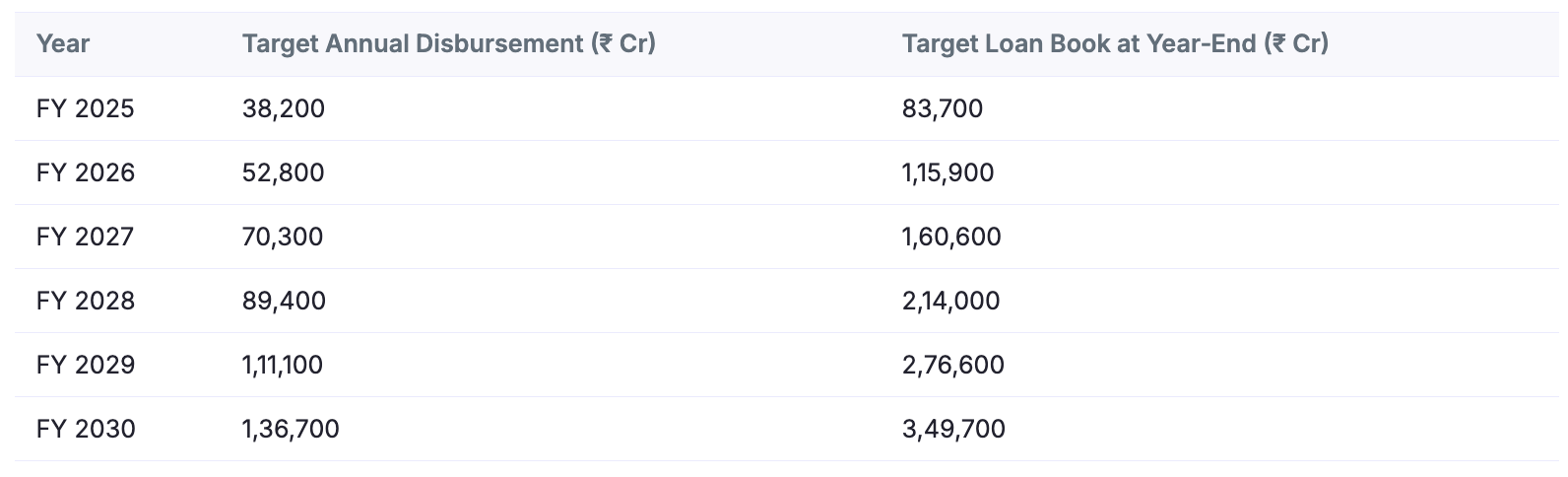
The loan book size is one of the most important indicators for a lending institution. As of December 2025, IREDA's loan book reached approximately ₹87,975 crore, reflecting 28% year-on-year growth. Over the longer term, the loan book has grown at nearly 29% CAGR since FY21, showing steady expansion in renewable energy financing.
The management has also discussed a long-term target of reaching ₹3.5 lakh crore by FY2030. Achieving this would require a much higher growth rate, but maintaining 25-30% growth would still indicate strong momentum within the sector.
Conclusion
IREDA operates within a sector closely connected to India's long-term renewable energy expansion. With its specialized lending model, government backing, and expanding loan book, the organization remains an important financial participant within the green energy ecosystem.
Understanding aspects such as business structure, financial trends, asset quality, and sector demand helps provide a clearer view of how institutions like IREDA function within India's evolving renewable energy landscape.

Check Other Post Posts
-

-
How Much Does Coindcx Charge for Withdrawal?
January 30, 2025
-