AMCA Explained: BEL’s Next Big Opportunity?
India's defence manufacturing ecosystem is entering a new phase, and one of its most ambitious programmes is the Advanced Medium Combat Aircraft (AMCA) project.
With the Ministry of Defence inviting bids from private industry, the project has attracted some of India's largest defence players. Among them is a consortium led by L&T, with Bharat Electronics Limited (BEL) as a key partner.
While BEL has not yet secured the contract, recent management commentary suggests that preparations are well underway to submit its bid. Naturally, this has raised an important question among investors:
Could the AMCA project become BEL's next major long-term growth opportunity?
In this article, we'll break down what the AMCA project is, BEL's potential role, the current bidding process, the timeline, and what it could realistically mean for investors—all based on the company's latest disclosures.
What is the AMCA Project?
Before understanding BEL's opportunity, it's important to first understand what the AMCA project actually is.
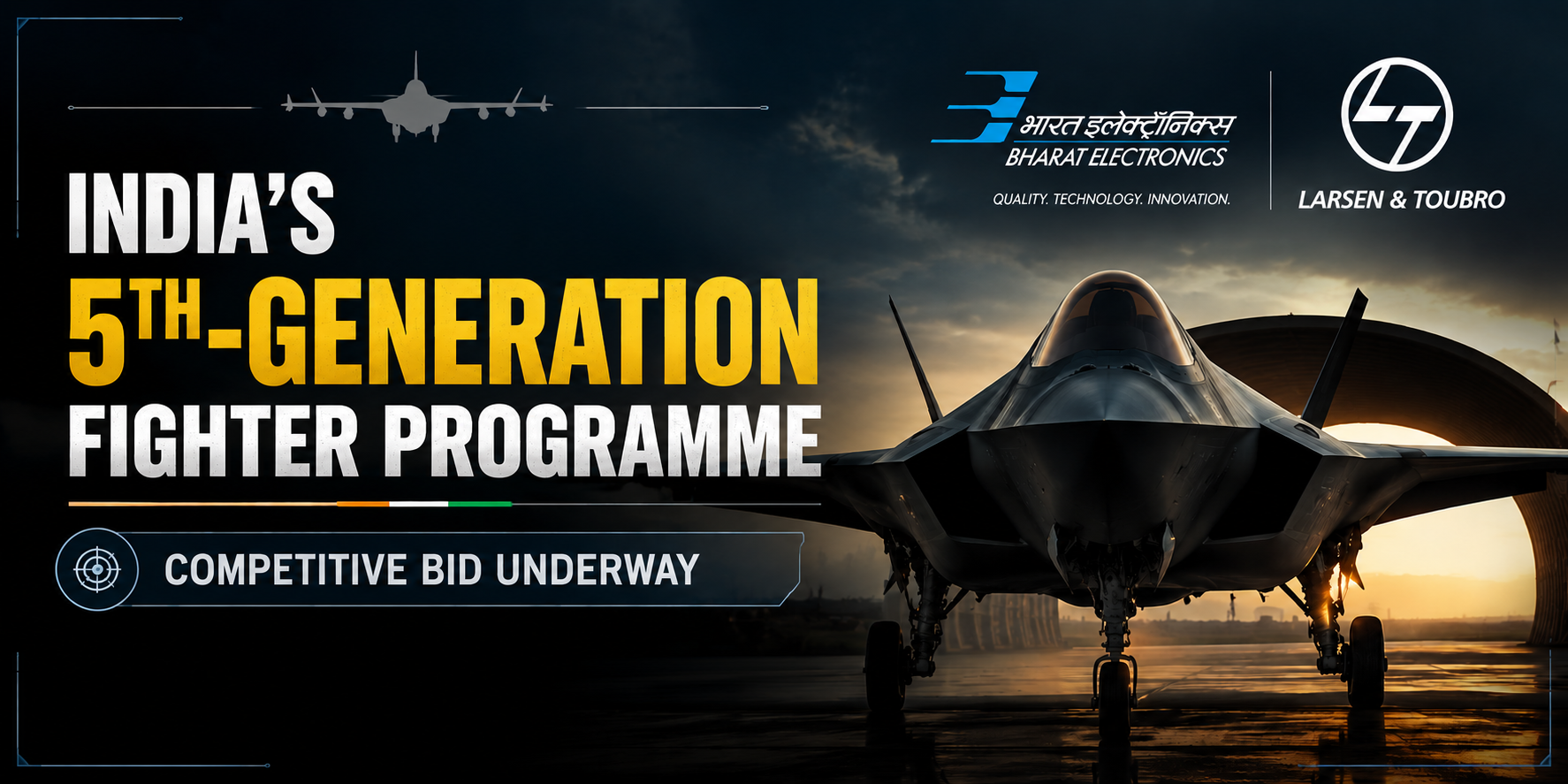
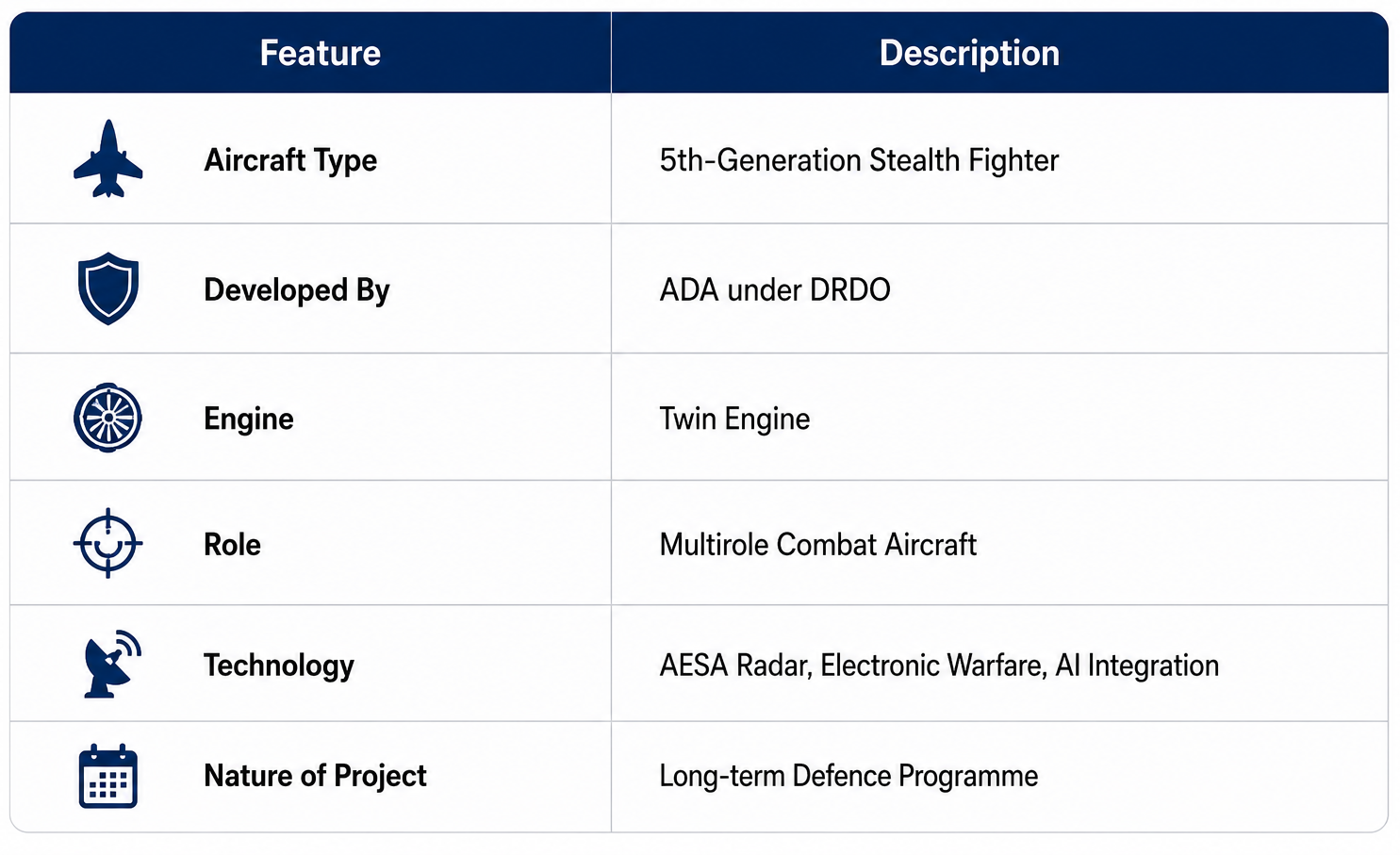
AMCA (Advanced Medium Combat Aircraft) is India's indigenous 5th-generation stealth fighter aircraft programme, being developed by the Aeronautical Development Agency (ADA) under the DRDO.
Unlike conventional fighter jets, the AMCA is being designed as a next-generation multirole combat aircraft, capable of carrying out a wide range of missions while remaining difficult to detect on enemy radar.
Some of its key features include:
- Stealth design to reduce radar visibility.
- Twin-engine configuration for higher performance and reliability.
- Internal weapons bays to maintain stealth characteristics.
- Advanced AESA radar and electronic warfare systems.
- AI-enabled systems and sensor fusion for enhanced battlefield awareness.
However, from an investor's perspective, what makes the AMCA project particularly significant is not just the technology—it is the scale of the programme.
The project is expected to span several years, covering everything from design and prototype development to testing and eventual production. Such long-duration defence programmes often create opportunities for companies involved across different stages of development.
Where Does the Project Stand Today?
The AMCA project has now moved from the planning stage to the competitive bidding phase.
In May 2026, the Ministry of Defence issued a Request for Proposal (RFP), inviting shortlisted private-sector consortia to compete for the programme. This marks a significant shift from the traditional model, where large defence aircraft programmes were typically led by a single public-sector entity.
Three consortia have been shortlisted:
- L&T + BEL (L&T is the lead bidder)
- Tata Advanced Systems-led consortium
- Bharat Forge-led consortium (with BEML)
Initially, the RFP submission deadline was around June 2026, but it was later extended by two months. As per BEL's management, the new submission deadline is 27 August 2026, giving the participating consortia additional time to finalise their proposals.
During the Q1 FY27 earnings call, BEL's management also stated that discussions with L&T are largely complete, internal pricing has been worked out, and the consortium is preparing to submit its bid well before the deadline.
For investors, this is an important milestone because the next major trigger will be the government's selection of the winning consortium, which is expected after the bidding process concludes.
Why Is BEL Considered a Strong Contender?
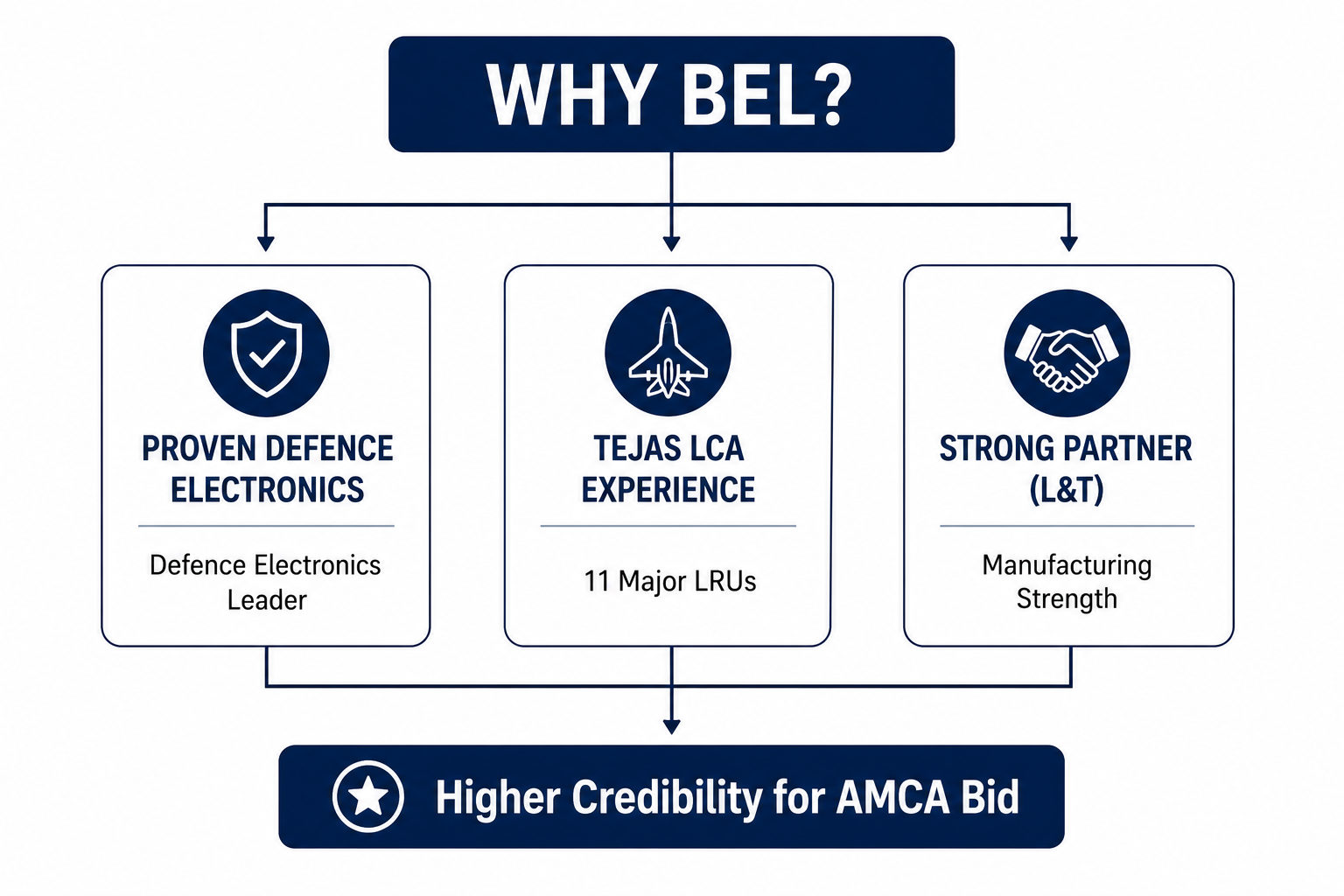
While BEL is not guaranteed to win the AMCA contract, the company enters the bidding process with several strengths that could work in its favour.
Over the years, BEL has established itself as India's leading defence electronics company, supplying critical electronic systems for several of the country's frontline fighter aircraft programmes.
One of the biggest advantages is its experience with the Tejas Light Combat Aircraft (LCA) programme, where BEL supplies 11 major Line Replaceable Units (LRUs) - key electronic components that are essential for the aircraft's operation.
Another strength is its partnership with L&T, one of India's largest engineering and defence manufacturing companies. Together, the consortium combines L&T's manufacturing capabilities with BEL's expertise in defence electronics, making it a strong competitor in the bidding process.
Interestingly, BEL's management also highlighted that its subsystem expertise could create business opportunities even if the consortium is not selected as the main Development-cum-Production Partner (DcPP). Since advanced defence programmes require numerous specialised electronic systems, BEL's products may still find opportunities within the broader AMCA ecosystem.
Is BEL Guaranteed to Win the AMCA Project?
The short answer is No.
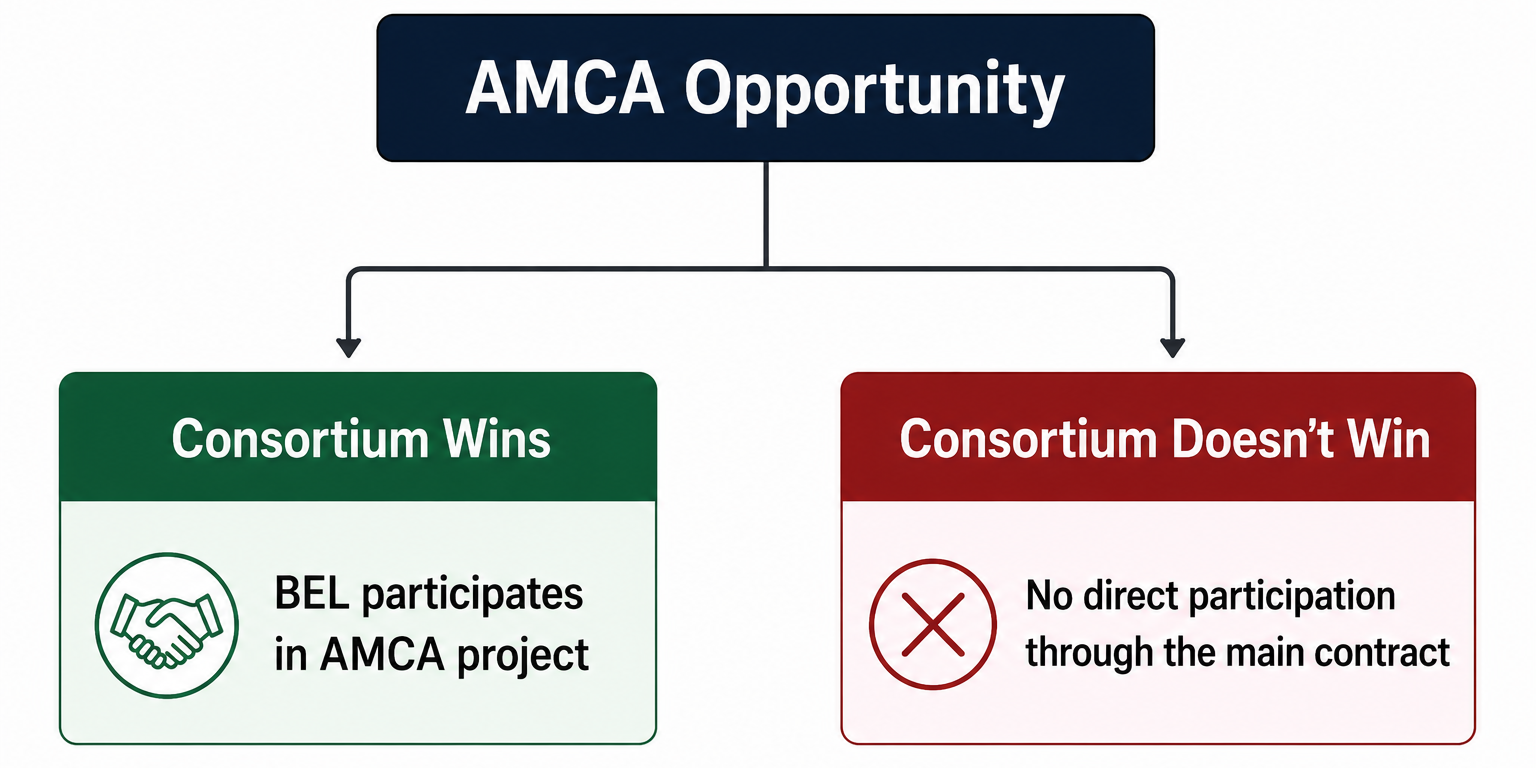
Although BEL is part of one of the three shortlisted consortia, it has not won the contract yet. The company will secure the opportunity only if the L&T - BEL consortium is selected through the competitive bidding process.
BEL's management has also acknowledged this uncertainty. During the Q4 FY26 earnings call, the company stated that while preliminary planning has been carried out, actual execution and major investments will begin only after the consortium is officially selected.
This is an important distinction for investors. At this stage, the AMCA project should be viewed as a potential opportunity, not a confirmed order.
That said, BEL's management appears confident about its preparedness. During the latest Q1 FY27 earnings call, the company indicated that discussions with L&T are largely complete, internal pricing has been finalized, and the consortium is preparing to submit its bid before the deadline.
In other words, BEL is well-positioned - but the final outcome will depend on the government's selection process.
What If BEL Doesn't Win the AMCA Contract?
A common concern among investors is whether BEL would lose out completely if the L&T - BEL consortium fails to secure the AMCA contract.
Based on the company's management commentary, that may not necessarily be the case.
BEL believes its strength lies in its defence electronics and subsystem expertise. During the earnings call, the management indicated that these capabilities could still create business opportunities in the future, even if the company is not selected as the main Development-cum-Production Partner (DcPP).
In other words, winning the main contract is not the only way BEL could participate in the AMCA programme. Given its established capabilities in avionics, radars, communication systems and electronic warfare, the company could still receive orders for specific subsystems at a later stage.
However, investors should note that this is a possibility, not a certainty. The exact scope of BEL's involvement will depend on how the programme progresses and how contracts are awarded.
What Role Will BEL and L&T Play If Selected?
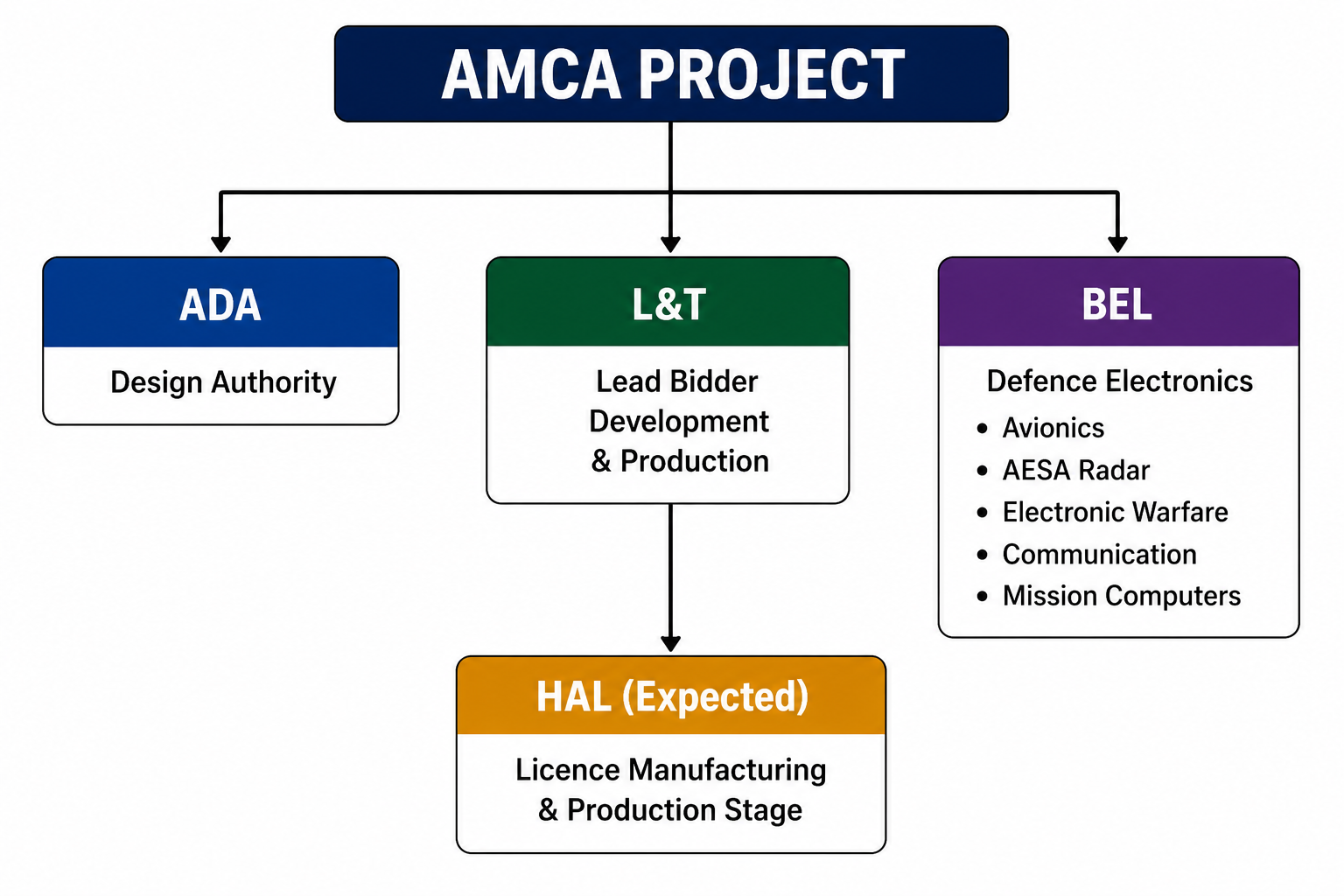
If the L&T - BEL consortium is selected, the two companies will play different but complementary roles in the AMCA programme.
L&T is the lead bidder of the consortium and will act as the Development-cum-Production Partner (DcPP) for the programme. It will be responsible for leading the development and production of the five AMCA prototypes.
BEL, on the other hand, will contribute its expertise in defence electronics. According to the company, its role will include supplying several mission-critical systems such as:
- Avionics
- AESA radars
- Electronic Warfare (EW) systems
- Communication systems
- Mission computers and other critical electronics
Meanwhile, the Aeronautical Development Agency (ADA) will continue to serve as the design authority for the aircraft, while HAL is expected to participate during the licence manufacturing and production stage.
In simple terms, if the consortium wins:
- ADA will design the aircraft.
- L&T will lead its development and production.
- BEL will supply the aircraft's advanced electronic systems.
- HAL is expected to support manufacturing during the production phase.
This division of responsibilities allows each organisation to contribute in the area where it has the strongest capabilities.
When Could BEL Benefit?
Even if the L&T - BEL consortium wins the AMCA contract, investors should remember that the financial benefits are unlikely to be immediate.
The AMCA programme is a long-term defence project that will progress through multiple stages - from bid selection and prototype development to testing and eventually production.
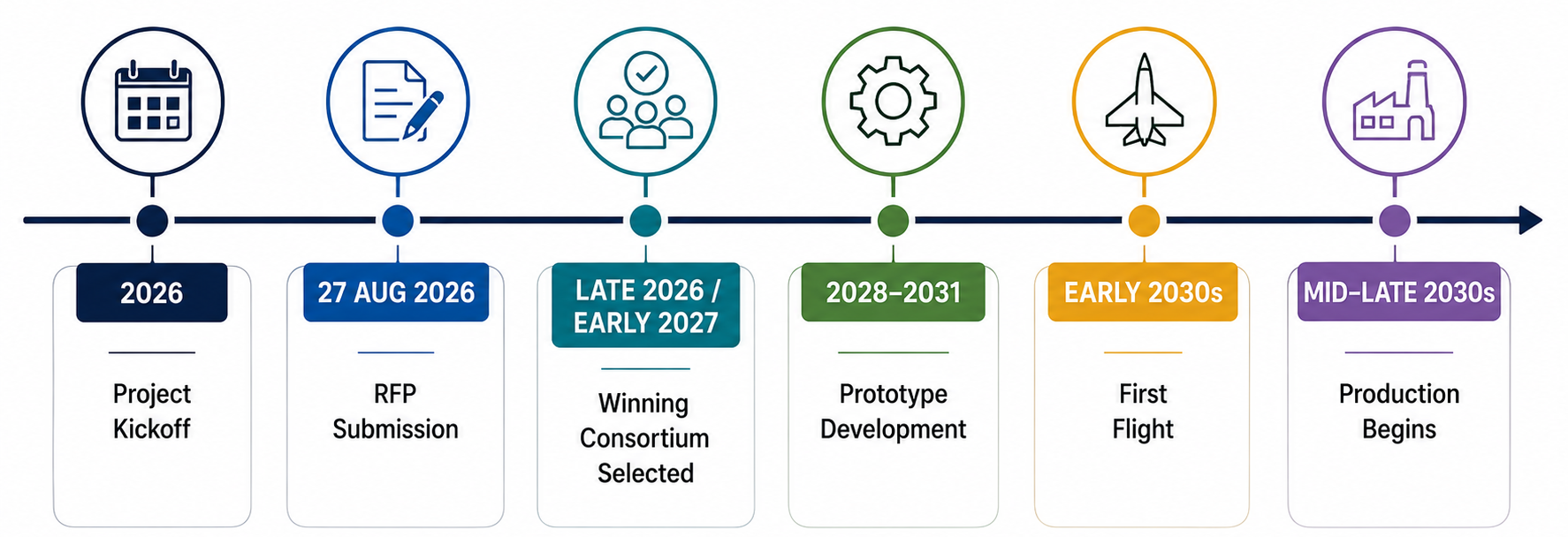
Based on the timeline shared in the document:
- 27 August 2026 – RFP submission deadline
- Late 2026 / Early 2027 – Expected contract award
- 2028–2031 – Prototype development
- Early 2030s – Expected first flight
- Mid-to-late 2030s – Licence manufacturing and production
Importantly, BEL's management has stated that projects of this nature typically take at least two years before they begin generating meaningful revenue.
This means that even if BEL wins the contract, investors should not expect a significant revenue contribution before 2028.
Investor Perspective
One of the biggest mistakes investors can make is expecting an immediate earnings boost from a project like AMCA.
In reality, winning the contract would be strategically significant, but the financial impact would likely unfold gradually over several years as the programme moves through different stages.
This highlights an important distinction:
- Short-term: Limited financial impact.
- Long-term: Potentially meaningful business opportunity, subject to winning the contract.
AMCA is a long-term growth opportunity, not a short-term earnings trigger. Even in the best-case scenario, investors should expect a gradual rather than immediate contribution to BEL's financial performance.
Is AMCA Really BEL's Next Big Opportunity?
The AMCA project is undoubtedly one of India's most ambitious defence programmes, with the potential to create long-term opportunities for companies involved in its development.
For BEL, the opportunity is significant - but it is important to separate potential from certainty.
On the positive side, BEL enters the bidding process with strong credentials. Its extensive experience in defence electronics, proven contribution to the Tejas programme, and partnership with L&T position it as a credible contender for the project.
However, investors should also keep three important realities in mind:
- BEL has not won the contract yet.
- The project is still in the competitive bidding stage.
- Even if BEL is selected, meaningful revenue is unlikely before 2028.
That said, BEL's management believes its expertise in defence electronics could continue to create business opportunities, even beyond the main contract.
For investors, the AMCA project should therefore be viewed as a long-term strategic opportunity rather than a near-term earnings trigger.
Ultimately, the next major milestone will be the government's decision on the winning consortium. Until then, AMCA remains a promising opportunity - one that investors should watch closely, but evaluate with realistic expectations.
How Does AMCA Compare with BEL's Existing Business?
The AMCA opportunity is not entirely new for BEL - it builds upon capabilities the company already possesses.
BEL is already a key supplier of defence electronics for programmes like Tejas LCA, Su-30MKI, and MiG-29 upgrades.
If selected for AMCA, BEL would continue its core expertise by supplying avionics, radars, electronic warfare systems, and mission computers.
From an investor's perspective, AMCA is an extension of BEL's existing defence electronics business, not a new segment.
Its importance lies in the programme's scale and long-term potential, which could create sustained opportunities if the consortium succeeds.
Long-Term Strategic Analysis
From an investor's perspective, AMCA matters not just because of its size, but also its strategic importance.
If the L&T-BEL consortium is selected, the project could strengthen BEL's role in India's indigenous fighter aircraft programmes.
BEL's expertise in defence electronics and subsystems may also create opportunities beyond the main contract.
While financial benefits may take time, AMCA could improve BEL's long-term growth prospects and strategic position in India's defence ecosystem.
Conclusion
The AMCA project has the potential to become one of BEL's most important long-term growth opportunities. However, investors should distinguish between potential and certainty.
BEL's defence electronics expertise and partnership with L&T strengthen its position in the bidding process. However, the contract is yet to be awarded, and meaningful financial benefits may take years to materialise.
For investors, the key takeaway is simple: AMCA is a long-term opportunity, not a near-term earnings trigger.
The bidding outcome will be an important milestone, as it could shape BEL's role in one of India's largest indigenous defence programmes for years to come.