India OTT Market – Who Leads? Fastest Growers and Future Leaders
Twenty years ago, Indians waited every week for a television episode. Today, people watch what they want, whenever they want, on whichever device they own.
This shift has created one of India's fastest-growing digital industries - the Over-The-Top (OTT) market.
Whether it's watching IPL on JioHotstar, Money Heist on Netflix, or Panchayat on Prime Video. OTT platforms have fundamentally changed how India consumes entertainment.
According to CLSA, India has around 1.45 billion monthly OTT app usages (Monthly active users across platforms, with overlap because users use multiple apps), while smartphone users are expected to reach nearly 885 million by FY28, creating a huge runway for streaming platforms.
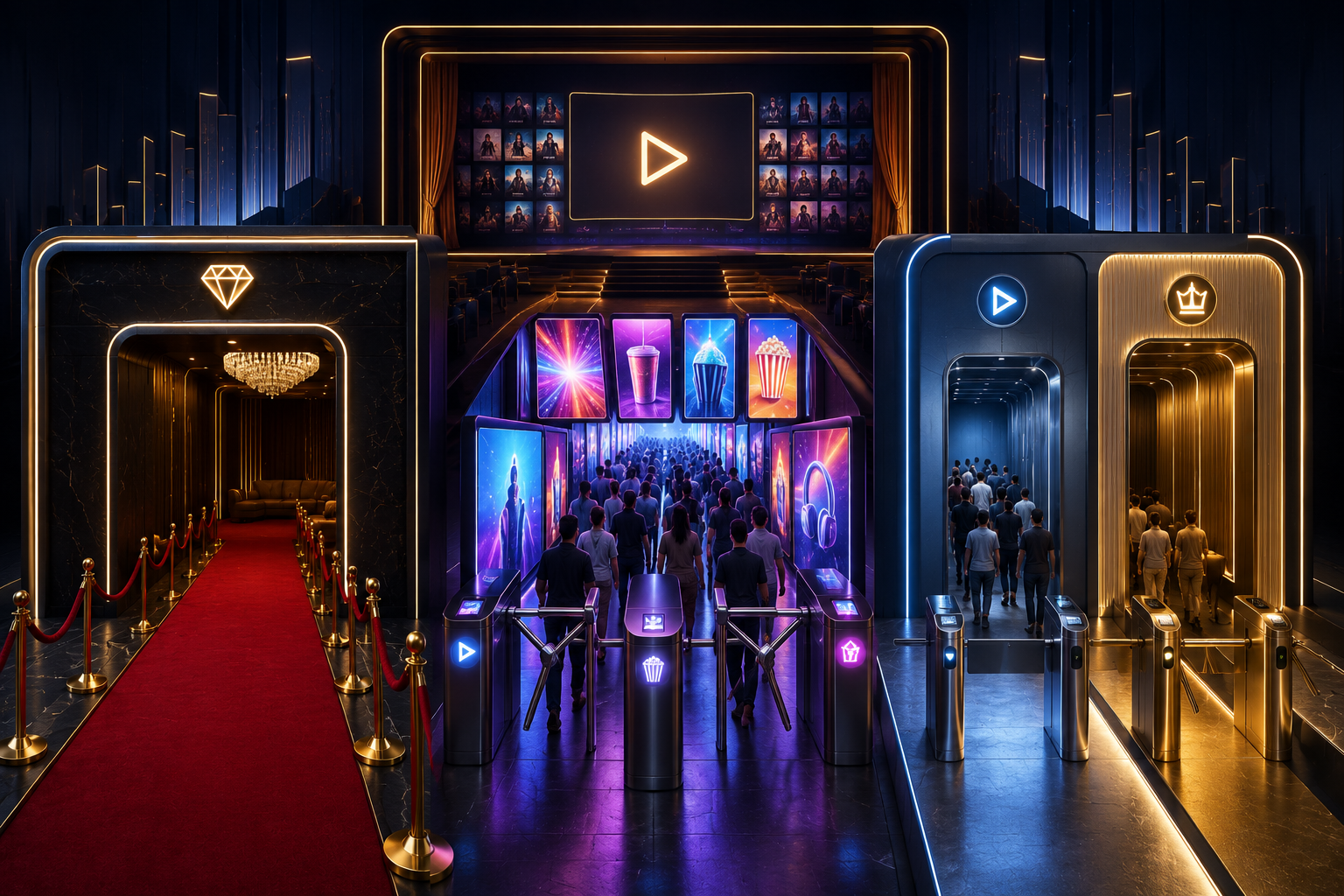
Think of India's OTT market like a shopping mall. Where each platform owns a different store - some attract people with sports, some attract people with Hollywood, and some attract people with premium originals. And by understanding this we got to know that the battle isn't just about subscribers anymore.
It's about who can keep viewers watching for the longest time. Let us now understand in detail why India's OTT market is growing so fast.

Cheap Internet Has Made Streaming Affordable
The cheap internet did much more than increase video consumption - it fundamentally changed the economics of India's entertainment industry.
Earlier, television broadcasters-controlled content distribution because they owned the delivery network through cable and satellite. Affordable mobile internet removed that barrier, allowing OTT platforms to reach viewers directly without investing in physical distribution infrastructure.
This shifted competition away from distribution and towards content. Today, the company with the strongest content library, recommendation engine, and customer experience wins - not the one with the largest cable network.
In many ways, cheap internet became the equalizer that enabled digital-first entertainment businesses to compete with decades-old television giants
Affordable Smartphones Have Expanded the Audience
Every new smartphone user is more than just another viewer - it is a potential long-term customer.
Once a user installs an OTT application, the platform begins collecting viewing preferences, search history, language choices, and engagement patterns.
Over time, recommendation algorithms become more accurate, making users increasingly likely to stay within the same ecosystem. In other words, smartphone adoption is not just expanding the market; it is steadily increasing customer lifetime value for streaming platforms.
Smart TVs Are Bringing OTT Into Living Rooms
Initially, OTT platforms were largely associated with mobile phones. However, this trend is changing rapidly as smart TV adoption continues to increase across India.

Modern smart televisions come with built-in streaming apps such as Netflix, Prime Video, JioHotstar, Sony LIV, and ZEE5. This allows families to enjoy cinema-like entertainment on larger screens without requiring a traditional cable connection.
As incomes rise and smart TVs become more affordable, OTT viewing is gradually shifting from individual mobile consumption to shared family entertainment in living rooms.
This trend is particularly important because viewers generally spend more time watching content on larger screens, increasing user engagement and encouraging subscriptions to premium plans.
Regional Content Has Become a Massive Growth Driver
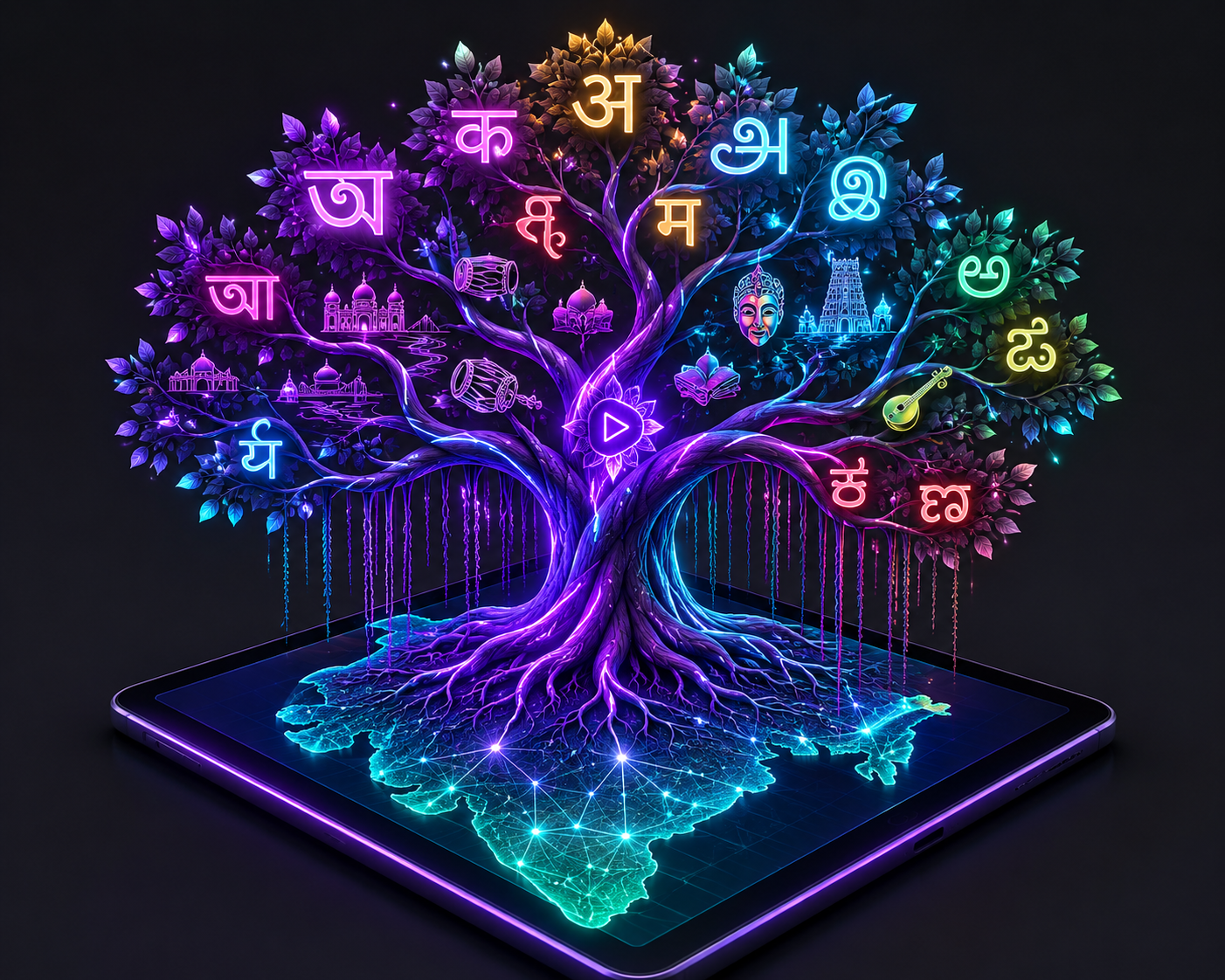
India is one of the most culturally diverse countries in the world, and its entertainment preferences reflect that diversity. While Hindi content remains popular, a significant portion of viewers prefer watching movies and web series in their native languages.
Regional programming has become one of the strongest competitive moats for Indian OTT platforms.
Unlike Hollywood libraries that can eventually be replicated across competing services, exclusive regional originals often create loyal audiences that are difficult to migrate. They also reduce subscriber churn because viewers continue returning for new local releases throughout the year rather than subscribing only for blockbuster titles.
Sports Streaming Has Become the Biggest Customer Acquisition Tool
While movies and web series help retain subscribers, live sports are often the biggest reason people subscribe in the first place.
Major sporting events generate enormous spikes in app downloads, subscriptions, and viewing hours because fans want to watch matches live rather than wait for highlights.
Some of the biggest audience drivers include:
- Indian Premier League (IPL)
- ICC Cricket tournaments
- Premier League football
- Wimbledon
- Pro Kabaddi League
Sports rights should not be viewed purely as content expenses - they are customer acquisition investments. An IPL season may bring millions of first-time users onto a platform within just a few weeks.
Once these viewers are inside the ecosystem, OTT companies attempt to retain them through movies, web series, regional programming, and personalized recommendations.
The real return on sports rights is therefore measured not only by advertising revenue during live matches, but also by how many users continue paying long after the tournament has ended.
India's OTT Industry Isn't One Market
| Category | Main Players |
| Premium Subscription | Netflix, Prime Video |
| Sports + Entertainment | JioHotstar |
| Regional Focus | ZEE5, SonyLIV, Sun NXT, Aha |
| Free + Ad Supported | YouTube, MX Player |
In simple terms, every OTT platform in India is solving a different problem for viewers. Some are built for premium entertainment, some for sports fans, some for regional audiences, while others aim to provide free content supported by advertisements.
This diversity is what makes India's OTT market highly competitive. While every platform has its own strengths, only a handful have managed to emerge as market leaders by consistently attracting subscribers, expanding their content libraries, and building strong customer loyalty.
The Absolute Market Leaders (The Big Three)
The Indian OTT market has become much more organized over the past few years. Earlier, dozens of streaming platforms were competing for viewers. Today, however, a handful of companies dominate the market through strong content libraries, sports rights, and competitive pricing.
Currently, three platforms stand out as the clear market leaders:
- JioHotstar
- Amazon Prime Video
- Netflix
Together, these platforms account for a significant share of India's paid OTT market. However, each has adopted a completely different strategy to attract and retain subscribers.
Let's understand what makes each of them successful.
You can think of Amazon Prime as a combo meal. People may initially buy it for one item, but they end up using several services together.
Strong Focus on Indian Originals
Amazon has invested heavily in creating premium Indian web series that have become household names.
Some of its biggest originals include: The Family Man, Panchayat, Farzi, Paatal Lok and Made in Heaven.
These exclusive shows cannot be watched on competing platforms, giving viewers another reason to maintain their subscriptions.
Prime Video Channels
One of Amazon's unique features is Prime Video Channels. Instead of asking users to install multiple OTT applications, Amazon allows subscribers to purchase additional streaming services directly within Prime Video.
JioHotstar - India's Largest OTT Platform
Following the merger of JioCinema and Disney+ Hotstar, JioHotstar has emerged as the biggest OTT platform in India. Instead of operating two separate streaming services, Reliance combined them into a single platform that offers movies, TV shows, live sports, and international content.
Today, JioHotstar commands an estimated 31% - 45% of India's OTT market, making it the undisputed market leader. The exact share fluctuates depending on whether major sporting events such as the IPL or ICC tournaments are taking place.
Why Does JioHotstar Lead?
JioHotstar's biggest strength is that it caters to almost every type of viewer. Whether someone wants to watch cricket, Bollywood movies, TV serials, international shows, cartoons, or reality programs, they can find everything on one platform.
Instead of targeting only premium users, JioHotstar focuses on serving the mass Indian audience by offering affordable plans and a diverse content library.
You can think of JioHotstar as a large shopping mall, where almost every entertainment category is available under one roof.
The Biggest Competitive Advantage: Live Sports
If there is one factor that separates JioHotstar from its competitors, it is sports.
The platform owns digital streaming rights for several of the world's most popular sporting events, including:
- Indian Premier League (IPL)
- ICC Cricket tournaments
- English Premier League
- Wimbledon
- Several other sporting events
In India, cricket is more than just entertainment - it is one of the biggest drivers of digital subscriptions. Millions of viewers subscribe specifically to watch tournaments like the IPL, giving JioHotstar a huge advantage over other streaming platforms.
Sports not only attract new users but also create opportunities to retain them by exposing viewers to movies, TV shows, and original content.
A Massive Content Library
Apart from sports, JioHotstar also has one of the largest entertainment libraries in the country.
Its content includes: Bollywood movies, Popular TV serials, Reality shows like Bigg Boss, Disney content, Pixar movies, Marvel movies and series, Star Wars franchise, HBO Originals, Peacock Originals, Paramount content and Kids programming.
This wide variety ensures that different members of a family can all find something to watch on the same platform.
Affordable Pricing
Another major reason behind JioHotstar's success is its pricing strategy.
Its subscription plans start at around ₹149 per month, making premium entertainment accessible to millions of Indian consumers.
Low pricing, combined with a massive content library, has helped the platform attract subscribers across both urban and rural India.

Amazon Prime Video - More Than Just a Streaming Platform
Amazon Prime Video follows a completely different strategy from JioHotstar.
Instead of selling only video streaming, Amazon offers Prime Membership, which bundles multiple services together. When customers purchase Amazon Prime, they receive:
- Prime Video
- Free and faster Amazon deliveries
- Amazon Music
- Prime Reading
- Shopping benefits
Because customers receive multiple services under one subscription, they are more likely to renew their membership every year.
This strategy creates a stronger customer relationship than offering video streaming alone.
For example, users can subscribe to platforms like:
- Lionsgate Play
- Discovery+
- Crunchyroll
- BBC Player
This transforms Prime Video into an entertainment marketplace rather than just another streaming platform.
Pricing
Amazon Prime membership costs around ₹1,499 per year.
It also offers lower-cost plans such as Prime Lite and Prime Shopping Edition, making the service accessible to different customer segments.
Netflix - The Premium OTT Leader
Unlike JioHotstar, Netflix has never tried to become the cheapest streaming platform in India.
Instead, Netflix focuses on providing premium-quality entertainment for users who are willing to pay more for exclusive content.
Today, Netflix holds around 14% of India's subscription-based OTT market.
Although its subscriber base is smaller than JioHotstar's, Netflix generates significantly higher revenue from each paying customer because of its premium pricing.
Netflix's Strategy
Netflix believes that exceptional content is the biggest driver of customer loyalty. Rather than producing hundreds of shows every year, it focuses on creating high-quality originals with global appeal.
This strategy has helped Netflix build one of the strongest brands in the streaming industry.
World-Class Content Library
Netflix combines international blockbusters with high-quality Indian productions.
Its library includes globally successful shows such as: Stranger Things, Squid Game, Wednesday, Money Heist.
Alongside Indian originals like: Delhi Crime, Sacred Games, Heeramandi, Kohrra, Khakee. This combination attracts both international content lovers and Indian audiences.
Premium Pricing
Netflix offers several subscription plans in India, including:
- Mobile Plan
- Basic Plan
- Standard Plan
- Premium 4K Plan
Although Netflix charges more than most competitors, many customers continue subscribing because they value its exclusive content, user experience, and recommendation system.
The Secondary Vanguard: Mid-Tier & Regional Challengers
Beneath the big three sits a fierce layer of platforms fighting for the remaining real estate by leveraging distinct regional niches or legacy broadcast television libraries.
These two function as the digital wings of traditional Indian television empires.
- ZEE5 (11% Market Share): Its superpower is deep vernacular penetration. ZEE5 thrives because it creates original content in Marathi, Telugu, Tamil, Bangla, and Bhojpuri. It acts as the primary entertainment hub for non-English, non-Hindi native audiences.
- Sony LIV (3% Market Share): Rather than competing for massive movie libraries, Sony LIV carved out an incredibly loyal base through two main pillars: Premium Sports broadcasting (UEFA Champions League football, tennis Grand Slams) and smart, realistic prestige dramas.
Who Could Become India's Future OTT Leader?
The industry is likely to evolve around three major themes rather than a single winner.
JioHotstar is best positioned for mass-market leadership because of sports, aggressive pricing and Reliance's ecosystem.
Netflix is likely to remain the premium content leader, focusing on higher-paying subscribers instead of chasing the largest user base.
Amazon Prime Video benefits from being part of Amazon Prime, making customer retention easier even if streaming alone is not the primary reason people subscribe.
Regional platforms such as ZEE5 and SonyLIV can continue growing by serving audiences that global platforms cannot fully address with language-specific content.
The Economics That Will Decide India's OTT Winners
Over the next decade, India's OTT leaders will not necessarily be the platforms with the largest subscriber bases. Instead, success will depend on four financial metrics:
- Average Revenue Per User (ARPU) - Higher revenue generated from each subscriber.
- Customer Churn - The ability to retain users after blockbuster events like the IPL.
- Content Efficiency - Generating maximum viewing hours from every rupee spent on producing or licensing content.
- Ecosystem Monetisation - Creating additional revenue through advertising, commerce, gaming, or bundled services.
As subscriber growth gradually slows across the industry, these metrics will become more important than headline download numbers.
Final Verdict
India's OTT industry is gradually shifting from a subscriber race to an attention economy. During the early years, platforms focused on acquiring as many users as possible, often sacrificing profitability.
The next phase will reward companies that can monetise viewer attention more efficiently through subscriptions, advertising, ecosystem integration, and superior content economics.
For investors, this changes the questions that matter. Instead of asking which platform has the most subscribers today, the better question is which company can generate the highest lifetime value from every customer it acquires.
In the long run, sustainable profitability - not subscriber growth alone - is likely to determine the true winners of India's streaming industry.