Godfrey Phillips – Revenue Model Explained
To understand the revenue model of Godfrey Phillips India, we first need to understand what the company actually is, how it operates, and in which industries it earns money. A company’s revenue model becomes much easier to understand when we know its core business, products, market position, and customer base. Therefore, before analysing how Godfrey Phillips generates its revenue, it is important to first get a clear overview of the company itself.
What is Godfrey Phillips India?
India’s tobacco industry is one of the most profitable consumer businesses in the country. Among the major players, Godfrey Phillips is one of them, one of the fastest-growing cigarette companies in recent years.
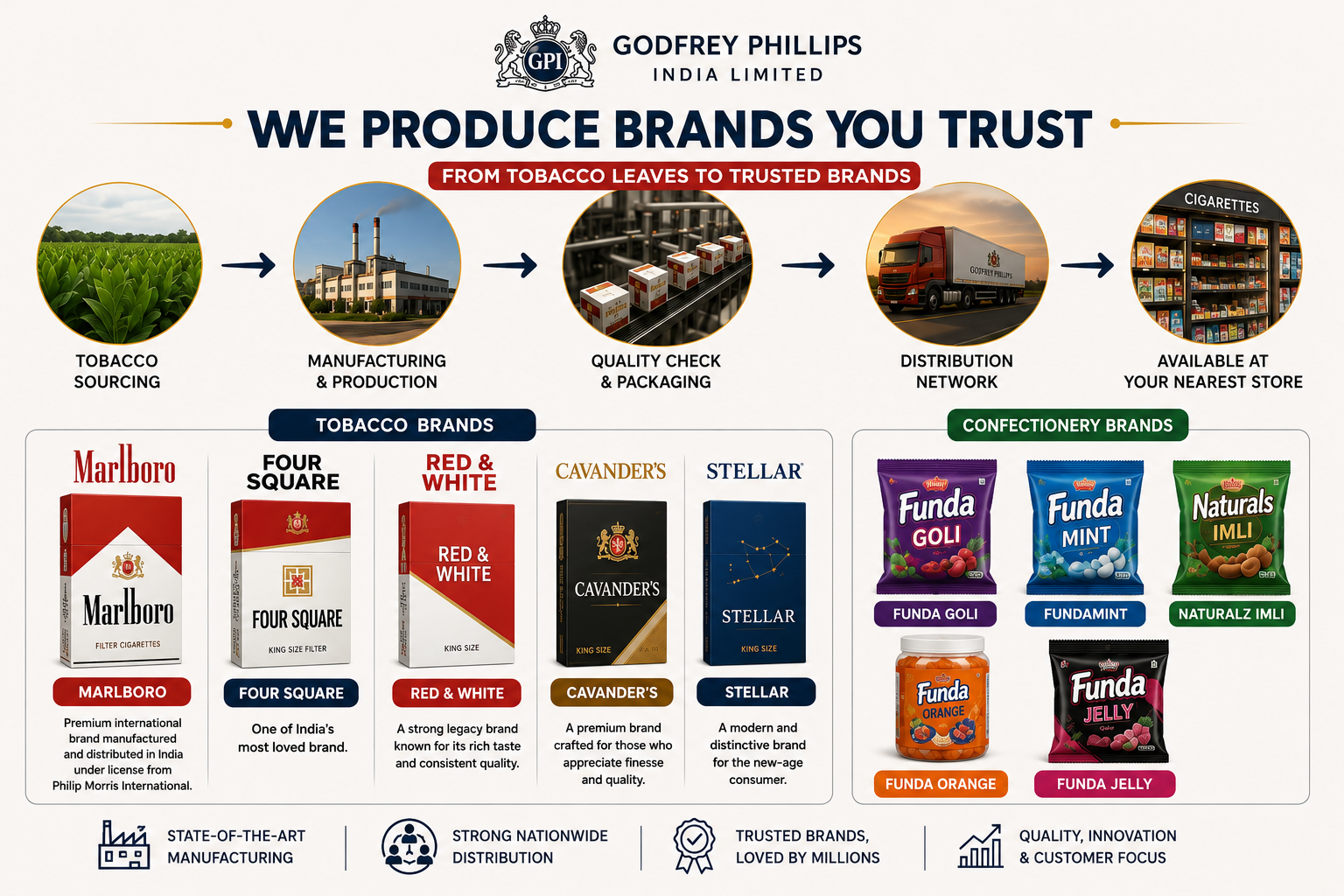
In India Godfrey Phillips Ltd, Is one of India’s leading tobacco and FMCG companies and is known for popular cigarette brands such as Four Square, Red & White, Cavanders, Stellar, and Marlboro. Marlboro is manufactured and distributed in India under an arrangement with Philip Morris. Along with tobacco products, the company has also expanded into confectionery products like - Funda goli, fundamint, naturalz imli etc. The company launched the Funda confectionery range to enter India’s fast-growing low-priced candy market. These products are designed around Indian taste preferences.
The company has built a strong distribution network across India with lakhs of retail touchpoints, thousands of distributors, and a large sales force. Over the years, it has transformed from being just a cigarette manufacturer into a diversified FMCG company with multiple revenue streams.
Now we should move towards the core revenue model of Godfrey Phillips Ltd.
Core Revenue Model of Godfrey Phillips ltd
The company mainly earns money from-
- Cigarette manufacturing
- Cigarette distribution
- Marlboro partnership
- Tobacco exports
- Contract manufacturing
- Small FMCG business
Now let us understand each of the business segment in details
Cigarette manufacturing
Cigarette manufacturing is the heart of the business. The company manufactures cigarettes in large-scale factories using - tobacco, filters, cigarette papers, packaging material.
Sourcing: Purchasing raw tobacco leaves from farmers.
Processing: Drying, flavouring, and blending the tobacco.
Mass Production: Manufacturing in large quantities using specialized filters, papers, and packaging.
Distribution: Shipping packed cartons to wholesalers, retailers, and supermarkets.
Cigarette distribution
Distribution is one of the strongest advantages in the tobacco business.
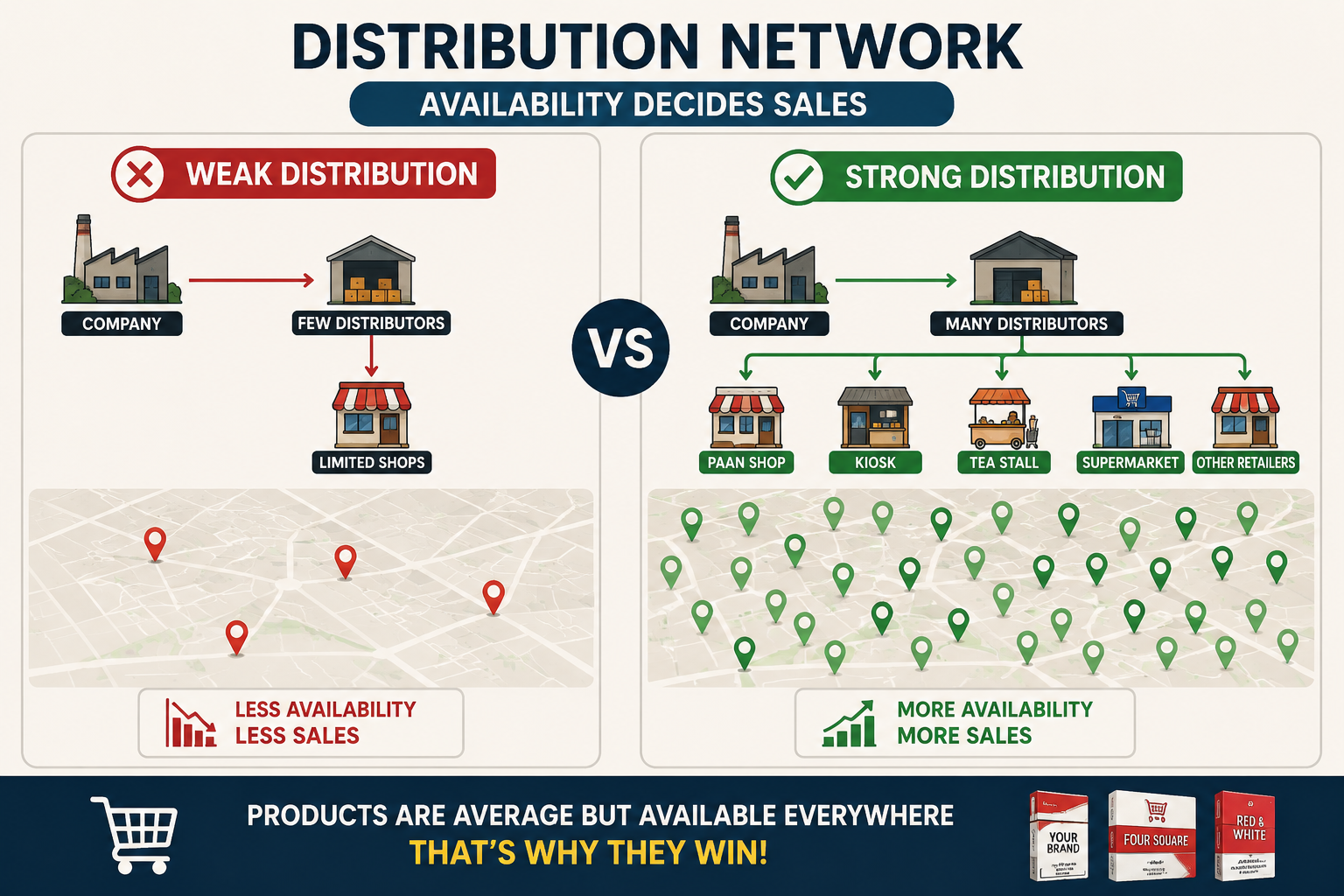
Godfrey Phillips has more than 950 distributors, thousands of sales personnel and this helps the company to place its products in small markets also like - paan shops, roadside kiosks, tea stalls etc.
Let's take an example to understand
Company A - company A is having great products but weak distribution.
Company B - company B is having products which are not as good as company A but having a strong distribution network then company A.
Conclusion
Products are average but available everywhere and due to this most consumers buy the easily available product which is directly going to affect the sales of the company.
Suppose if Marlboro isn't available in the shop, the shopkeeper is going to offer another brand, and here the brand Marlboro loses its sale.
Marlboro Partnership
One of the biggest strengths of Godfrey Phillips is its relationship with Philip Morris International and due to this the company manufactures and distributes Marlboro cigarettes in India.
Why is Marlboro important for Godfrey Phillips?
Marlboro is one of the world’s most recognized cigarette brands. It is considered premium and consumers are willing to pay extra for premium cigarettes, which directly increases the margin.
By manufacturing and distributing Marlboro, Godfrey Phillips benefits from premiumization.
For example
A normal cigarette price is ₹20 and the price of Marlboro is ₹30, the company margin increases and this is called premiumization.
Tobacco exports
Godfrey Phillips also exports - cigarettes, processed tobaccos, confectionery products in selected markets.
The company exports both
- Its own products.
- Contract-manufactured products for international clients.
Why export?
Foreign Currency Earnings
Exports bring revenue in foreign currencies such as - USD, EURO, middle eastern currencies.
This is important because foreign exchange earnings can improve profitability, especially when the Indian Rupee weakens.
India’s Low Manufacturing Cost
India has relatively lower labour cost, tobacco processing cost, manufacturing expenses.
Because of this, Indian cigarette manufacturing can sometimes be cheaper than production in Western countries.
Risk mitigation
India is the primary market for Godfrey Phillips, but depending entirely on one country can be risky because tobacco tax may increase etc.
By exporting products to multiple countries, the company reduces dependence on the Indian market.
Contract Manufacturing
The company also manufactures products for other international brands. Which simply means that the other company owns the brand and Godfrey simply manufactures for them.
This creates an extra utilization of factory and Godfrey gets manufacturing fees and production margins
In simple words, we can say that one company has the brand and the Another company has the factory and manufacturing expertise
Let's take an example to understand
Company A owns a famous chocolate brand but it does not have factories in India So Company A gives the manufacturing work to Company B
Company B has Factories, Workers, Machinery, Distribution systems then they manufacture the products, and Company A sells them under its own brand name.
This is called contract manufacturing. In which the company generated money from manufacturing fees and production margins
FMCG & Confectionery Business
Apart from tobacco, Godfrey Phillips also entered FMCG. The company distributes candies and chewing products; it also has a partnership with Tic Tac." The company entered this industry also due to some reasons like - taxations, regulation, advertising bans etc.
Despite diversification efforts, tobacco still dominates the business. Tobacco contributes more than 90% of the revenue, non-tobacco business only contributes a small share.
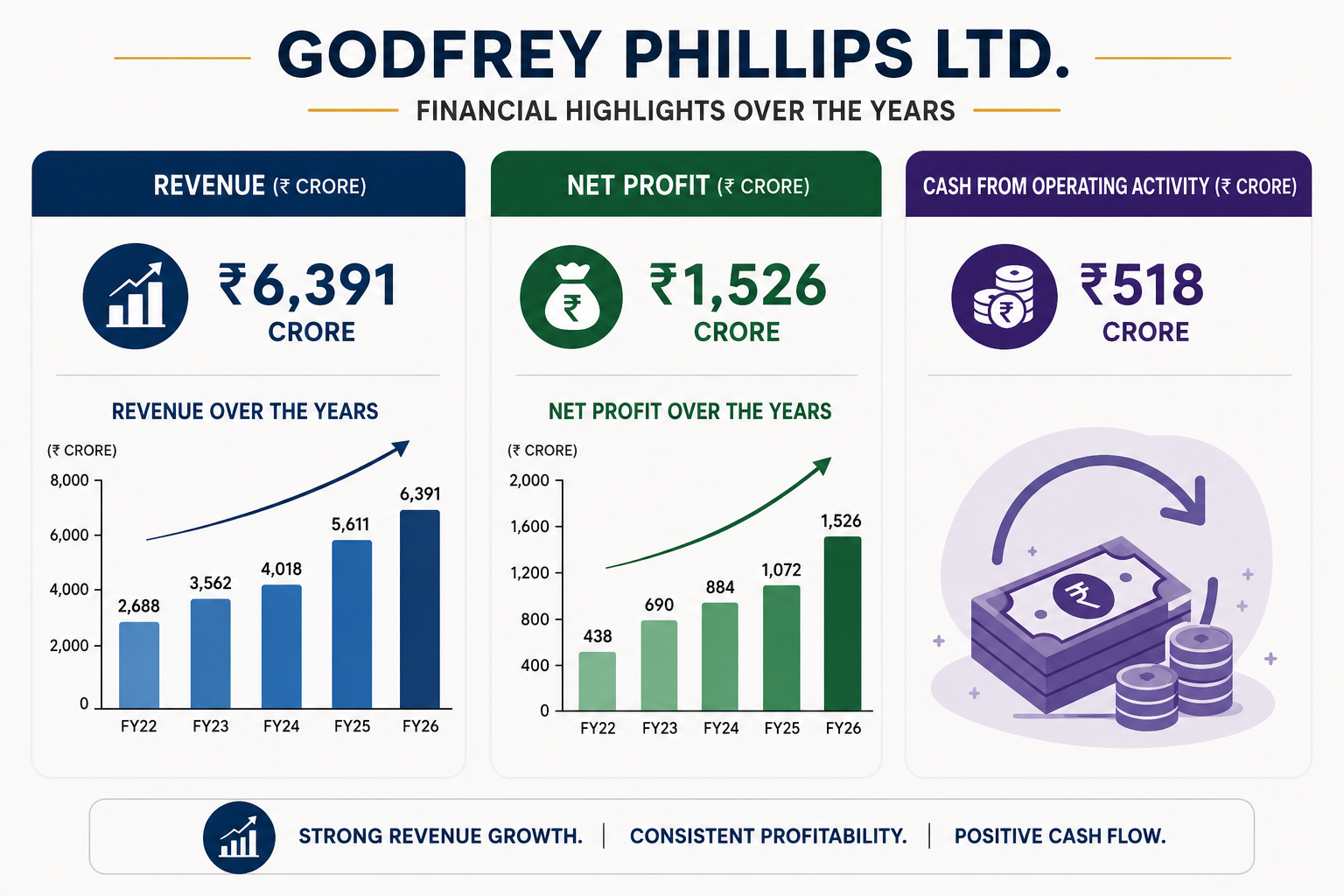
From the following factors that generate revenue, the graph below presents the company’s complete financial performance in terms of revenue and net profit growth over the years.
Why Are Cigarette Businesses So Profitable?
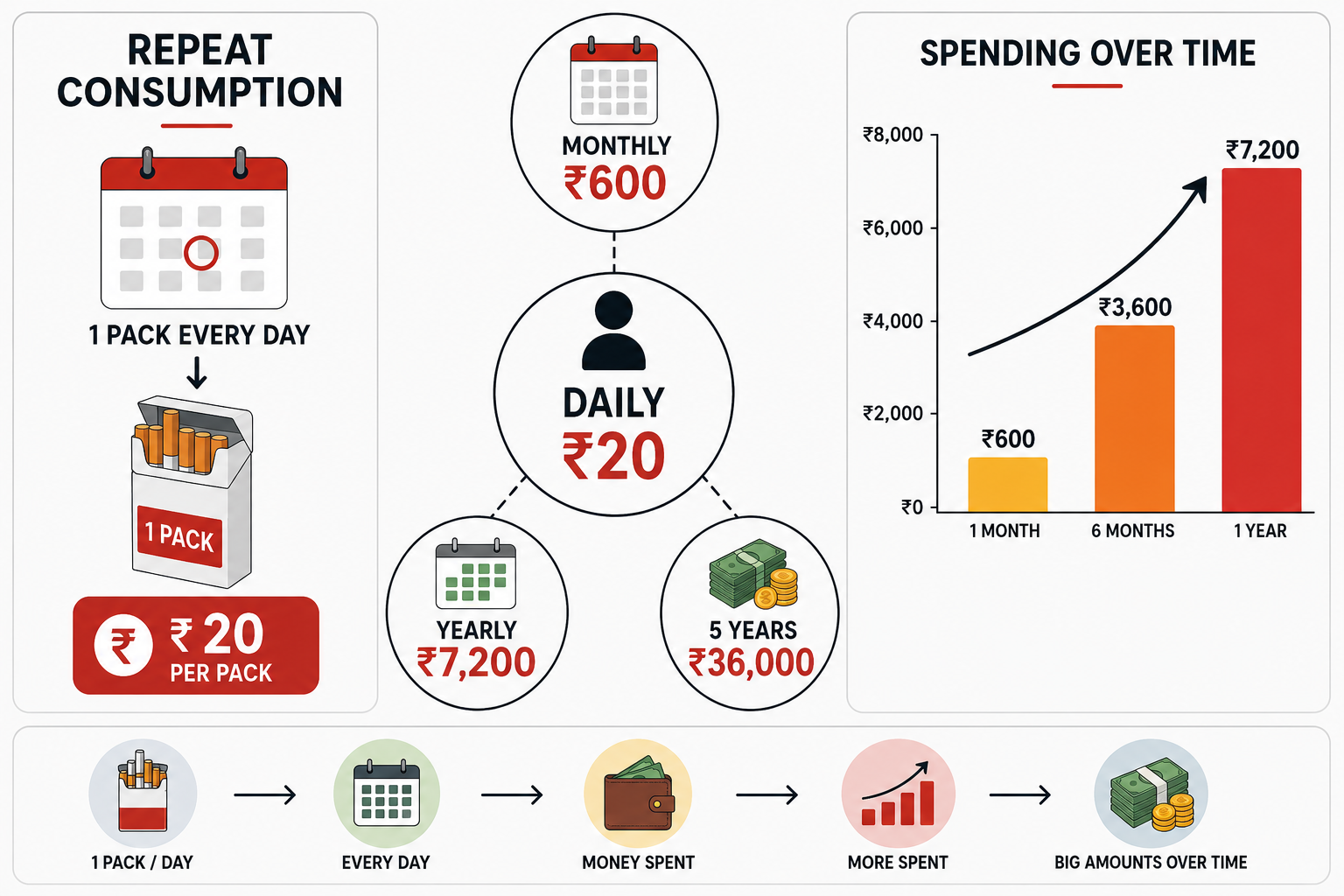
Repeat consumption
Tobacco is a habit-driven product.
For example
A smoker buying one pack daily at ₹20 spends ₹7,200 annually. With millions of consumers, this creates extremely stable revenue.
Strong Brand Loyalty
Many smokers never change their cigarette brand for years. For example
- A Marlboro smoker may continue smoking Marlboro for decades
- A Four Square customer may repeatedly buy the same product
This creates predictable sales.
Pricing Power
One major reason tobacco businesses are loved by investors is pricing power. If raw material cost rises, they can simply raise the selling price, and many consumers continue purchasing and due to these reasons profits are protected.
Conclusion
Godfrey Phillips India operates one of the most profitable consumer business models in India.
Its revenue model is primarily based on cigarette manufacturing, premium cigarette brands, Marlboro partnership, strong distribution, tobacco exports, pricing power.
The company earns huge recurring revenue because cigarette consumption is repeat-driven and brand loyalty is very high.
The biggest strength of the company is its premiumization, nationwide distribution, strong margins, repeat consumers, stable demand.
While the model is highly profitable, it is important to note the long-term risks:
- Increasing taxation.
- Stricter government regulations and advertising bans.
- Rising ESG (Environmental, Social, and Governance) concerns among global investors.
References :
Annual reports - https://www.godfreyphillips.co.in/sustainabililty/financial-results
Recent investor conference call PPT - https://www.bseindia.com/xml-data/corpfiling/AttachHis/8fdd254f-bacb-4989-be8d-43e00a862f23.pdf