Andre Witzel and Jia Tian Rong Set New Standards in Day Trading Education with WR Trading
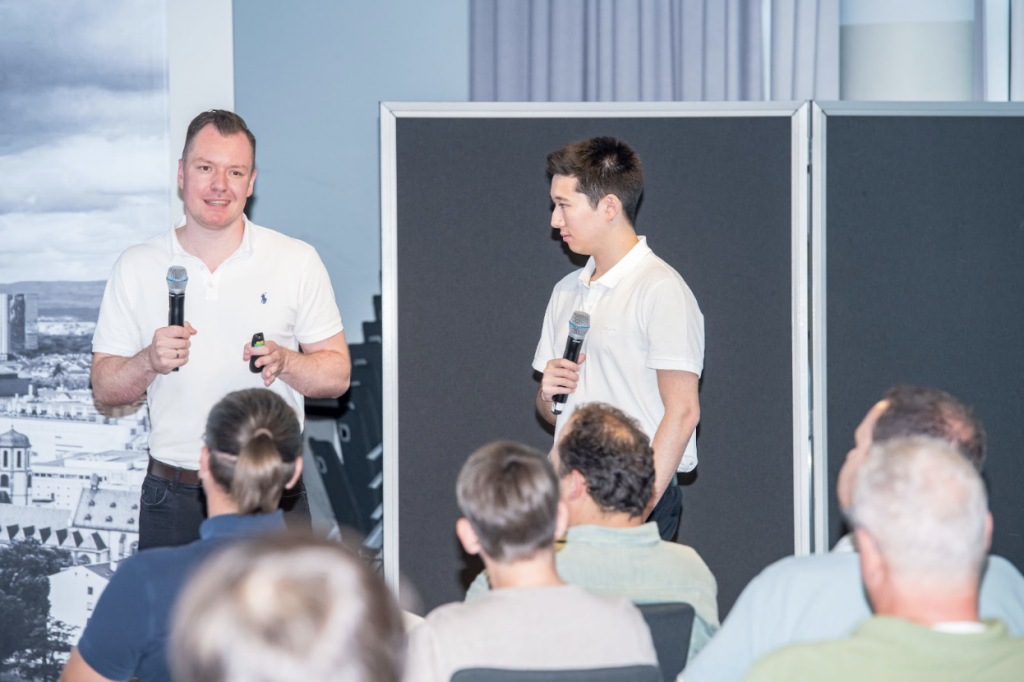
Most trading courses promise overnight results and deliver pre-recorded videos. Andre Witzel and Jia Tian Rong built something different, and they did it the hard way: by losing money first.
The two traders, who together operate the trading education platform WR Trading, have spent the better part of a decade formalizing a coaching model built around one core belief: that most retail traders fail not because markets are too complex, but because they are being taught wrong. Their approach to personalized trading coaching is drawing attention from traders across Europe and beyond, not because of marketing, but because of a growing record of coached traders who have crossed into consistent profitability.
Two Different Roads to the Same Conclusion
Andre Witzel began trading in 2013 with no financial background and no mentor. He lost his initial capital. He tried again, rebuilt, lost again, and kept going. What came out of that cycle was not a polished system or a shortcut. It was a methodology tested through years of real trades, real losses, and the kind of slow iteration that does not make for good marketing copy.
By the time Witzel began teaching others, he had logged over 400 successful trades and more than a decade of active market experience. He has since coached more than 100 traders to profitability, shares analysis and trading content on YouTube, and has written extensively on trading strategy. His stated goal, which he speaks about plainly rather than dramatically, is to guide 10,000 traders to profitability by 2030.
Jia Tian Rong, known in the trading community as JT, came from a completely different starting point. He spent years working as an electrician before deciding to pursue trading full-time in 2016. He paid for his own education out of pocket, investing in coaching and training programs before he had any consistent track record. That experience of being a paying student who wanted real answers, not generic advice, shaped how he would eventually teach.
JT has now accumulated over 12 years of trading experience, more than 300 successful trades, and a coaching track record that mirrors Witzel's in scale. He is known particularly for conducting live trades on YouTube, letting viewers watch decisions unfold in real time rather than presenting polished after-the-fact recaps.
A Methodology Built Around Losing Less, Not Winning More
At the center of WR Trading's approach is a focus on high Risk-Reward Ratio (RRR) setups: trades structured at ratios of 1:5, 1:7, and 1:10. The mathematical logic is straightforward but easy for newer traders to overlook. When a trade setup offers a potential return ten times the amount at risk, a trader can be wrong far more often than right and still generate consistent profits over time. This is the foundation on which both founders built their own trading, and it is the first principle they teach.
The technical framework centers on the 1-minute chart using wick-based price action, primarily on EUR/USD and the S&P 500. These are not exotic instruments or obscure setups. They are among the most liquid and widely followed markets in the world, which is partly the point. The 1-minute chart strategy works precisely because it is executable in a limited daily time window of one to three hours, which matters to traders who cannot or do not want to sit at a screen all day.
What the methodology does not promise is ease. Both Witzel and Rong are direct about the fact that losses are a permanent feature of trading, not a temporary problem to be solved. A trader following a 1:10 RRR setup can lose seven out of ten trades and still come out ahead, but only if they can hold to the system when losses string together. That psychological discipline is treated as a core competency, not an afterthought.
Why the Education Model Matters as Much as the Strategy
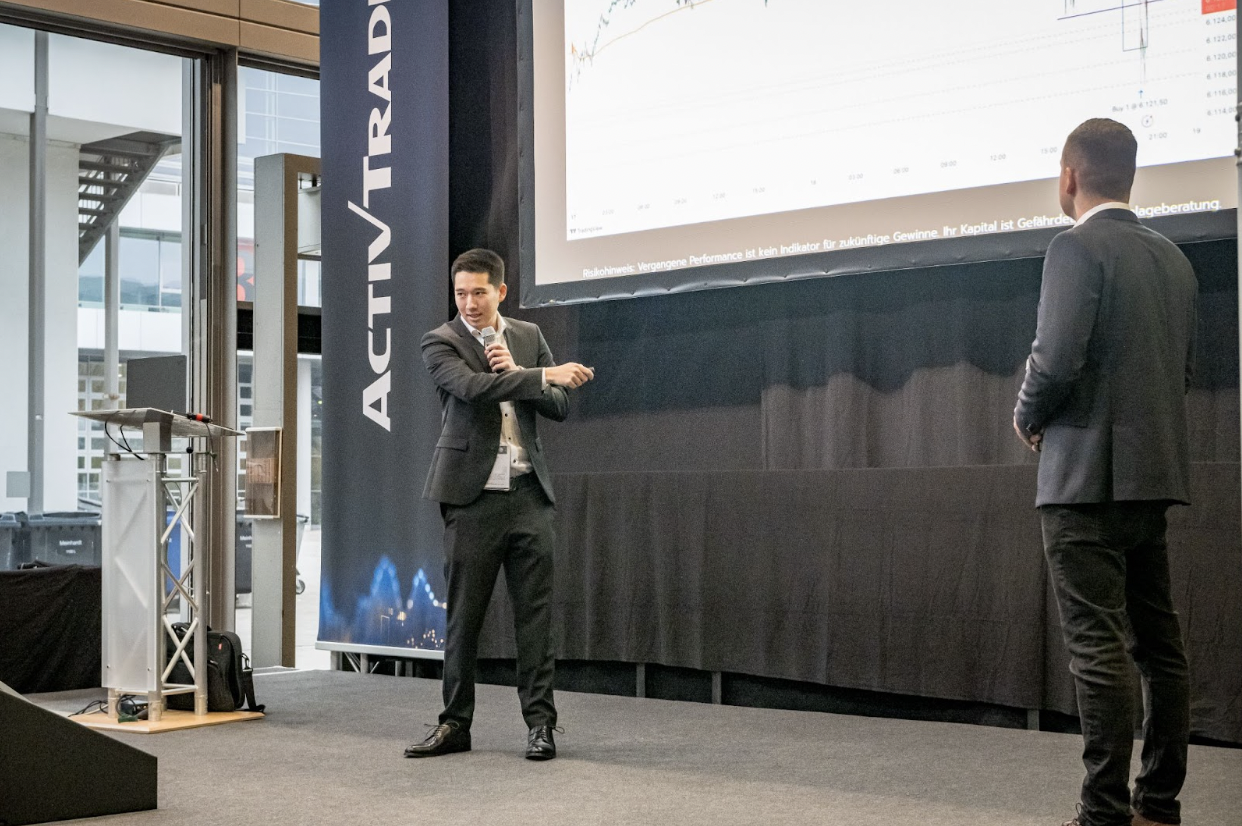
The delivery of trading education has long defaulted to a passive format: video libraries, PDF guides, and community forums where experienced traders occasionally appear. WR Trading's structure looks different in practice.
Traders work through three levels of structured content, from foundational market concepts to the core strategy to advanced application. Progress through these levels is tied to demonstrated competency rather than content consumption. Students move from demo accounts to live accounts with direct coach involvement at each stage. Live webinars and a Discord community provide interaction that a static video library cannot replicate.
The reasons Witzel and Rong structured things this way are rooted in what both of them experienced as learners:
- Passive content rarely addresses the specific mistakes a trader is actually making
- Accountability to a coach changes how seriously traders treat their own development
- Live feedback during or after real trades builds understanding faster than retrospective lessons
This does not mean WR Trading's model is the only credible path into trading. The industry includes legitimate self-directed resources, including organizations like the CFA Institute and freely available market data through platforms tracked by financial regulators. The difference is the level of individual attention and structure that a coaching-based program can provide compared to self-study alone.
What "New Standards" Actually Means Here
The phrase gets used loosely in any industry, but in the context of retail trading education, there is something specific being addressed. According to research published by financial regulators in several markets, the majority of retail day traders lose money over meaningful time horizons. A 2020 study by the Securities and Exchange Commission and similar findings across European regulatory bodies have consistently pointed to undereducation and poor risk management as primary contributors.
The approach Witzel and Rong have built does not claim to fix what makes trading hard. It tries to address what makes trading education inadequate: a gap between knowing a strategy intellectually and being able to apply it under pressure with real money. The live trade demonstrations JT runs on YouTube exist precisely because watching someone navigate an actual setup, including when it fails, builds a different kind of understanding than a flowchart of entry and exit rules.
For traders evaluating where to invest time and money in their development, organizations like the Financial Industry Regulatory Authority (FINRA) provide useful independent frameworks for evaluating any trading education program, including asking whether a coach trades their own methodology or only teaches it.
What Comes Next
WR Trading's growth has been structured deliberately rather than aggressively. The focus remains on the quality of outcomes for individual traders rather than the volume of program enrollments. Witzel has spoken publicly about the 2030 target of 10,000 traders reaching profitability as a measuring stick for the program's effectiveness, not just its reach.
For traders who have cycled through courses that left them no more prepared for live market conditions than when they started, the WR Trading model represents a meaningful alternative. Not because it makes trading easier, but because it takes seriously the question of what it actually takes to get from learning a strategy to consistently applying it.
Visit WR Trading here: https://wrtrading.com/