5 Nuclear Energy Stocks to Benefit from India’s Privatization Bill
India Opens Nuclear Energy to private players in what the Indian Government has described as a historic policy shift.
The move follows Parliament’s approval of a landmark atomic energy bill that formally allows private companies to participate in India’s nuclear power sector for the first time.
However, before jumping to conclusions, it is important to clearly examine why this move matters, how nuclear energy fits into India's long-term power strategy, and what challenges still remain.
Why Nuclear Energy Is Important for India?
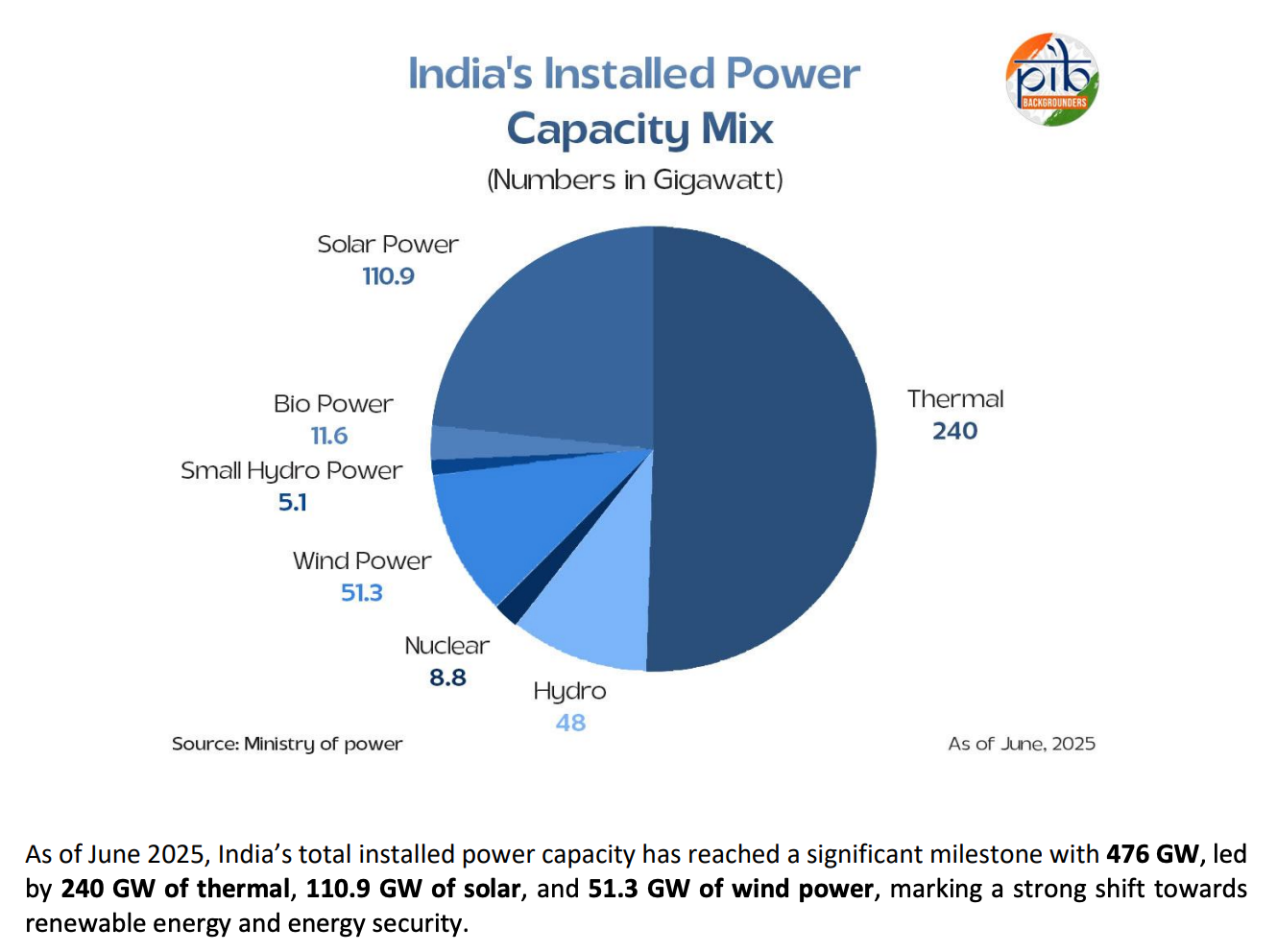
Globally, India is still far behind in nuclear energy adoption. In terms of installed nuclear capacity, India ranks around 9th in the world, with approximately 8 GW of capacity. In comparison, countries like France generate nearly 79% of their total electricity from nuclear energy. As of June 2025, nuclear power accounts for just about 8.8 GW out of India’s total installed capacity of nearly 476 GW, highlighting how small its role remains in the overall energy mix. This is a concern because India’s dependence on thermal (coal-based) power remains very high, which is not environmentally sustainable.
Nuclear energy is a clean source of power with a very low carbon footprint. India also has domestic uranium availability, strengthening the long-term case for nuclear expansion.
To diversify energy sources and reduce reliance on coal, the government has taken a logical step by opening nuclear power to private participation. Until now, nuclear projects were handled only by the government through NPCIL.
While the announcement has been made, full implementation will require amendments to the Atomic Energy Act and the CLND Act, expected in the next Parliament session.
Nuclear vs Solar and Wind: The Reality Check
Nuclear energy comes with its own challenges. Over the last decade, solar energy costs have fallen sharply, but nuclear energy costs have not reduced in the same way.
- Solar power cost: ₹2.5-3 per unit
- Nuclear power cost: ₹6-8 per unit
In terms of timelines:
- Solar/Wind projects: 1-1.5 years
- Nuclear projects: 8-10 years due to complex technology and safety requirements
Land acquisition is also more difficult for nuclear plants. Public resistance still exists because of memories of incidents like Chernobyl and Fukushima, even though modern nuclear technology is far safer today.
So why is the government still focusing on nuclear energy? Because all these challenges are initial. Once a nuclear plant is operational, it has a life of up to 60 years and provides 24×7 reliable electricity, something solar and wind cannot deliver on their own.
Nuclear energy is therefore not a competitor to renewables-it is a complement that helps stabilize the national power grid.
India's Practical and Balanced Nuclear Strategy
The government's approach toward nuclear energy is practical and measured, not aggressive.
- Current nuclear capacity: ~8.8 GW
- Expected in the next 5 years: ~22.5 GW
- Total non-fossil fuel capacity in the same period: 500+ GW
Even after this expansion, nuclear energy's contribution will remain below 4%. India's long-term target is 100 GW of nuclear capacity by FY2047, and even then, nuclear energy will contribute only about 5% of total non-fossil fuel capacity.
The Role of SMRs (Small Modular Reactors)
A major part of future nuclear expansion is Small Modular Reactors (SMRs). Traditional nuclear reactors are 700-1,000+ MW in size and take 10-15 years to build. SMRs solve many of these issues.
- SMR capacity: 50-300 MW per unit
- Setup time: 2-3 years
- Factory-built and assembled on-site
- Lower cost, lower financing risk, and higher safety
SMRs are especially useful for data centers, industrial towns, refineries, and military facilities that require continuous, high-load power. Countries like the US, Canada, and China are already expanding nuclear energy using SMRs.
Watch Our Top 5 Nuclear Energy Stocks in India Video
5 Indian Stocks That Could Benefit from Nuclear Privatization
1. Larsen & Toubro (L&T)
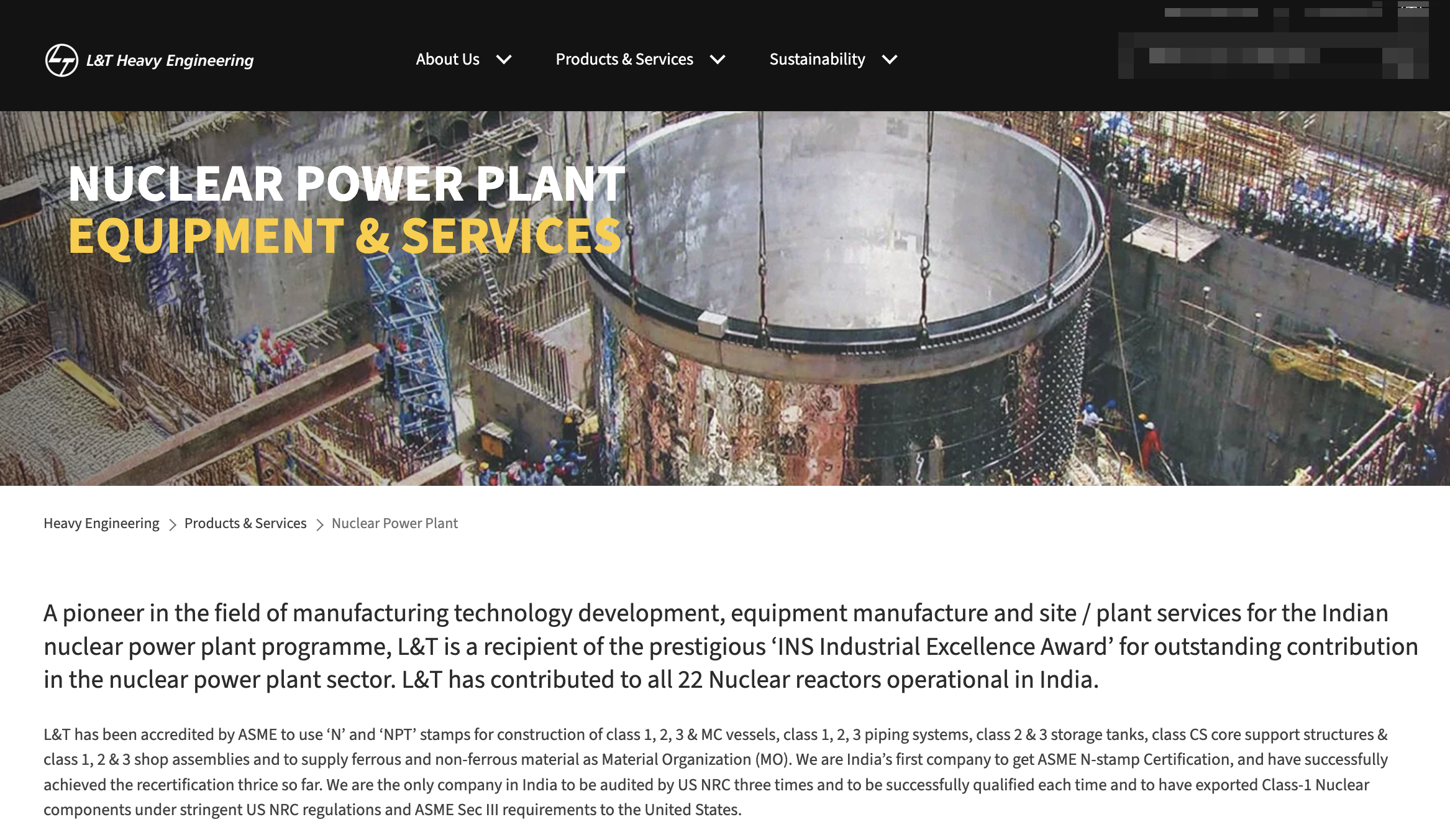
L&T is India’s largest EPC company with a market cap of around ₹5 lakh crore. It has consistently grown over the last decade and is fundamentally strong even without nuclear exposure. L&T has contributed to all 22 nuclear reactors currently operational in India, and manufactures key components such as reactor vessels, steam generators, heat exchangers, and shields. Nuclear currently contributes about 1.6% of its revenue, but long-term expansion can meaningfully support growth.
2. Walchandnagar Industries
Walchandnagar Industries is a micro-cap (₹1,000 crore) company and a direct supplier to NPCIL. It manufactures highly critical nuclear components that cannot be imported. Although current financials look weak, the company has an order book of ₹900 crore, nearly four times its annual sales, with 35-40% linked to nuclear projects. This makes it a high-risk, high-reward opportunity.
3. Tata Power
Tata Power has already expressed interest in developing SMRs. Once private participation is officially allowed, SMRs could become a long-term growth driver. Its existing renewable and battery energy storage businesses are already growing well, making nuclear energy an additional upside rather than a dependency.
4. Power Mech Projects
Power Mech Projects is a small-cap EPC company with a ~₹7,000 crore market cap, trading at around PE of 23
Despite strong growth-25% sales CAGR and 32% profit CAGR-valuation remains reasonable. The company already has a ₹560 crore nuclear project with a 32-month execution timeline, proving its nuclear EPC capability.
5. MTAR Technologies
MTAR Technologies manufactures core nuclear reactor components. The biggest concern is management credibility, as past projections have often fallen short. However, the company has recently secured a ₹310 crore order for nuclear reactor equipment, strengthening its nuclear order book and indicating potential growth if nuclear capacity expansion accelerates. MTAR has strong nuclear expertise, and if nuclear expansion gathers pace, its nuclear division could grow meaningfully. This stock is suitable only for selective, high-risk exposure.
Conclusion
Opening nuclear energy to private players is a long-term structural reform, not a short-term market trigger.
- L&T and Tata Power offer stable, diversified exposure
- Walchandnagar and MTAR are high-risk, high-reward bets
- Power Mech Projects stands out for valuation and growth
However, Nuclear energy will not replace solar or wind-it will support and stabilize India's power grid alongside them. As India moves toward energy security and sustainability, nuclear power will play a small but critical role in the decades ahead.

Check Other Post Posts
-
 Best Bond Investment Platforms in India 2025
April 17, 2025
-
What is TPIN in PNB?
October 11, 2024
-
How to Change SBI Address Online?
October 4, 2024